Warm Neutral Living Rooms · THE GUIDE
Incorporate a Narrow Shoe Cabinet into the Living Room for Board Books
Children's board books and slim family media frequently overwhelm standard living room shelves, creating clutter across low surfaces. Shallow flip-out shoe cabinets, originally designed for narrow entryways, offer an adaptable alternative for organizing compact media in shared living spaces. With depths often measuring under ten inches, these drop-down compartments conceal colorful covers behind simple, flat front panels. Because tilting compartments shift weight forward when opened, these units require secure wall anchoring and realistic load management. Exploring this alternative storage method keeps floor areas tidy while respecting essential furniture safety standards.
Jump to the checklist ↓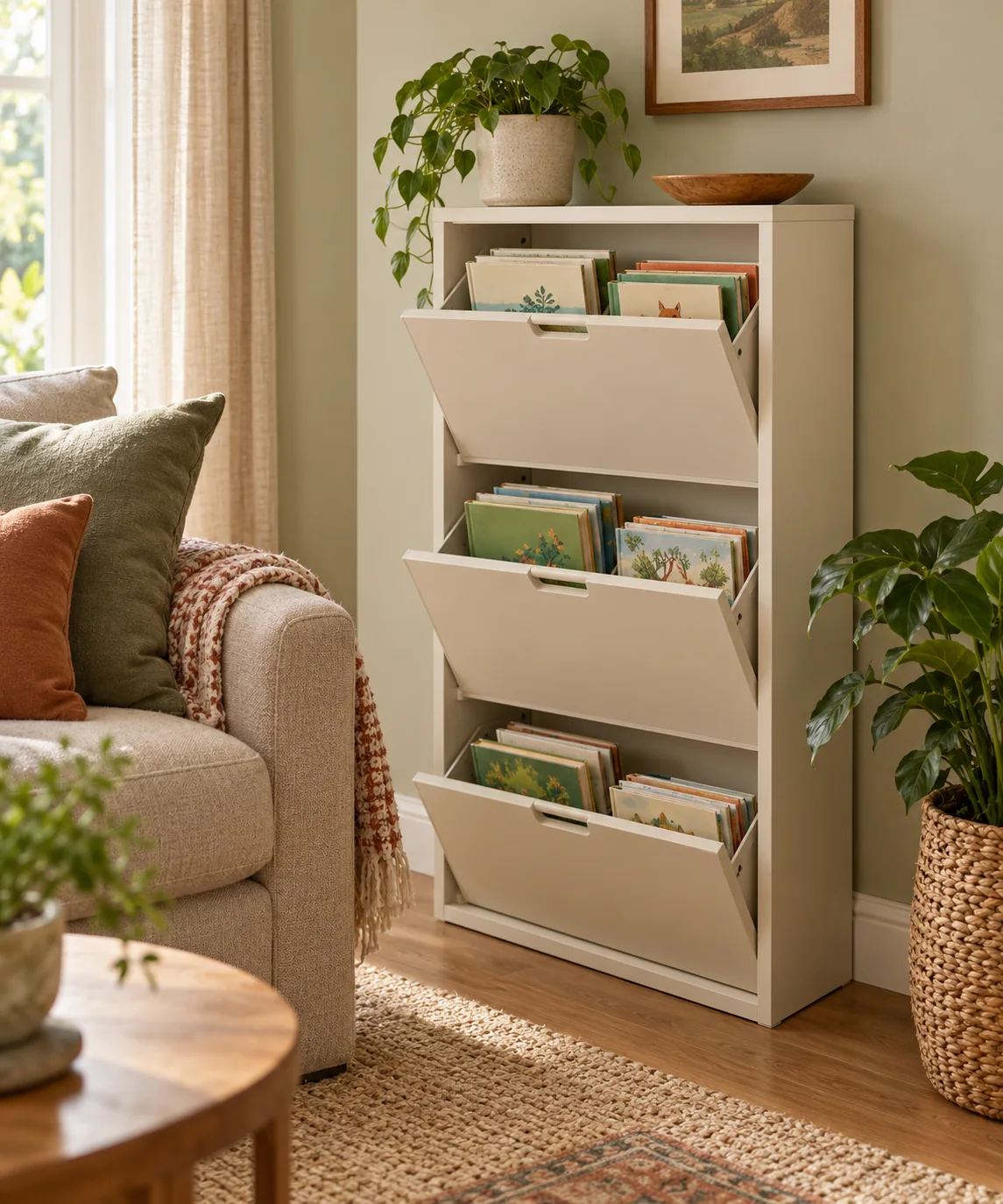
Mandatory Wall Anchoring and Structural Fastening
Ultra-narrow shoe cabinets have a very slim depth-to-height ratio, making them inherently unstable if unattached. Opening a drawer transfers the center of gravity forward, creating a severe tip-over risk that heavy contents like board books significantly increase. Always anchor the cabinet securely to the wall using the manufacturer-provided brackets and fasteners suited to your wall type, such as wood studs or masonry. Never rely on the unit's freestanding weight, especially in homes where children or pets are present.
Assessing Room Flow and Drop-Down Clearance
Before installing the cabinet, measure the path of travel with all compartments tilted fully open. Ensure sufficient clearance remains for family members to walk past without squeezing or catching clothing on open drawer edges. Confirm that opening the compartments will not collide with room doors, baseboard heaters, or nearby electrical outlets. Positioning the unit along an underutilized perimeter wall keeps walkways clear while maintaining convenient access to daily reading materials.
Managing Weight and Internal Dividers
Shoe cabinet drop-down mechanisms are typically engineered with plastic pivot pins and friction stops intended for lightweight shoes rather than heavy paper products. Dense stacks of hardcovers can strain these hinges, causing compartments to stick or pull away from their tracks. Store heavier, thick-paged board books in lower tiers to reduce upper mechanical stress, and file them loosely upright rather than packing them tightly together. Reserve upper compartments for thinner softcover books, drawing pads, or flashcards.
Cabinet Finishes in Warm Neutral Spaces
Many standard utility cabinets come in basic bright white or cool laminate finishes that can look stark against warm neutral furnishings. Look for models finished in soft biscuit, warm ivory, or light wood veneers that blend smoothly with warm paint colors and textiles. If adapting an existing white unit, balance its appearance by pairing it with adjacent natural elements, such as a textured wool floor rug, framed linen art, or a warm wood accent chair.
Display and Surface Safety on Narrow Ledges
The shallow top surface of a shoe cabinet offers minimal resting depth. Avoid placing heavy ceramic vases, hot drinks, or fragile decorative objects on top, as the vibration from opening and closing the drop-down compartments can cause perched items to shift or fall. Keep the top ledge clear, or limit items to lightweight, shatterproof accents such as a shallow wooden catchall or a soft fabric basket.
YOUR STARTING POINT
A little checklist.
Original editorial guidance. Images are AI-generated concepts, not photographs of completed projects. Our sources and approach.
Questions to consider
Can shoe cabinets safely hold heavy children's board books?
Yes, provided the cabinet is firmly anchored to the wall and weight limits are respected. Because books are substantially denser than shoes, distribute items loosely to avoid overloading the internal plastic pivot hinges.
Why is wall anchoring strictly necessary for this type of cabinet?
The shallow footprint and tilting drawer motion pull the cabinet's center of gravity forward whenever a compartment opens. Anchoring the unit directly to wall studs prevents catastrophic tip-over accidents, which is critical in homes with children.
What should I do if the drop-down drawer feels stiff or rubs against the frame?
Remove some books immediately to reduce weight on the pivot pins. Check the alignment of the side screws and inspect the plastic hinge tracks for dust, debris, or warping caused by excessive load.