Pantry Organization · THE GUIDE
Incorporate a Portable Dinner Prep Basket for Busy Weeknights
Weeknight meal preparation often stumbles over scattered ingredients, leading to frantic pantry searches while pans heat on the stove. A portable dinner prep basket—such as a shallow wooden crate—centralizes recipe planning by gathering dry ingredients, canned goods, and whole produce into one accessible caddy. By loading the crate during morning routines or weekend planning, you create a tangible staging zone that bridges pantry storage and countertop cooking. This practical strategy eliminates repeated trips into deep cabinets, prevents missing-ingredient surprises at dinnertime, and keeps your food preparation orderly, deliberate, and remarkably calm.
Jump to the checklist ↓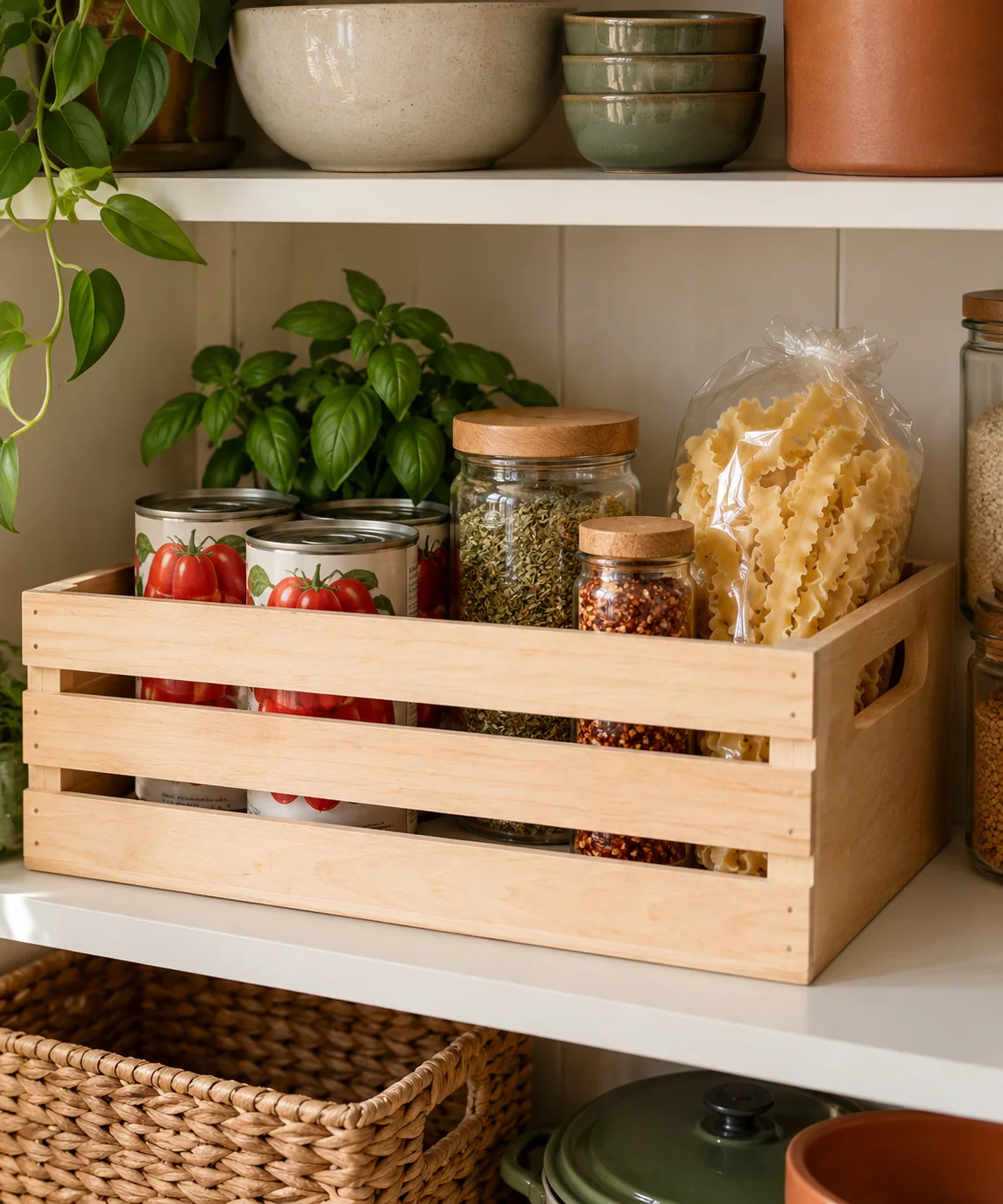
Selecting Crate Dimensions and Materials
Choose a shallow crate measuring approximately 12 to 14 inches long, 8 to 10 inches wide, and 4 to 5 inches deep. Birch, pine, or paulownia provide lightweight durability without adding unnecessary heft when carrying contents across the kitchen. Low side walls are critical: they keep ingredients visible from across the counter while allowing easy grabbing. Ensure the crate includes smooth integrated cut-out handles and a flat, splinter-free base that rests securely on shelf liners and countertop surfaces without scratching.
Staging Non-Perishables and Whole Produce
Use the prep basket strictly for items that do not require continuous refrigeration before cooking. Stock it with canned tomatoes, dry pasta boxes, bottled oils, raw onions, whole garlic heads, spice jars, and dried legumes required for that night’s menu. Keeping recipe-specific dry goods grouped together prevents family members from accidentally opening ingredients reserved for scheduled meals. Never place wet or chilled perishables in the crate; leave meats and dairy in the refrigerator until active cooking begins.
Pantry Shelf Placement and Clearances
Position your dinner prep basket on a waist-to-chest-height shelf in your primary pantry or food cabinet. Avoid storing it on high shelves that require overhead reaching when fully loaded with heavy canned goods. Provide at least 3 inches of vertical clearance above the top of the basket so you can deposit cans or tall boxes directly into it without sliding the entire unit forward. Keep the surrounding shelf space clear to permit fluid, two-handed basket extraction.
Establishing a Morning Loading Routine
Integrate basket stocking into your morning kitchen routine while brewing coffee or packing lunches. Review your evening recipe card, pull the necessary dry components from primary storage zones, and assemble them inside the crate. Place small recipe instruction cards or printed ingredient checklists upright alongside the items. This simple morning habit takes less than two minutes, yet it confirms that all essential non-perishable components are on hand well before cooking begins, eliminating frantic last-minute grocery runs.
Cleaning, Maintenance, and Spill Prevention
Wooden crates can absorb grease and stains if leaky containers or dirty root vegetables sit on bare wood. Line the bottom of your crate with a removable, washable silicone mat or durable cork sheet to protect the timber grain from oily bottle bases and onion skins. Inspect the liner weekly, wiping it down with a damp cloth and mild dish soap. Allow the crate to air-dry completely before returning it to the pantry to prevent mold growth.
YOUR STARTING POINT
A little checklist.
Original editorial guidance. Images are AI-generated concepts, not photographs of completed projects. Our sources and approach.
Questions to consider
Can I place fresh vegetables and herbs in the prep crate?
Whole, unpeeled vegetables like onions, garlic, squash, and potatoes are suitable. Delicate fresh herbs and cut produce must remain in the refrigerator until active preparation begins, as pantry temperatures will cause them to wilt prematurely during the day.
What size prep basket works best for small kitchens?
A compact crate measuring roughly 10 by 8 inches with 4-inch sides fits standard pantry shelves and narrow countertops. It holds three cans, a grain pouch, and aromatics without occupying valuable prep space or overcrowding tight work surfaces.
How do I prevent oil and vinegar bottles from staining the wood?
Insert a removable silicone or plastic liner at the crate bottom. Always wipe the exterior base and rims of condiment bottles before staging them, ensuring no drips seep beneath the protective liner and absorb into the untreated wood grain.