Reading Corners · THE GUIDE
Incorporate a Retractable Fabric Canopy into a Porch Reading Bench
Direct sun and overhead glare can quickly make an exposed porch bench uncomfortable for daytime reading. Incorporating a retractable fabric canopy allows you to adjust shade coverage as the sun moves, creating a softer visual environment for reading without permanently closing off the porch ceiling. Because outdoor canopies catch wind and add mechanical loads to mounting points, successful planning requires careful evaluation of porch framing, local building codes, and manufacturer-tested hardware systems rather than improvised structural alterations.
Jump to the checklist ↓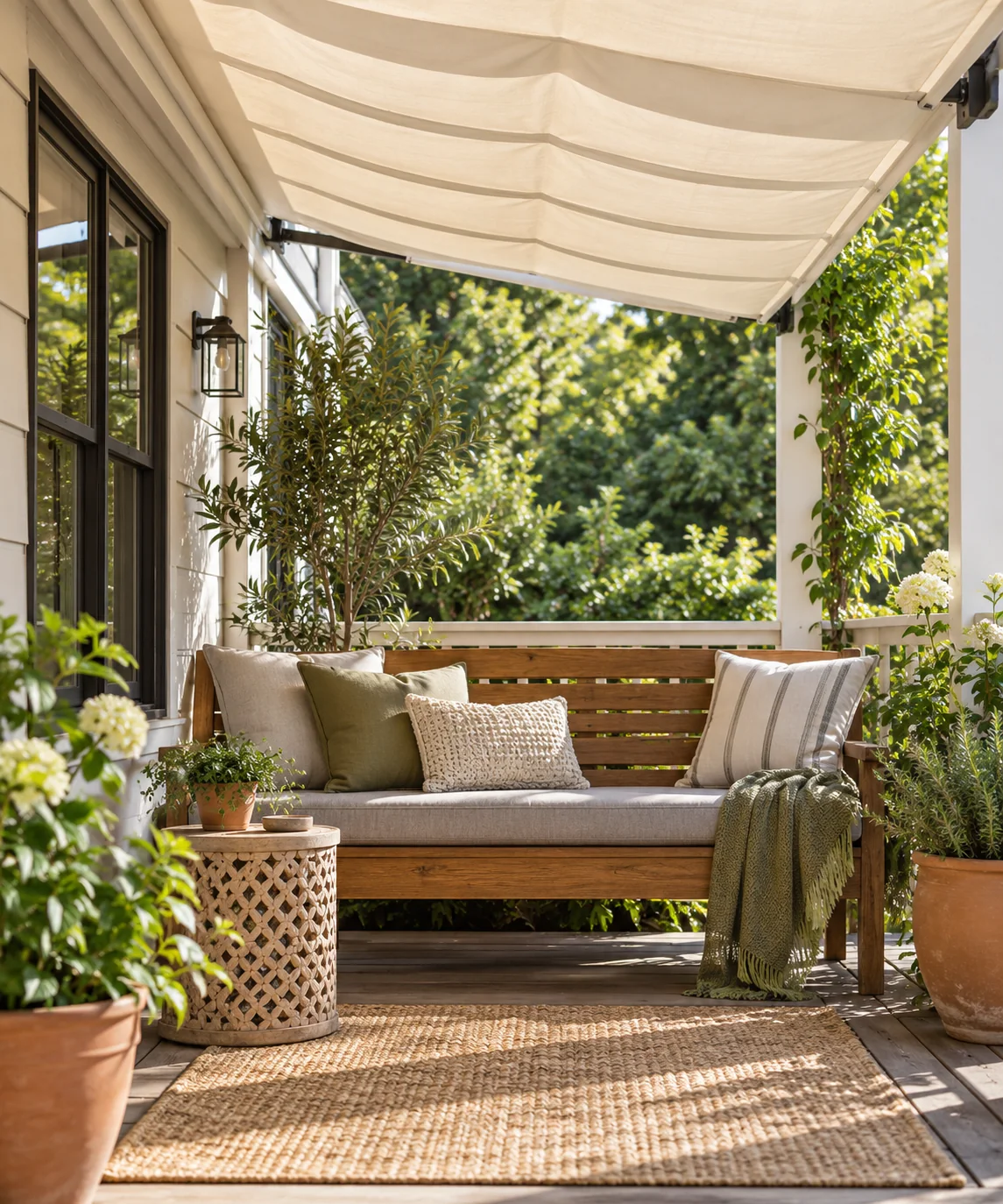
Evaluating Porch Framing, Clearances, and Permissions
Before planning an overhead shade, verify that your porch structure, lease terms, and local homeowner association rules permit overhead additions. Inspect existing framing to ensure structural beams and posts are sound, fully finished, and free of decay or pest damage. Measure vertical clearance carefully so that any suspended fabric hangs comfortably above head height when fully extended or stacked. Take into account the swing path of exterior doors, screen doors, hanging planters, and outdoor lighting fixtures to prevent interference.
Selecting Weather-Resistant Exterior Textiles
Canopy fabrics must withstand outdoor exposure, temperature fluctuations, and ultraviolet radiation. Solution-dyed acrylics and commercial shade-cloth meshes are standard choices that resist fading, stretching, and mildew. A porous, breathable weave allows warm air to escape upward while filtering harsh overhead sunlight, reducing glare on paper and screen surfaces. Avoid solid waterproof vinyls, as they prevent air circulation and can trap large volumes of standing rainwater that strain overhead supports.
Choosing Engineered Systems Over Improvised DIY Hardware
Tensioned cables and outdoor shade fabrics generate significant lateral pull on supporting posts and beams. Rather than assembling unrated hardware store components, select engineered, commercially manufactured retractable shade kits designed specifically for residential outdoor spaces. Follow the manufacturer's engineering specifications for mounting substrates, anchor ratings, and spacing. When mounting to structural porch framing, consult a qualified carpenter or contractor to ensure the attachment method safely accommodates dynamic tension and movement.
Accounting for Sun Paths and Wind Limitations
A horizontal overhead canopy primarily shields against high-angle midday sun. If low-angle morning or late afternoon light causes glare across your reading bench, consider pairing the overhead canopy with an independent, freestanding vertical screen or positioning the bench where existing architectural features block side angles. Always recognize that fabric canopies act as sails during gusty conditions; retractable designs must be drawn back and securely stowed during windy periods to prevent hardware failure.
Routine Inspection and Seasonal Care
Outdoor textile systems require regular inspection and upkeep to remain functional and safe. Check mounting brackets, sliders, and fasteners periodically for corrosion, looseness, or wear caused by movement and vibration. Clean the fabric according to manufacturer directions, typically by brushing off loose debris and washing with mild soap and water. In regions that experience freezing winter conditions, heavy snowfall, or seasonal windstorms, unhook the canopy and store it dry indoors to extend its lifespan.
YOUR STARTING POINT
A little checklist.
Original editorial guidance. Images are AI-generated concepts, not photographs of completed projects. Our sources and approach.
Questions to consider
How do retractable canopies handle rainwater accumulation?
Flat, tensioned fabric can quickly collect pooling rainwater, which adds significant weight and can damage mounting hardware or tear the material. Canopies must be pitched according to manufacturer guidance to shed water, or fully retracted under a porch roof before rain begins.
Can an overhead shade canopy remain extended in breezy weather?
Light breezes can pass through porous shade mesh, but gusty winds apply sudden mechanical uplift and tension to supporting posts. To protect framing and mounting hardware, retract and lash the canopy closed whenever winds increase beyond calm conditions.
How often should overhead canopy hardware be inspected?
Inspect all mounting fasteners, clips, and tension points monthly during active outdoor months. Look for signs of metal fatigue, corrosion, loose screws, or frayed fabric seams, and repair or replace worn components promptly according to manufacturer guidance.