Sage and Cream Interiors · THE GUIDE
Incorporate a Slim Shoe Cabinet Behind an Apartment Entry Door
Apartment entryways frequently suffer from doorway clutter when shoes accumulate in narrow transit corridors. Placing an ultra-slim tipping shoe cabinet behind the main entrance door provides enclosed footwear organization without consuming critical hall width. Finished in a gentle cream hue against muted sage perimeter walls, a shallow vertical cabinet conceals daily pairs while keeping compact vestibules visually open. Successfully integrating this storage piece requires measuring door swing arcs, checking handle projections, verifying baseboard profiles, and adhering to manufacturer wall-anchoring specifications and building egress guidelines so the entry door operates freely without mechanical interference.
Jump to the checklist ↓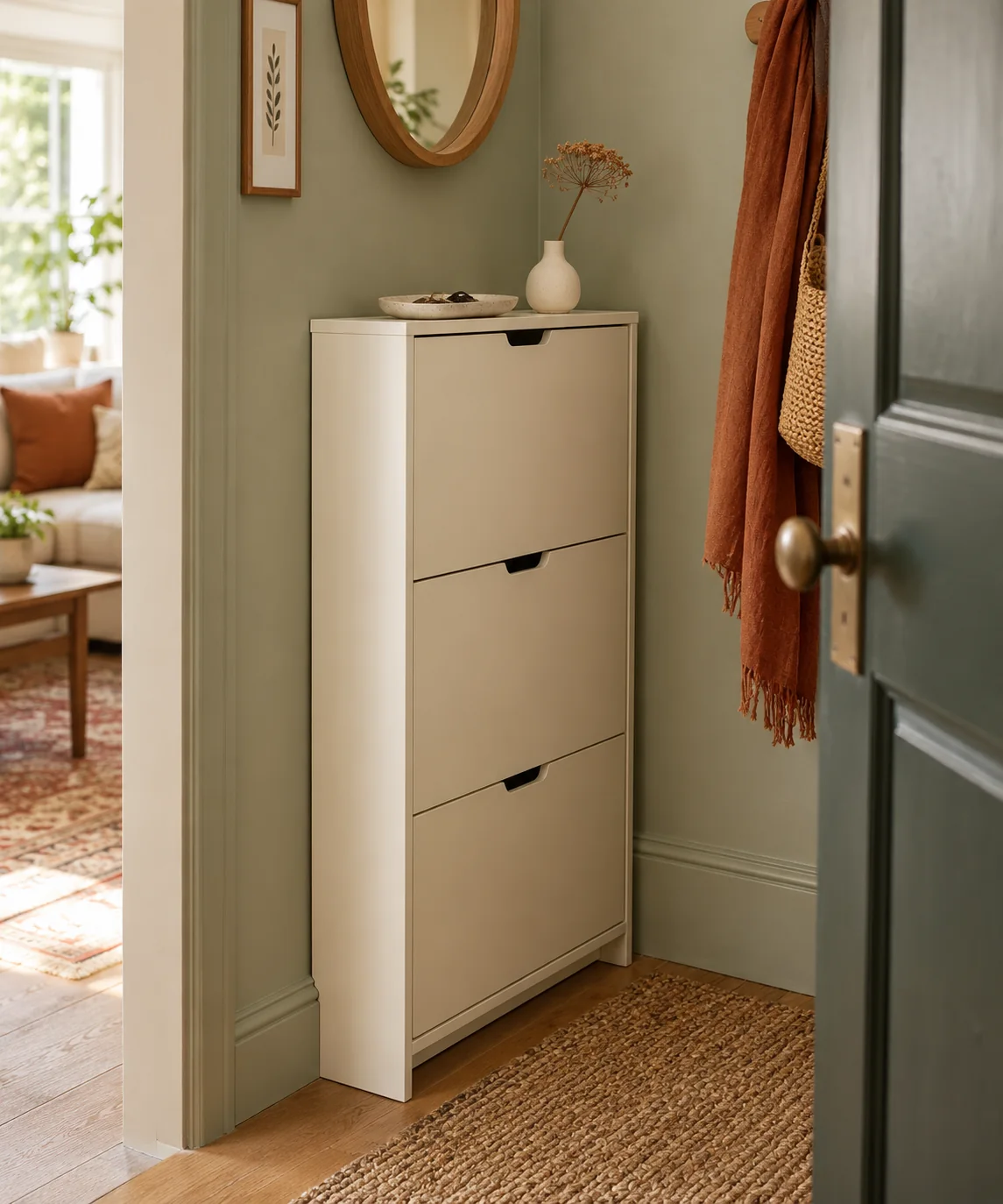
Mapping Door Swing Path and Hardware Clearances
Before selecting an entryway cabinet, examine the full mechanical swing of the entry door. Open the door to its natural resting point and observe the open space between the door surface and the adjoining wall. Rather than relying on standard clearance assumptions, check the specific profile of your door hardware, including deadbolts, levers, and privacy latches. An ultra-slim shoe cabinet typically demands sufficient wall depth behind doors that rotate beyond a right angle. Positioning a freestanding wedge or adjustable bumper can help define a safe boundary that prevents door levers from contacting the cabinet finish during everyday entry and exit.
Assessing Footwear Dimensions and Compartment Limits
Tipping shoe cabinets utilize angled internal drop-down pockets to hold footwear vertically rather than flat on open shelves. This orientation provides enclosed storage within a minimal frame profile. However, internal pivot bins naturally favor low-profile footwear such as running shoes, flat sandals, and tailored loafers. Heavier winter footwear, thick-soled work boots, and high-top sneakers often bind against the internal front face or prevent compartments from closing flush. Dedicate the entry cabinet to your most frequently worn low-profile shoes, and avoid forcing pairs into compartments to protect the plastic or metal pivot pins from premature wear.
Harmonizing Sage Walls with Cream Cabinetry
A narrow hallway risks feeling crowded when furniture contrasts sharply with adjacent wall surfaces. Applying a soft sage tone to corridor walls provides a calm, balanced backdrop that feels intentional and grounded. Selecting a matching cream cabinet allows the shallow profile to blend gently with neighboring trim or door moldings. This coordinated palette reduces the visual weight of the furniture piece in a tight entry zone, softening the transition from outdoors while diffusing ambient light from overhead fixtures throughout the entryway.
Baseboard Alignment and Wall-Anchoring Protocols
Apartment corridors typically feature standard baseboard trim that keeps tall, narrow furniture from resting flush against the wall surface. Because tipping shoe cabinets shift their center of gravity forward whenever a compartment drops open, manufacturer guidelines uniformly mandate securing the cabinet directly to the wall. Select cabinets designed with pre-cut baseboard notches or tall leg clearance so the rear frame sits flat against the drywall above the molding. Consult your property management policies regarding wall fasteners, and install the manufacturer-supplied anti-tip hardware into solid backing or appropriate drywall anchors before loading any footwear into the drawers.
Styling the Top Surface for Daily Utility
Because a slim entry cabinet functions primarily as practical organization, surface styling should prioritize daily function and avoid clutter. Keep items to a minimum to maintain a clean transition zone. A shallow ceramic tray or wooden dish offers a contained spot for keys and mail, while a single bud vase with dried botanicals adds natural texture without the risk of standing water spills near footwear. Avoid placing heavy decorative objects, unsecured mirrors, or loose items on the upper surface, as vibrations from opening and closing the front door can cause unstable decor to shift.
YOUR STARTING POINT
A little checklist.
Original editorial guidance. Images are AI-generated concepts, not photographs of completed projects. Our sources and approach.
Questions to consider
Can tall work boots or winter boots fit inside a slim tipping cabinet?
Most ultra-slim tipping cabinets cannot accommodate tall or wide boots due to the restricted depth of the drop-down pockets. Place heavy winter footwear on a dedicated boot tray or inside a closet, reserving the tipping unit for sneakers, flats, and everyday walking shoes.
Are tipping shoe cabinets safe to use without anchoring to the wall?
Tipping shoe cabinets should not be used freestanding. When compartments rotate open, the center of gravity shifts forward, creating a significant tip-over hazard. Always fasten the unit to the wall using the manufacturer-specified anti-tip hardware and appropriate wall anchors.
How do I ensure the cabinet does not interfere with apartment hallway egress?
Position the cabinet within the recessed pocket behind the open door leaf where foot traffic does not naturally route. Verify that the door still opens wide enough for comfortable passage and that the arrangement conforms to your building's safety and entryway guidelines.