Compact Home Offices · THE GUIDE
Incorporate a Vertical Ladder Desk in an Apartment with High Ceilings
High ceilings offer generous vertical volume, yet floor footprints in city apartments often remain tight. A leaning ladder desk utilizes upward reach without consuming square footage. With a modest 20-by-30-inch base footprint, this tiered design stacks critical storage directly over the work surface. The upward-tapering frame preserves an open sightline while providing structured tiers for reference materials, desk accessories, and lighting. Integrating a ladder desk successfully depends on evaluating floor clearances, shelf weight thresholds, task lighting placement, and ergonomic seat positioning to balance visual proportions with practical daily computing needs.
Jump to the checklist ↓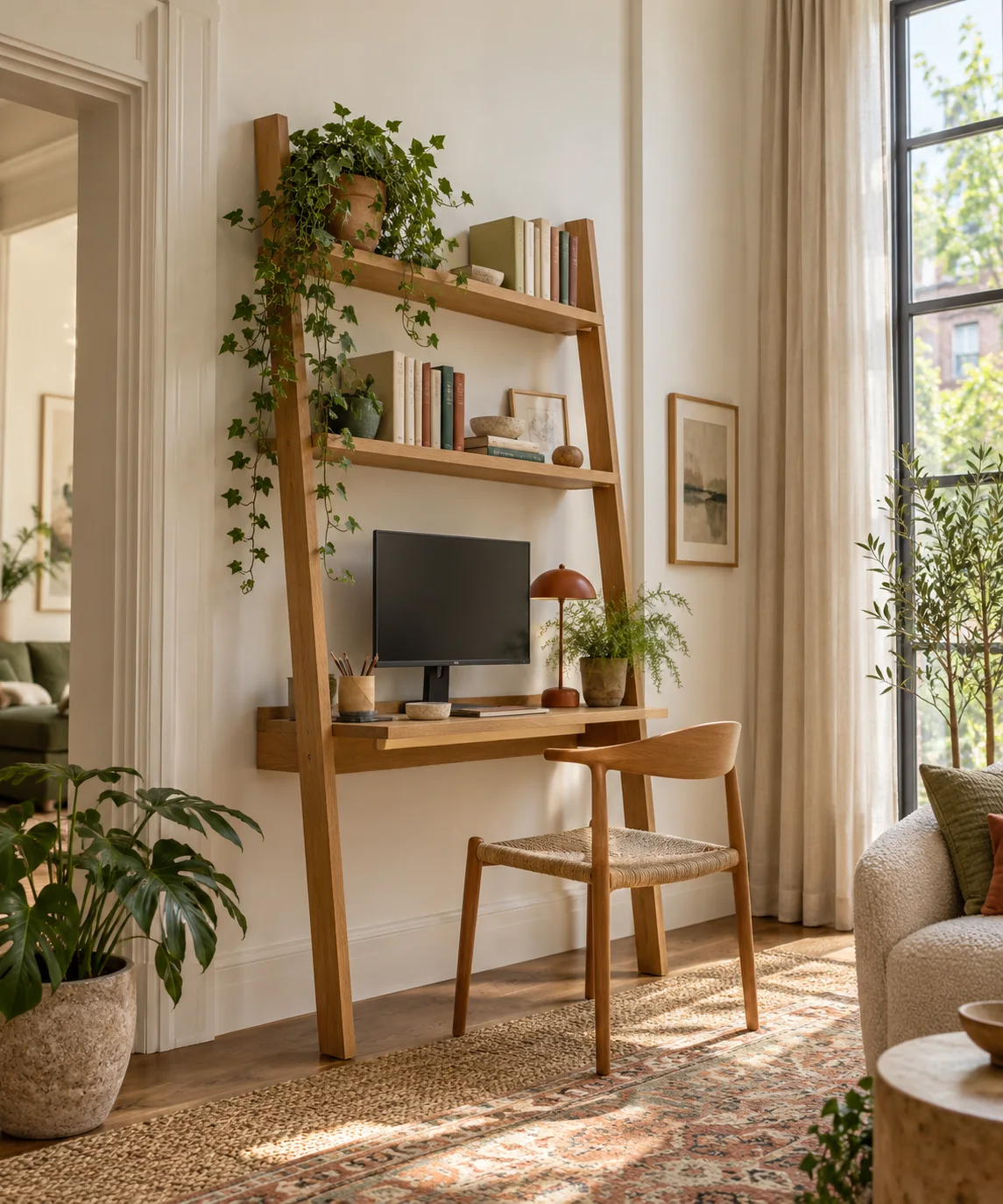
Evaluating Footprint and Lean Angle
A leaning ladder desk typically requires a dedicated base footprint of roughly 20 inches deep by 30 inches wide, with the vertical rails resting against the wall at a set incline. Measure your floor area carefully to confirm that chair movement will not obstruct adjacent walking paths or interior doors. Use painter's tape on the flooring to map the base contact points before bringing the unit into the room. Check that tall baseboards or quarter-round moldings do not push the feet outward at an unsafe angle, and ensure the base pads make level, flat contact across the floor surface.
Weight Limits and Anti-Tip Anchoring
High ceilings may invite displaying heavy items vertically, but leaning furniture presents inherent tip-over hazards if not properly secured. Most manufacturers supply wall-tethering brackets or top-rail anchors designed to secure the unit directly to wall studs. Install these manufacturer-provided anti-tip devices before placing any gear on the shelves. Review the manufacturer's specific weight ratings for each shelf tier; keep heavy books on separate low-profile floor storage, reserving upper ladder tiers exclusively for lightweight essentials like paper notebooks or small desktop accessories.
Ergonomic Screen and Keyboard Alignment
Because leaning ladder desks feature fixed, non-adjustable shelf heights, you must adapt your working posture using modular desktop accessories. Place an external keyboard and mouse on the primary work tier so your forearms rest naturally without excessive downward pressure on the shelf front. If using an external display, confirm that the base sits entirely within the tier's depth without overhang. Select an adjustable, armless desk chair that slides fully beneath the desk when idle to prevent tripping in compact living quarters.
Cable Routing and Task Lighting
Running cords along exposed leaning rails can quickly clutter the clean vertical lines of the workstation. Secure charging cables and peripheral cords along the rear edge of one side rail using removable adhesive clips, guiding them down toward a nearby baseboard outlet. Overhead fixtures in rooms with high ceilings often cast shadows across recessed shelving; mount a slim, battery-powered LED light bar or a low-profile clip-on lamp beneath the shelf immediately above your monitor to provide even, directed illumination across the desk surface.
Circulation Clearances and Maintenance
Maintain an unobstructed perimeter behind the seated workstation to support comfortable room circulation. Periodically inspect the leaning frame and anti-tip hardware to ensure wall anchors remain snug and free from looseness caused by everyday typing vibration. Clean wood veneer or solid timber shelves using a slightly damp microfiber cloth, drying immediately to avoid water spotting. Check the rubber base feet twice a year to confirm they remain supple, preventing accidental slippage against hardwood floors or smooth tiles.
YOUR STARTING POINT
A little checklist.
Original editorial guidance. Images are AI-generated concepts, not photographs of completed projects. Our sources and approach.
Questions to consider
Can a dual-monitor setup fit onto a ladder desk?
A standard 30-inch shelf width cannot safely fit two standard monitors side by side without substantial overhang. Use a single monitor within the manufacturer's specified dimensions or rely on a laptop paired with a compact secondary screen that fits fully within the tier boundaries.
How do I prevent the desk feet from marking wooden floors?
Fit dense rubber or felt pads directly under the contact points of the base feet. Rubber pads provide friction that limits sliding on smooth floorboards while protecting the finish from pressure marks.
Do leaning ladder desks always need to be anchored to the wall?
Yes. Leaning ladder desks must be secured to the wall using the manufacturer's supplied anti-tip hardware or brackets anchored into structural framing. Gravity and shelf weight alone do not prevent leaning furniture from sliding or tipping forward if bumped or subjected to downward force.