Bookshelf Styling · THE GUIDE
Incorporate Audio Equipment and Headphone Stands Beside Reading Materials
Integrating listening gear onto book shelves offers functional convenience for quiet study areas without turning a living space into an electronics depot. A successful layout dedicates a single cubby or section specifically to an understated headphone stand and compact audio components, keeping them distinct from surrounding reading materials. By framing audio gear with structured vertical books and managing passive cord routing neatly, you prevent cable tangles from encroaching on paperbacks. This approach balances mechanical utility with quiet library aesthetics, treating functional technology as a considered element of the bookcase.
Jump to the checklist ↓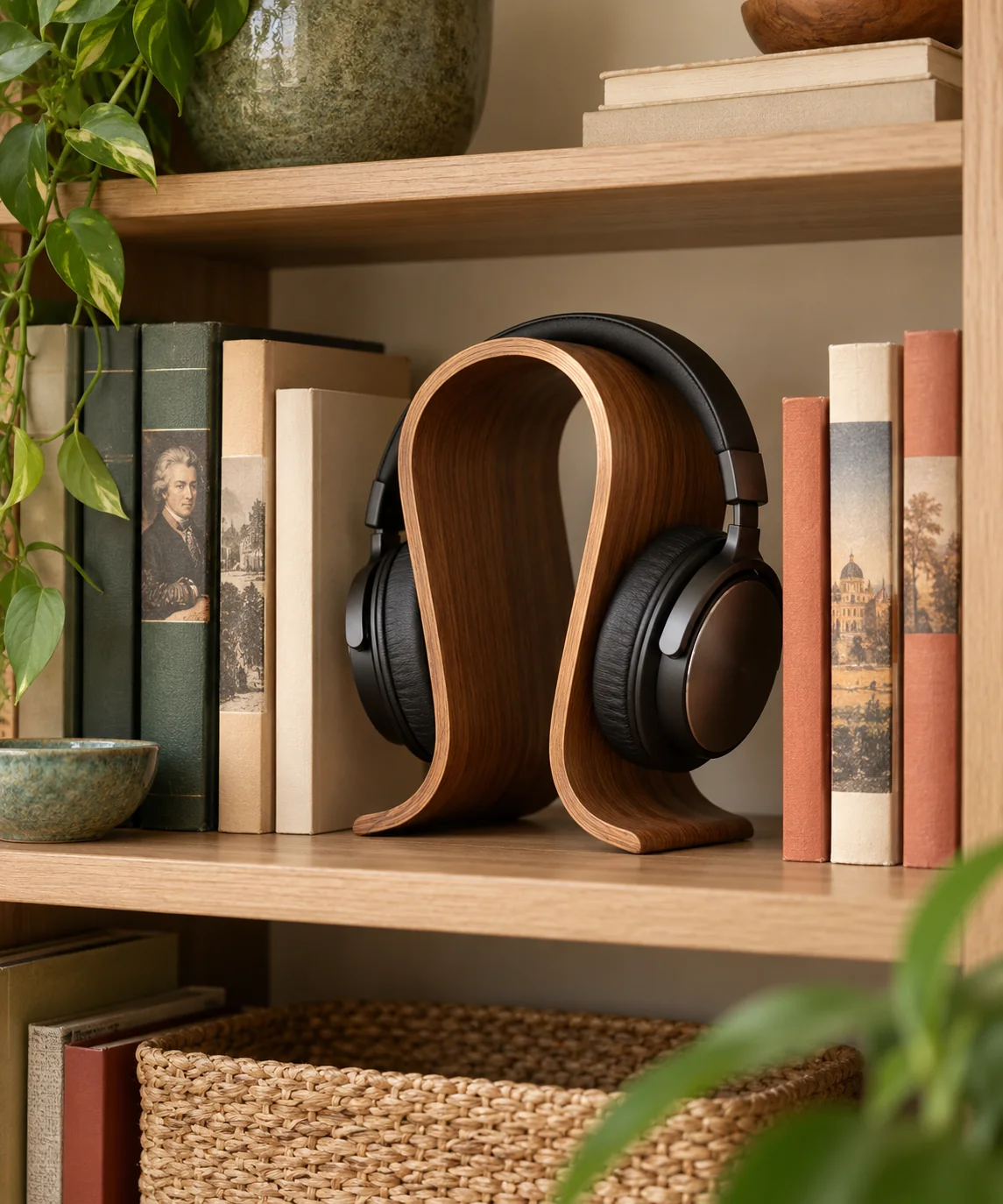
Select a Mid-Tier Cubby for Ergonomics
Place your audio components on a shelf situated between waist and chest height. Storing headphones too low invites accidental kicks or pet interference, while placing them above shoulder level makes docking awkward and risks pulling gear off the shelf. A mid-tier cubby provides natural sightlines and easy one-handed retrieval while seated or standing. Check the physical shelf depth against the manufacturer dimensions beforehand to ensure both the headphone arch and the amplifier or audio interface sit fully within the cubby boundary without overhang.
Flank Gear with Structured Vertical Books
Anchor the technology visually by placing tight rows of vertical paperbacks or hardcovers on either side of the audio unit. Using volumes with consistent spine heights, such as reference books or biographies, creates clean structural borders that frame the bentwood or metal headphone stand. This arrangement prevents the equipment from looking like temporary tabletop drift. Keep the book rows firmly seated using heavy, simple bookends so volumes never lean inward against delicate headphone earcups or audio knobs.
Manage Headphone Cables Passively
Exposed, looping cords can snag on book covers and create immediate visual disorder. Coil headphone cables into a relaxed, loose loop when not in use, securing them with a reusable hook-and-loop strap rather than wrapping them tightly around the stand or stretching the internal copper wiring. If the audio unit features rear output lines, guide them flat along the back panel seam. Avoid running cables across book spines; keep wiring confined along the shelf base to preserve clear pathways for book retrieval.
Follow Manufacturer Ventilation Guidelines
Even compact headphone amplifiers, digital-to-analog converters, and audio receivers generate warmth during active operation. Consult the manufacturer's manual for recommended ventilation clearances and never pack paperbacks directly against equipment cooling vents or top chassis panels. Maintaining open airflow around the unit prevents heat buildup from drying out book paper or causing internal electronic components to throttle. Never stack books or papers directly atop an active audio chassis.
Establish Daily Docking and Maintenance Routines
Dust settles quickly on audio dials and porous headphone ear pads. Keep a dedicated soft brush or microfiber cloth nearby to dust equipment surfaces and adjacent book tops during routine cleaning. Establish the habit of returning headphones to the curved stand immediately after listening to prevent band deformation. Periodically check that factory rubber feet beneath the stand and amplifier remain intact, preventing finish transfer, vibration, or scratching on the wooden shelf surface over long periods.
YOUR STARTING POINT
A little checklist.
Original editorial guidance. Images are AI-generated concepts, not photographs of completed projects. Our sources and approach.
Questions to consider
Can bookshelf wood be damaged by heat from a small audio amplifier?
Most compact amplifiers dissipate heat safely if you adhere to the manufacturer's ventilation clearances. Never enclose active components tightly between book spines or block ventilation grilles, and ensure the unit rests on its original factory feet to permit airflow underneath.
Can I hang headphones from an adhesive hook on the shelf side instead?
Adhesive hooks can damage shelf veneer or drop gear if adhesive fails. A freestanding bentwood stand inside a cubby distributes headband weight evenly and shields earcups from bumps or snagging hazards.
How do I blend modern audio gear with vintage or aged book spines?
Choose a headphone stand crafted from bentwood or matte black metal that echoes shelf tones. Grouping the gear beside clothbound volumes or neutral paperbacks softens mechanical contrast without hiding the equipment.