Dining Nooks · THE GUIDE
Incorporate Front-Facing Foot Rails on a High-Counter Dining Nook
Dining at counter-height surfaces creates a relaxed, sociable atmosphere, but dangling legs can lead to restlessness during longer meals. Providing reliable foot support allows diners to shift positions comfortably and maintain a relaxed seated posture. While some kitchen islands and high tables feature built-in foot rests, others lack integrated foot support entirely. Choosing appropriate stools with built-in rungs, evaluating manufactured foot rail hardware, and respecting the structural limitations of island cabinetry helps create a practical dining nook while protecting surrounding finishes and maintaining safe floor circulation.
Jump to the checklist ↓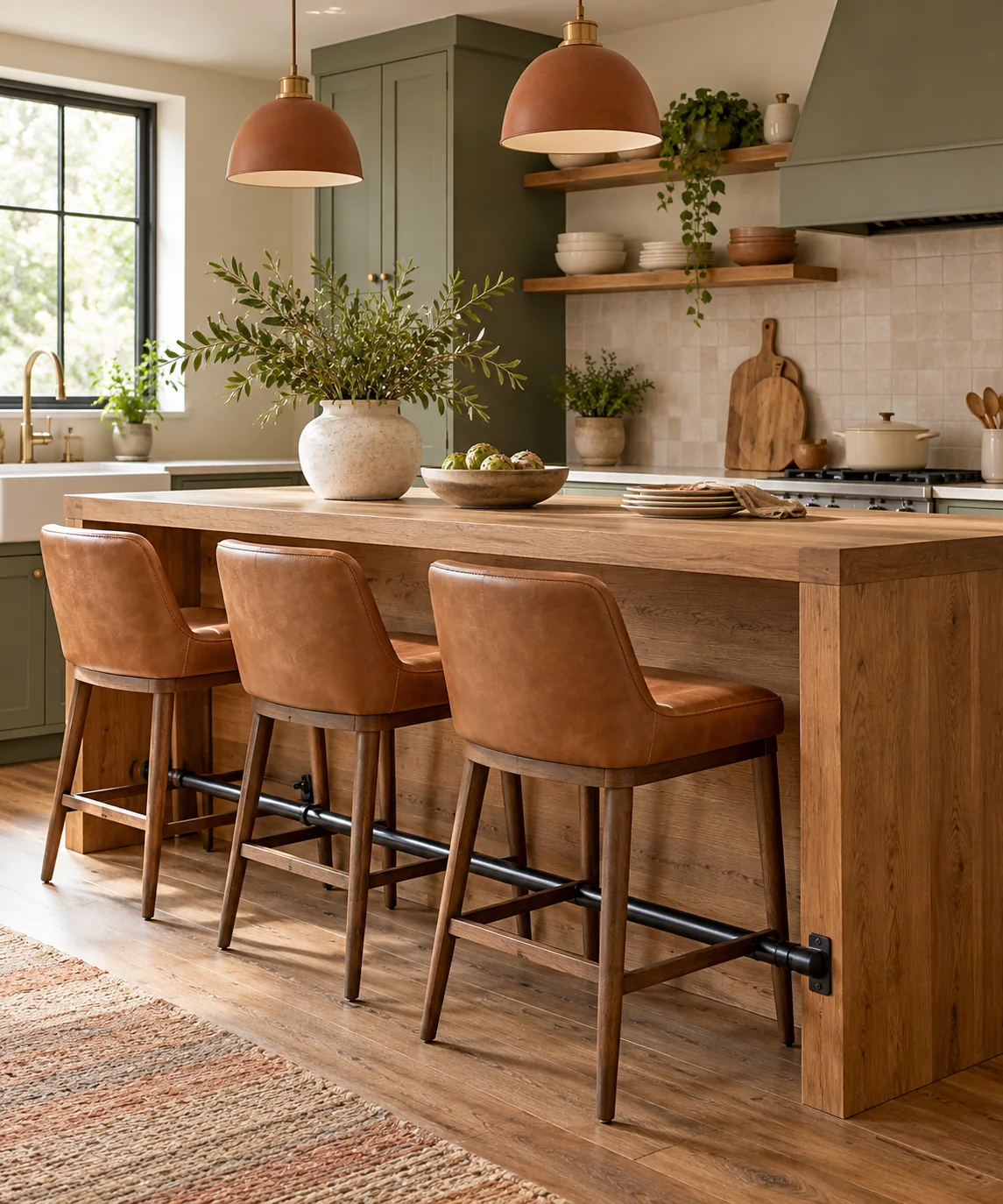
Evaluating Footrest Elevation and Seated Comfort
Counter-height surfaces generally sit thirty-five to thirty-six inches high, while bar-height counters reach forty-one to forty-two inches. For comfortable seating, a footrest should sit at a height that allows the diner's feet to rest comfortably without pressing thighs against the counter underside. When selecting stools or standalone counters, look for foot rails positioned roughly seven to ten inches above the floor for standard counters, and ten to twelve inches for taller surfaces. Stools offering multiple rung heights accommodate household members of different heights effectively.
Understanding Structural Backing and Load Limitations
A fixed foot rail must endure considerable downward and shear force from resting feet, but standard drywall half-walls and cabinet toe kicks are rarely reinforced for dynamic passenger loads. Surface mounting a rail directly to unreinforced drywall or thin cabinet skins can cause cracking, screw tear-out, or finish damage. If your island cabinetry was not manufactured with internal blocking or a reinforced foot-rest ledge, avoid driving heavy brackets into unfinished wall cavities. Instead, rely on sturdy counter stools featuring robust, factory-welded or bolted foot rungs.
Material Finishes and Everyday Scuff Resistance
Footrests endure constant contact with footwear, making finish durability an important consideration. Durable powder-coated steel, brushed stainless steel, and solid hardwood rungs withstand abrasive shoe soles far better than decorative plated metals or painted softwood. Bright polished brass or lacquered finishes tend to show scuffs, chipping, and uneven wear patterns over time. Choosing matte, textured, or naturally resilient materials minimizes visible wear and keeps the dining area looking well-maintained with routine cleaning.
Coordinating Stool Rungs with Island Architecture
When counter stools already incorporate foot stretchers, adding an architectural rail to the cabinetry can create awkward legroom interference. Diners may accidentally wedge feet between the stool rung and the island structure, or find their feet crowded by overlapping supports. Before adding any fixed hardware, assess how chosen stools interact with the counter overhang. Ensuring sufficient knee clearance—typically ten to twelve inches of horizontal overhang—prevents legs from feeling constricted against the island face.
Walkway Clearances and Tripping Considerations
Any hardware projecting from a dining counter must remain strictly within the protected footprint of the overhang. An exposed rail protruding past the edge of an island end panel creates a sharp snagging hazard for clothing, apron strings, and passing shins in high-traffic kitchen corridors. Choose hardware designs with smooth, capped ends that terminate flush inside the cabinet profile. Remind household members that foot rails and stool rungs are designed only for seated support, not as step-up platforms for reaching high cabinets.
YOUR STARTING POINT
A little checklist.
Original editorial guidance. Images are AI-generated concepts, not photographs of completed projects. Our sources and approach.
Questions to consider
Can I mount a foot rail to an existing drywall breakfast bar wall?
Drywall half-walls typically lack the internal structural blocking needed to support repeated foot pressure. Without heavy timber backing designed into the wall framing, reliance on stools with built-in rungs is much safer and avoids wall damage.
What finish is most durable for foot-contact surfaces?
Brushed stainless steel, commercial powder coats, and dense hardwoods resist shoe abrasion effectively. Polished or thinly plated finishes tend to scratch and wear unevenly under daily contact.
How much overhang is needed to use a foot rail comfortably?
Counter seating generally requires ten to twelve inches of clear overhang depth so knees and feet have sufficient room to rest without hitting the vertical cabinet face or protruding awkwardly into the room.