Bookshelf Styling · THE GUIDE
Incorporate Maintenance Manuals and Utility Tins into Utility Room Shelves
Open shelving near a laundry or utility zone often becomes an untamed repository for household operating guides, loose fasteners, and appliance warranties. Without an organizing structure, limp booklets curl in humid air, and miscellaneous hardware scatters across open surfaces. By uniting utility literature in upright holders alongside durable, lidded metal tins, you can create a reliable reference depot that looks tidy and purposeful. This guide demonstrates how to curate repair literature, balance utility containers on open shelves, protect paper from laundry ambient moisture, and maintain quick access for everyday home fixes.
Jump to the checklist ↓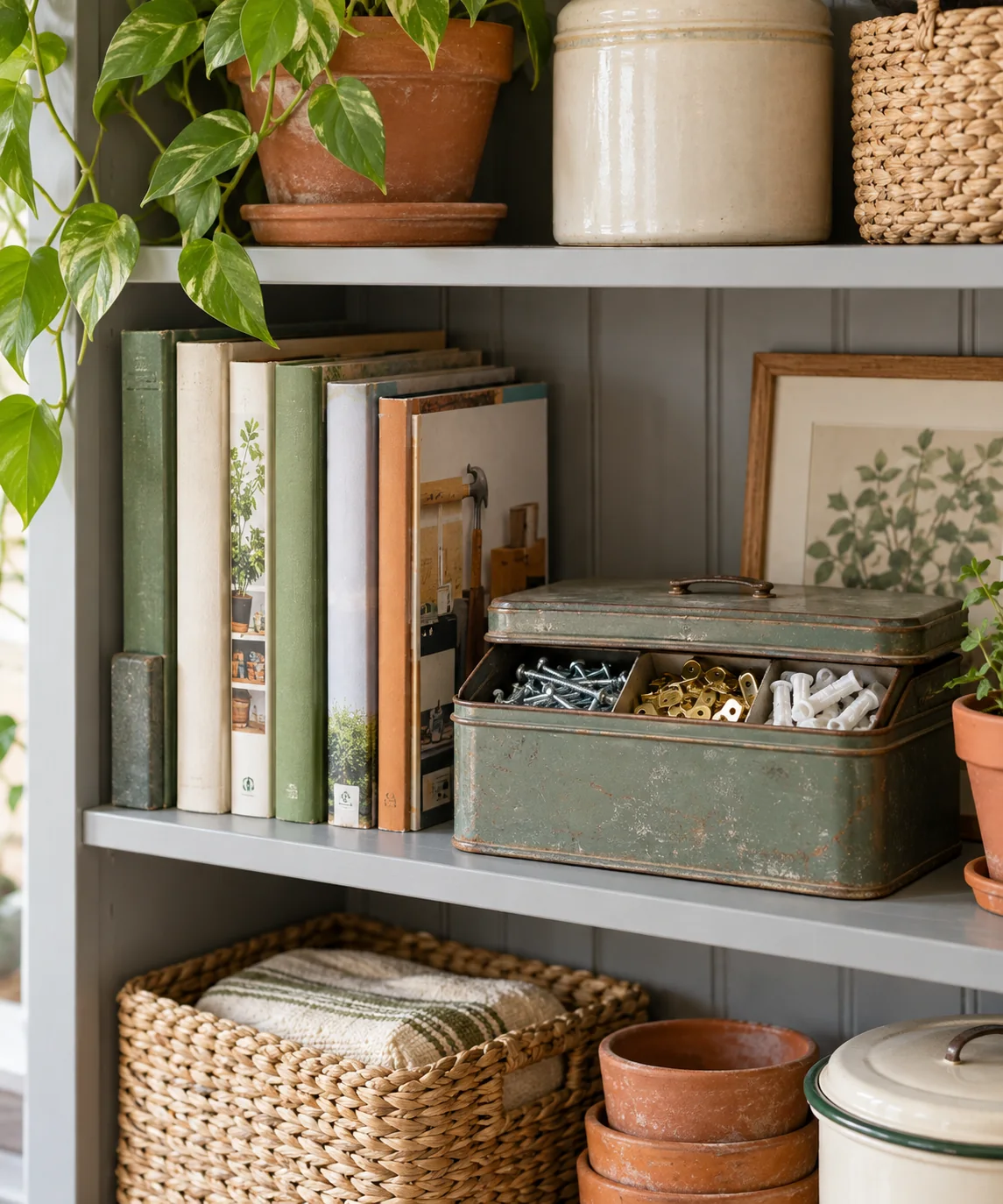
Sorting and Consolidating Household Paperwork
Collect appliance operating instructions, plumbing documentation, and structural home manuals before organizing utility storage. Discard obsolete documentation for equipment no longer in the home, and file essential multi-language leaflets into labeled folders. Group lightweight booklets inside rigid magazine files or place them between heavier home-maintenance reference books. This vertical arrangement prevents thin paper from slumping across open shelves and presents an orderly, functional reference station alongside hardware tins.
Repurposing Metal Tins for Fastener Storage
Lidded utility tins offer enclosed, opaque storage for small items like wall anchors, spare picture hooks, washers, and hex keys. Unlike clear plastic bins, metal containers hide small visual clutter while keeping components contained. Inspect pre-owned tins for sharp burrs, loose hinges, or internal oxidation before placing them in service. To reduce noise and prevent hardware from scratching the metal interior, line the bottom of each tin with heavy paper, cork, or a thin rubber liner.
Managing Environmental Exposure and Airflow
Utility rooms and laundry areas frequently experience fluctuations in ambient humidity and temperature from appliances. Position paper manuals and metal tins away from direct water sources, washing machine supply lines, and dryer exhaust paths. Maintain open space behind shelving and avoid pushing paper directly against uninsulated exterior masonry walls, where temperature differentials can encourage surface moisture accumulation. In consistently damp areas, monitor stored paper periodically for mustiness or warping.
Arranging Heights and Functional Visual Zones
Establish an orderly shelf configuration by placing taller binders and reference guides on one end, stepping down to smaller booklets and manual holders. Position hardware tins on the opposite side to balance the shelf visually. If stacking tins, limit the stack to two containers of graduated sizes, placing the wider tin at the base. Restricting stack height ensures lower tins remain accessible without creating awkward handling or tipping hazards when retrieving fasteners during quick home repairs.
Labeling and Routine Maintenance
For utility storage to remain useful across the household, containers must be clearly identified. Affix embossed adhesive labels or durable card tags to the front rim or lid of each tin to identify its contents at a glance. Review paper files once a year to discard expired warranty papers and return stray hardware to proper compartments. Wipe metal tins occasionally with a dry cloth to prevent dust and ambient moisture from settling on exterior seams.
YOUR STARTING POINT
A little checklist.
Original editorial guidance. Images are AI-generated concepts, not photographs of completed projects. Our sources and approach.
Questions to consider
Can I keep heavy tools in vintage utility tins?
Reserve lightweight hardware like anchors, wire, and brackets for thin metal tins. Heavy hand tools such as wrenches or hammers can deform lightweight tinplate, distort lid alignments, and make handling unwieldy on open shelves.
How do I minimize manual curling in a utility room?
Store booklets inside rigid magazine files or between sturdy bookends to provide structural support, and ensure the room has adequate general ventilation. If the utility space experiences chronic high humidity, consider moving paper records to a drier living area or using sealed storage containers.
What shelf depth works well for manuals and storage tins?
A shelf depth of ten to twelve inches generally accommodates standard warranty binders and common hardware tins while leaving sufficient margin to grasp containers securely without shelf overhang.