Bookshelf Styling · THE GUIDE
Incorporate Matching Lidded Canvas Boxes on the Lowest Shelf
Open bookshelves often suffer visual clutter when utility items like spare chargers, user manuals, and loose office supplies share space with curated books. Placing uniform, lidded canvas boxes along the lowest shelf establishes a grounded visual anchor while quietly hiding high-turnover clutter. Lower shelving naturally receives less direct sightline scrutiny, making it the most sensible zone for opaque storage. By opting for tailored, matching fabric containers, you retain a cohesive architectural base that balances lighter, more open book displays above. This reversible setup creates practical, accessible utility storage without disturbing upper shelf styling.
Jump to the checklist ↓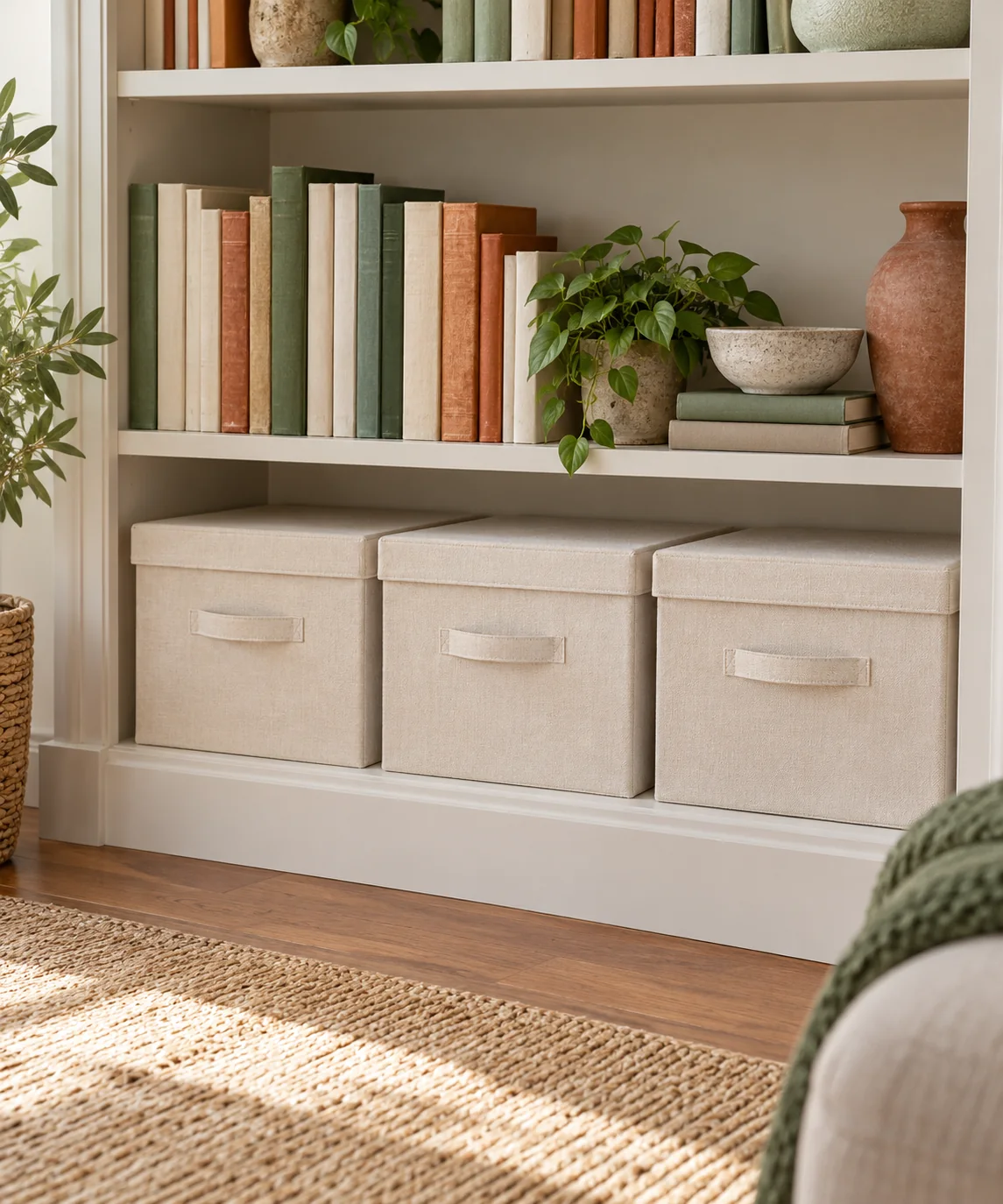
Measuring Shelf Clearances and Box Widths
Measure the interior shelf height, depth, and total width before purchasing or deploying fabric boxes. Aim for at least one inch of vertical clearance above each lid to allow smooth removal without scraping shelf paint or veneer. Calculate total width to ensure boxes sit comfortably edge to edge or leave deliberate, uniform gaps. For example, a thirty-six-inch wide shelf comfortably accommodates three eleven-inch boxes with slight gaps. Verify depth matches the shelf face to prevent protruding edges that break the clean horizontal profile.
Sorting Utility Items by Frequency and Weight
Group your items logically across the boxes before packing them. Dedicate one box exclusively to coiled cables, label cords with simple tags, and place denser backup hardware at the very bottom. Reserve a second box for appliance manuals, warranties, and file folders, storing them vertically like catalog files for immediate access. Use a third box for pens, tape, and loose stationery organized inside shallow inner trays. Keeping dense, heavy paper flat prevents fabric boxes from bulging along the sides over time.
Testing Fabric Texture and Color Harmony
Select a canvas weave that echoes surrounding furnishings to keep the lower shelf grounded yet understated. Natural cream, soft grey, or unbleached linen textures diffuse room light smoothly, softening the rigid lines of wooden uprights. Test fabric swatches or existing storage bins against your bookcase finish under daytime and evening lighting. Avoid high-contrast patterns, which draw the eye down away from reading material. A consistent textile finish across all bottom boxes acts as an architectural plinth, enhancing the visual weight of the base.
Maintaining Structure and Preventing Fabric Sag
Canvas storage bins without rigid internal support panels tend to deform under heavy loads or frequent pulling. Inspect existing containers to ensure reinforced cardboard or fiberboard baseboards sit firmly against the bottom seams. Avoid overstuffing boxes with irregularly shaped electronics, which can push against canvas walls and distort straight edges. When pulling a box forward, support the base with one hand rather than pulling solely on fabric tabs, which reduces mechanical strain on stitched handles and maintains crisp corner seams over months of use.
Routine Editing and Dust Management
Because bottom shelves collect floor dust quickly, fabric containers require routine upkeep to remain pristine. Vacuum box surfaces quarterly using a clean, soft brush attachment on low suction to lift settled dust from woven fibers. During these cleanings, open each lid to purge expired manuals, obsolete cables, and duplicate stationery. Rotating internal contents seasonally prevents hidden clutter creep and ensures you do not keep outdated technology manuals. Wiping down the bare shelf surface before reinserting containers keeps the base fresh and tidy.
YOUR STARTING POINT
A little checklist.
Original editorial guidance. Images are AI-generated concepts, not photographs of completed projects. Our sources and approach.
Questions to consider
Can I use open canvas baskets instead of lidded boxes?
Lidded boxes offer superior visual calm because they conceal top-down clutter completely. Open baskets reveal tangled cords and loose paper when viewed from standing height, disrupting the neat, grounded foundation that lidded designs provide for open shelving displays.
How do I label canvas boxes without ruining their appearance?
Use tied cardstock tags looped through handle grommets rather than adhesive stickers that leave residue on fabric. Alternatively, assign specific categories to specific positions, keeping cable storage consistently on the left and paper manuals on the right.
What should I do if my shelf depth is too shallow for standard boxes?
Seek shallow desktop organizers or photo storage boxes wrapped in linen rather than standard cube containers. Always confirm the container depth is equal to or slightly less than the shelf depth to avoid accidental bumps in walkways.