Dining Nooks · THE GUIDE
Incorporate Open Base Cubbies for Baskets Beneath Banquette Seating
Banquette seating provides generous dining capacity, but accessing storage beneath lift-up seat lids often proves frustrating during daily meal routines. Every retrieval requires clearing table settings, shifting heavy cushions, and asking seated guests to stand. Integrating open base cubbies outfitted with slide-in woven baskets solves this operational bottleneck. Diners can effortlessly retrieve cloth napkins, table runners, and pantry overflow without disrupting anyone at the table. By transforming dead baseboard space into modular drop zones, this design maximizes storage efficiency while keeping the dining nook visually organized, uncluttered, and practical for busy households.
Jump to the checklist ↓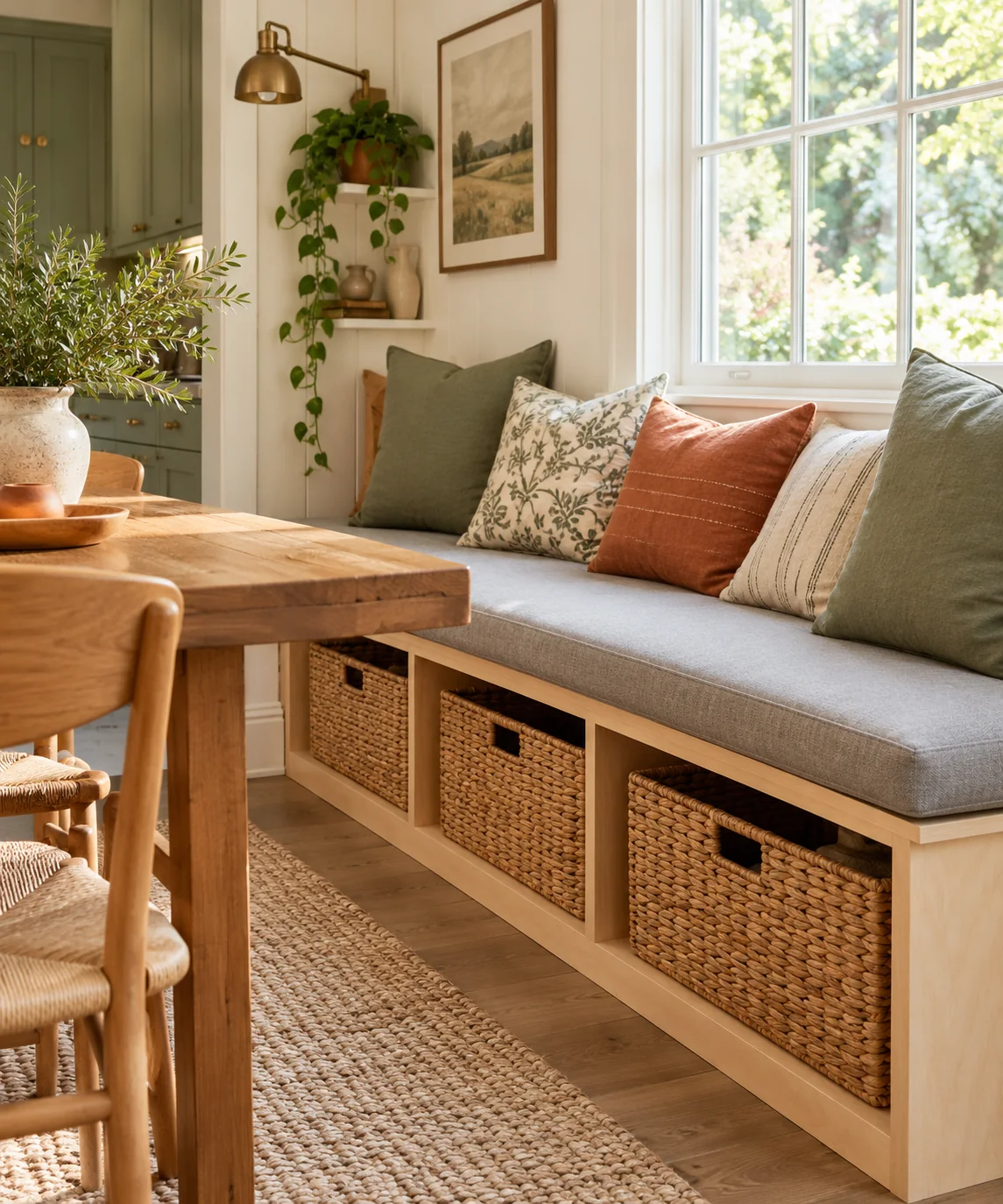
Accessible Storage for Dining Essentials
Lift-up banquette lids function reasonably well for rarely accessed household linens, but they create friction during everyday meal routines. If an extra napkin or placemat is needed while people are eating, accessing a top-hinged compartment requires shifting cushions, clearing nearby place settings, and asking diners to move. Open lower cubbies resolve this disruption by providing straightforward horizontal access beneath the seating platform. Positioned below the knee line, these openings allow diners to slide out storage baskets smoothly, keeping everyday table linens, paper goods, and serving accessories accessible without disturbing mealtime conversation or rearranging the tabletop.
Basket Dimensions and Structural Planning
Integrating lower cubbies requires balancing storage volume with seating stability. Before altering or building any bench base, verify load-bearing requirements with a qualified carpenter or consult the seating manufacturer's framing specifications. Built-in dining benches must reliably support the weight of multiple seated adults, which requires sturdy vertical supports between openings. When selecting modular bins or woven baskets, allow practical clearance along the sides and top of each opening so containers slide freely without catching on the frame. Measuring both the interior usable space and the exterior bin dimensions ensures a clean fit without compromising the structural integrity of the bench.
Protective Liners and Glide Materials
Natural fiber baskets woven from seagrass, water hyacinth, or rattan feature textured surfaces that can abrade painted interior woodwork and catch on delicate woven textiles. Choosing baskets fitted with removable, washable fabric liners protects stored table runners and cloth napkins from snagging on rough splints. To safeguard the interior shelf surfaces against scuff marks from repeated sliding, attach smooth adhesive felt pads or glides to the bottom corners of each container. This low-profile barrier minimizes friction, dampens noise, and helps maintain the interior finish over extended daily use.
Visual Cohesion and Concealed Storage
Open lower shelving without containers can quickly look untidy if miscellaneous dining items and household supplies are left in plain view. Utilizing uniform, opaque storage baskets establishes a tidy and organized rhythm across the base of the bench. Matching baskets conceal varied items such as activity books, cloth napkins, and serving essentials behind a cohesive texture. Selecting consistent materials and neutral tones across all lower openings maintains visual calm within the dining nook, preventing the storage area from appearing cluttered or disjointed.
Ergonomic Recess and Heel Clearance
A frequent design mistake with lower bench storage is positioning container faces flush with the front edge of the seat. Without an adequate toe recess, seated diners naturally bump their heels against the baskets, causing unnecessary wear and diminishing seating comfort. Setting the cubby openings back several inches behind the front edge of the bench seat creates a protective overhang. This recess provides ample clearance for natural foot movement while dining and keeps the storage containers clean, scuff-free, and protected from accidental kicks.
YOUR STARTING POINT
A little checklist.
Original editorial guidance. Images are AI-generated concepts, not photographs of completed projects. Our sources and approach.
Questions to consider
How do open lower cubbies compare to hinged banquette storage?
Open lower cubbies provide immediate side access to dining essentials without requiring diners to stand up or clear cushions from the bench. Hinged storage benches remain suitable primarily for bulky, rarely accessed items that do not require retrieval during meals.
What dining essentials work best in slide-out under-bench baskets?
Everyday table linens, cloth napkins, woven placemats, and dry paper goods are well-suited for under-bench bins. Avoid storing excessively heavy items at floor level, as lifting heavy containers from low angles can cause unnecessary physical strain.
How can you prevent seated diners from kicking storage baskets?
Designing the cubby face with a recess set back several inches beneath the front edge of the bench seat provides essential foot and heel clearance, preventing seated diners from coming into contact with the baskets.