Household Reset Routines · THE GUIDE
Indoor Plant Foliage Dusting and Moss Pole Moistening
Accumulated household dust on indoor foliage blocks ambient light and reduces the plant's natural transpiration, while dry climbing supports can cause aerial roots to wither. In compact living rooms, establishing a weekly foliage wiping and pole hydration routine preserves plant vigor without creating indoor water mess. By pairing a soft, damp microfiber cloth with a controlled water dispenser or gentle continuous spray bottle, you can clean broad leaves and nourish support poles efficiently. This reset keeps living spaces looking tidy while supporting climbing species without moving large, heavy planters across living room rugs or timber floorboards.
Jump to the checklist ↓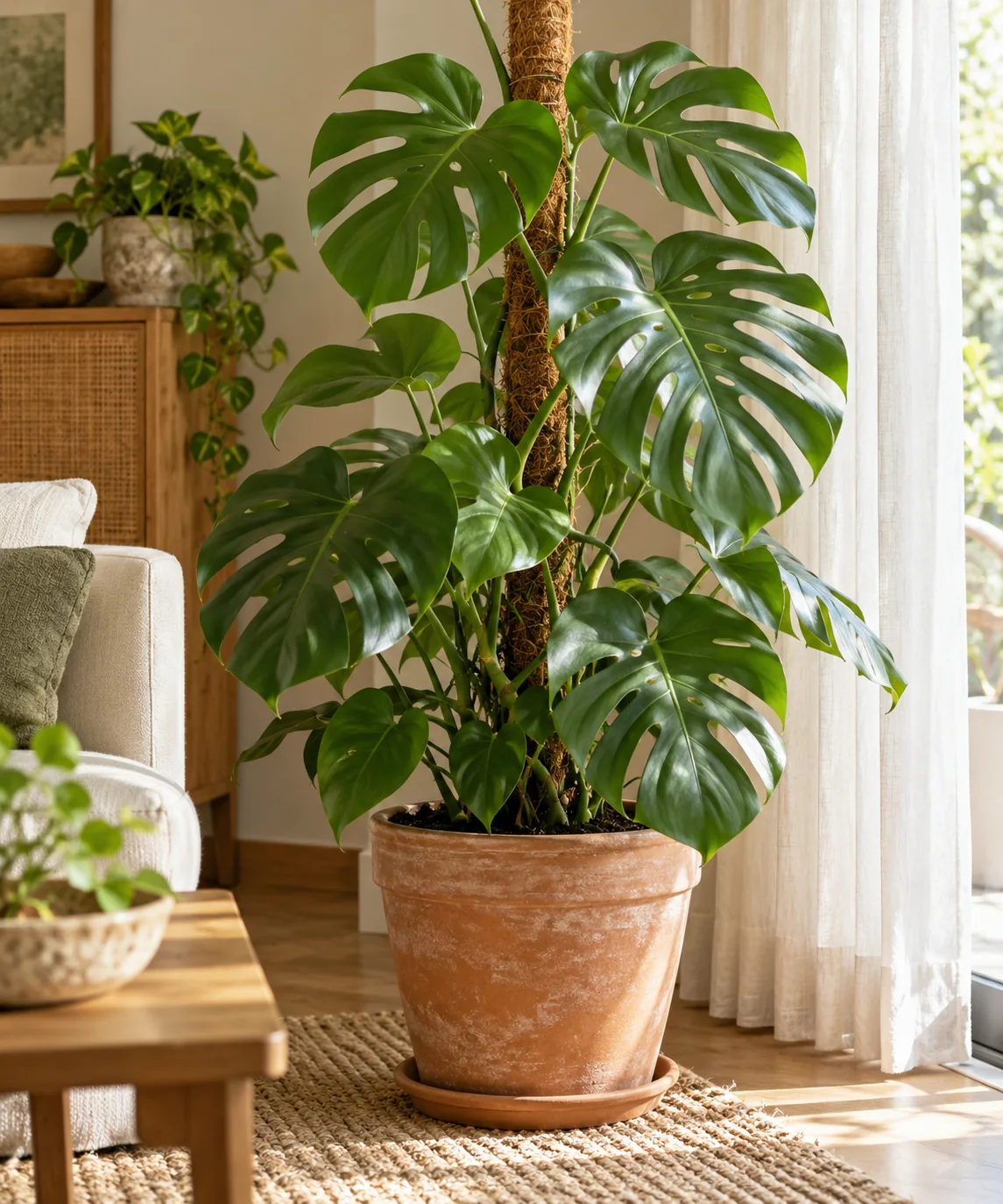
Supporting Leaf Surfaces During Cleaning
Always support the underside of each leaf with your flat palm while gently wiping the top surface with a damp microfiber cloth. This counter-pressure prevents accidental snapping of delicate petioles or tearing along the leaf margins. Work from the leaf base outwards toward the tip in smooth strokes. Rinse the cloth in clean, lukewarm tap water frequently so collected dust is not merely dragged across neighboring foliage. Never press down directly on immature or unfurling leaves, as their tender tissue tears easily.
Targeting Undersides and Petiole Junctions
Turn the cloth to inspect the undersides of mature foliage and the crevices where stems meet leaf stalks. While dust settles primarily on upper surfaces, household particulates and lint collect around junction nodes. A quick upward wipe cleans these lower areas and lets you inspect stem health without harsh friction. Keeping these junctions clean reduces residue accumulation around aerial root nodes. For smaller leaves, pinch the cloth gently between thumb and forefinger, gliding gently along the length of each stem.
Hydrating Climbing Poles Without Runoff
Moistening coir or sphagnum poles requires controlled application to prevent excess water draining into the potting mix below. Instead of a rapid pour that spills, use a narrow-spout watering can or slow drip bottle applied to the top of the pole. The moisture slowly wicks downward into the fibers, softening them for emerging aerial roots. If water begins running down the pole faster than absorption occurs, pause immediately. This measured approach protects root systems from involuntary overwatering during routine surface care.
Trialing Cloth Materials and Catch Basins
Before purchasing specialized plant-care tools, test existing household items to manage water drops. A worn, washed cotton tee or lint-free flat-weave dish towel works just as well as commercial microfiber. When moistening the upper sections of tall moss poles, slip an old folded towel around the base of the main stem directly over the soil line. This temporary catch barrier absorbs accidental splashes, protecting decorative top dressings, baseboard trim, and nearby living room carpets from muddy drips.
Routine Maintenance and Spatial Clearances
Schedule foliage dusting and pole moistening early in the day so moisture on foliage dries before evening light fades. Maintain comfortable clearance between broad leaves and window treatments so fabric does not drag across damp foliage or catch on petioles as drapes open and close. Keep plants positioned away from active heating vents or air conditioning drafts, which accelerate support pole desiccation. Regular observation helps you time pole rehydration before fibers turn completely hydrophobic.
YOUR STARTING POINT
A little checklist.
Original editorial guidance. Images are AI-generated concepts, not photographs of completed projects. Our sources and approach.
Questions to consider
Can I use commercial leaf shine sprays during dusting?
Leaf shine sprays contain oils or waxes that can clog leaf pores and attract heavier dust over time. Plain lukewarm water applied with a damp cloth cleans effectively without leaving residue or interfering with natural leaf transpiration.
How often should indoor foliage be wiped and poles moistened?
Wipe leaves every two to four weeks depending on ambient indoor dust levels. Climbing poles require moisture more frequently, often once or twice weekly, to keep fibers receptive to expanding aerial root tips without drenching the potting soil.
What if my moss pole dries out completely between waterings?
Completely dry coir or moss repels water initially. Mist the pole surface lightly to break surface tension, wait five minutes, then slowly apply water via a narrow spout down the core to re-establish capillary moisture flow.