Compact Home Offices · THE GUIDE
Install a Fold-Down Bamboo Table Inside an Enclosed Laundry Bay
An enclosed laundry closet often contains unused wall or corridor space opposite laundry equipment. Introducing a fold-down bamboo surface can provide a temporary utility and work surface without permanently obstructing access to washing machines. Bamboo offers a firm, dense surface suitable for sorting clean textiles or setting up a laptop for brief tasks, but utility closets present unique environmental factors including humidity, heat, and tight clearances. Evaluating appliance clearances, building guidelines, and moisture levels before selecting and placing a fold-away surface ensures the area remains practical for core household chores while safely supporting periodic desktop use.
Jump to the checklist ↓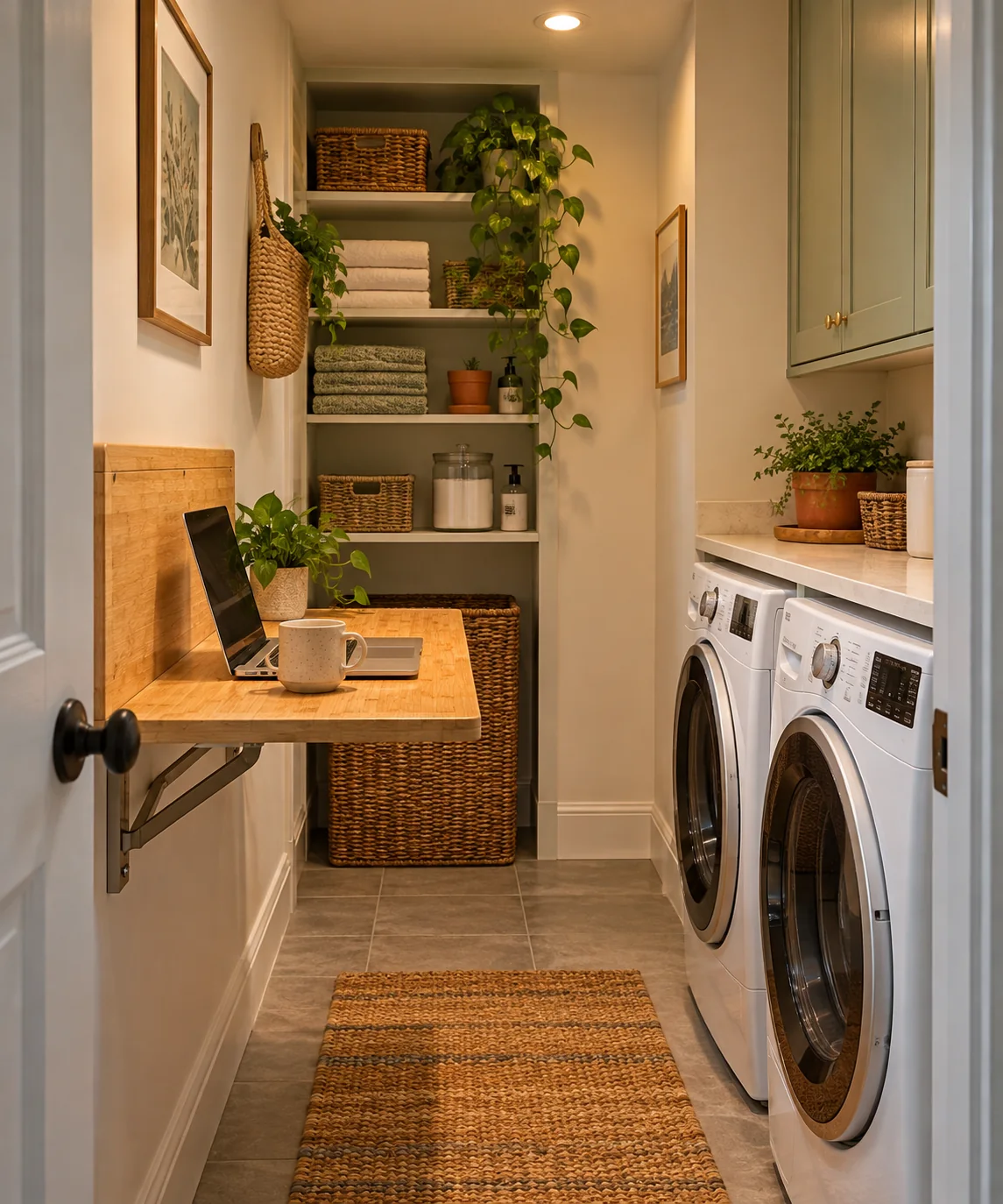
Assessing Passageway and Appliance Clearances
Before considering any wall-mounted folding surface, map the full swing path of washer and dryer doors along with primary access routes. Front-loading appliances require substantial front clearance to load and unload baskets comfortably. When a drop-down surface is in its horizontal position, verify that it leaves adequate standing and passing room so you are not trapped against machine doors. The collapsed profile must also lie sufficiently flat against the perimeter wall so it does not catch on laundry baskets, clothing, or individuals moving through the utility space.
Evaluating Bamboo Surfaces in Utility Environments
Bamboo panels and butcher-block surfaces are valued for their structural rigidity and natural appearance, but performance inside a laundry closet depends heavily on the factory finish. High relative humidity and temperature swings from dryers can cause unsealed or edge-glued bamboo to expand, warp, or separate over time. Choose a pre-finished, moisture-sealed panel intended for interior work surfaces, and inspect edge banding regularly. Rounded outer corners are advisable to prevent snags on passing garments or laundry hampers.
Moisture and Lint Management for Electronics
Operating sensitive electronics in a laundry space introduces risks from airborne lint, steam, and ambient warmth. Washing machine doors release humid air when opened after warm cycles, while dryer exhausts can shed fine fibers if seals or ducting are imperfect. Avoid running high-heat dryer cycles while working at the surface with open laptops or peripherals. Keep laundry closet doors open during work sessions to promote air exchange, and use a dry microfiber cloth to keep surfaces free of settling fibers before opening equipment.
Ergonomics and Seating in Constrained Areas
Standard office chairs with wide wheelbases rarely fit inside narrow laundry passages and can block fire exits or utility shutoffs. Pair the folding surface with a lightweight, collapsible task stool or plan the surface at an upright height suitable for standing tasks and linen folding. Check that standing or seated positions do not interfere with electrical panels, plumbing shutoff valves, or floor drains. If using a compact stool, verify that it can be stored flat against a nearby wall or in an adjacent closet when laundry cycles run.
Operational Guidelines and Fastener Safety
Mounting any folding mechanism requires consulting building rules, lease terms, and wall construction details, as laundry bay walls frequently conceal high-voltage wiring, plumbing supply pipes, and drainage stacks. Fasteners must secure strictly into verified structural framing members, following the bracket manufacturer's rated load limits rather than general estimates. Periodically examine hinge pins, wall brackets, and latching stops to ensure the surface remains steady under typical loads, and store mobile office accessories in a portable tote so the deck can clear instantly for laundry days.
YOUR STARTING POINT
A little checklist.
Original editorial guidance. Images are AI-generated concepts, not photographs of completed projects. Our sources and approach.
Questions to consider
Can I operate a computer while laundry appliances are running?
It is best to separate computer use from active laundry cycles. Dryers generate heat and airborne lint, while washing cycles can elevate humidity and produce ambient vibration, none of which are ideal for sensitive electronic hardware.
What structural factors must be verified before mounting a fold-down bracket?
Laundry closet walls commonly house water supply pipes, drain stacks, and high-voltage appliance circuits. Wall brackets must be anchored into verified framing members in accordance with hardware manufacturer ratings and local building rules, avoiding blind drilling.
How should bamboo surfaces be maintained around laundry products?
Detergents, stain removers, and bleach can discolor or strip wood and bamboo coatings. Clean accidental spills immediately with a soft cloth dampened with clean water, dry the surface thoroughly, and avoid placing open chemical bottles directly on the bamboo.