Entryway Organization · THE GUIDE
Install a Fold-Down Wall Bench for Occasional Boot Lacing
Narrow entryways present a practical challenge: household members benefit from a steady place to lace boots or change footwear, but permanent furniture can crowd primary traffic paths. A fold-down wall seat offers a compact option that rests near the wall surface when not in use and folds out briefly when needed. Successfully planning this feature requires assessing local hallway clearance expectations, door swing radiuses, and the structural backing of the chosen wall. Rather than treating installation as a casual task, homeowners must consult manufacturer load ratings and qualified professionals to ensure the assembly safely supports dynamic body weight without obstructing household circulation.
Jump to the checklist ↓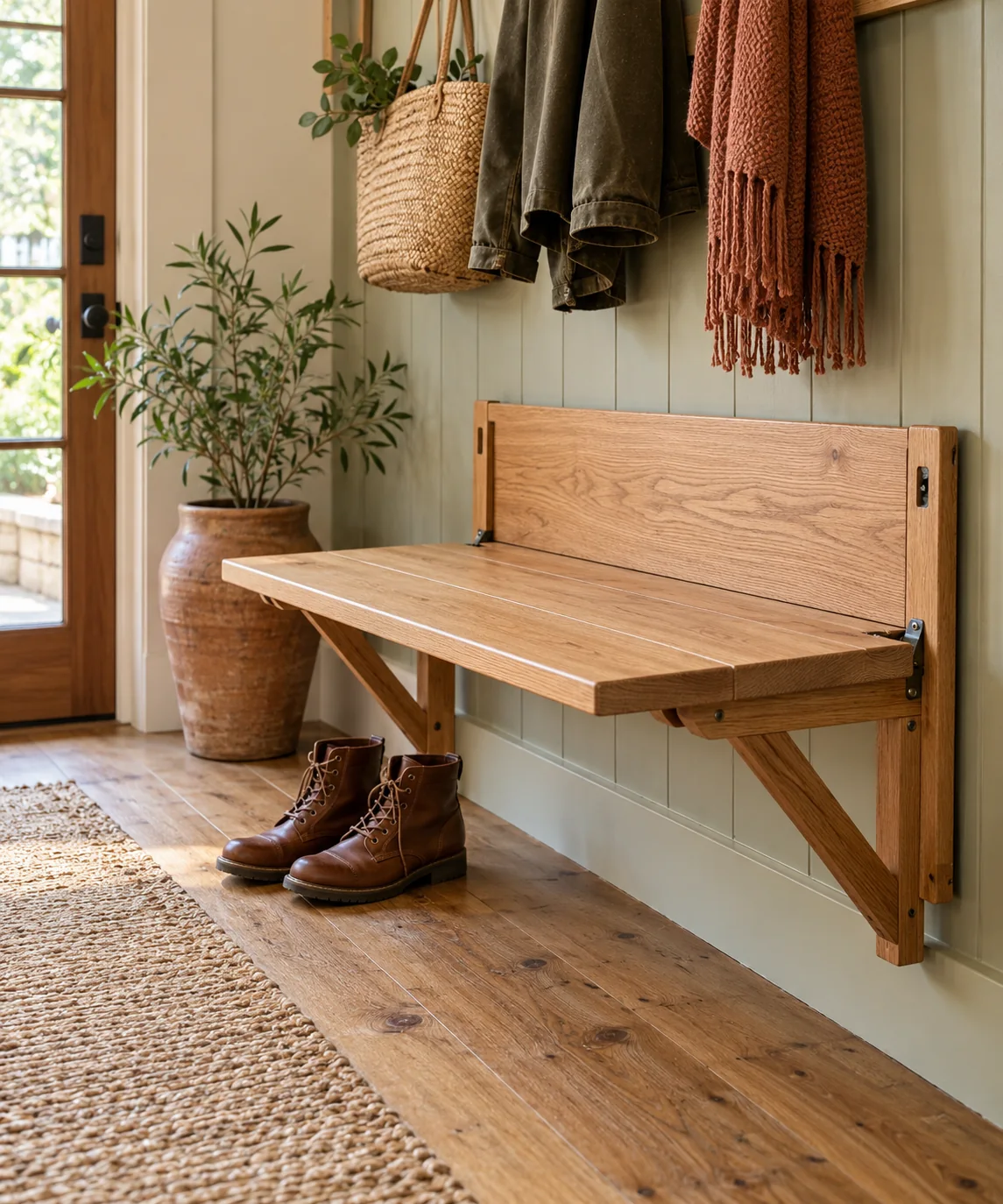
Assessing Hallway Width and Egress Pathways
Before selecting any folding wall seat, evaluate your entryway layout with nearby interior and exterior doors fully open. Wall-mounted seats project into walking paths when lowered, which can compromise everyday flow or conflict with local residential building requirements governing minimum hallway widths. Measure the available corridor space and map out the complete swing arc of adjacent doors using low-tack tape on the floor. Ensure the proposed bench position remains entirely outside door clearance zones and leaves ample, comfortable room for household members to pass safely even when the seat is lowered.
Planning Functional Dimensions and Seat Height
A boot-lacing perch is intended for brief functional use rather than prolonged sitting, so its proportions can remain relatively compact. Seat depths generally range from twelve to fourteen inches, while widths of twenty to twenty-four inches accommodate typical seated postures without extending unnecessarily into the room. Plan finished seat heights to align with conventional chair levels, typically between seventeen and nineteen inches above the floor, depending on user comfort and mobility needs. Confirm that users can easily reach their laces without straining or tipping forward.
Evaluating Manufacturer Ratings and Wall Structure
Because a wall bench must endure the dynamic force of an adult sitting down and shifting weight, hardware selection and wall support are paramount. Folding brackets must carry documented manufacturer load capacities that exceed standard static body weight to handle dynamic movement safely. Standard drywall, hollow plaster, and non-structural partitions cannot support these loads without engineered backing. Inspect wall construction thoroughly, review manufacturer installation manuals, and engage a licensed carpenter or contractor to verify whether framing studs, solid masonry, or supplementary blocking are required.
Testing Traffic Impact with a Physical Mockup
To gauge the real-world impact of a fold-down seat before drilling or securing framing, build a temporary cardboard or foam-board template matching the bench's extended dimensions. Temporarily position the mockup against the wall at the planned height and test both lowered and upright profiles. Walk through the entryway while carrying routine items such as backpacks, bags, and winter outerwear. This simple test highlights unexpected bottlenecks, sharp corners, or potential snag hazards, allowing you to refine the location or reconsider placement without altering wall surfaces.
Routine Inspection and Household Clearances
Any moving mechanical fixture in an active entry corridor requires ongoing attention to remain safe and functional. Establish a routine to check bracket hinge pins, mounting fasteners, and mechanical release catches for loose connections, structural play, or signs of wear. Keep moving joints free of grit by wiping them with a clean dry cloth, following manufacturer lubrication recommendations. Most importantly, ensure household members consistently return the seat to its upright, folded position immediately after tying footwear, keeping the entryway completely open for unimpeded daily movement and emergency egress.
YOUR STARTING POINT
A little checklist.
Original editorial guidance. Images are AI-generated concepts, not photographs of completed projects. Our sources and approach.
Questions to consider
Can a folding bench be mounted directly into hollow drywall?
No. Hollow wall anchors and standard drywall cannot safely withstand dynamic loads created when someone sits down. Manufacturer guidelines and professional installers require anchoring directly into verified structural framing studs, solid masonry, or specially installed wall blocking.
What should be considered regarding household safety and folding mechanisms?
Folding brackets feature hinge joints and release levers that can create pinch hazards. Review manufacturer safety guidelines, select hardware with positive locking catches, and ensure young children are supervised and taught not to operate moving levers independently.
How should the seat surface be maintained in wet climates?
Protect natural timber surfaces with a durable, water-resistant protective finish suited to moisture exposure from damp coats or boots. Wipe away standing water promptly with a soft dry cloth, and avoid harsh abrasive cleaners that could deteriorate the protective seal.