Entryway Organization · THE GUIDE
Planning a Fold-Flat Wall Table for Flexible Entryway Use
In compact foyers, permanent console tables frequently turn narrow hallways into frustrating bottlenecks, particularly when multiple people arrive simultaneously and require space to move comfortably. A wall-mounted fold-flat table offers a flexible surface that delivers drop-zone convenience when opened, yet folds down against the wall when open floor space is needed. This adaptable setup allows you to set down incoming packages, mail, or small daily items during quiet hours, while folding away during peak gatherings. By carefully evaluating pathway clearances, hinge projection, and manufacturer wall-fastening requirements, micro-foyers can gain valuable landing space without compromising corridor circulation.
Jump to the checklist ↓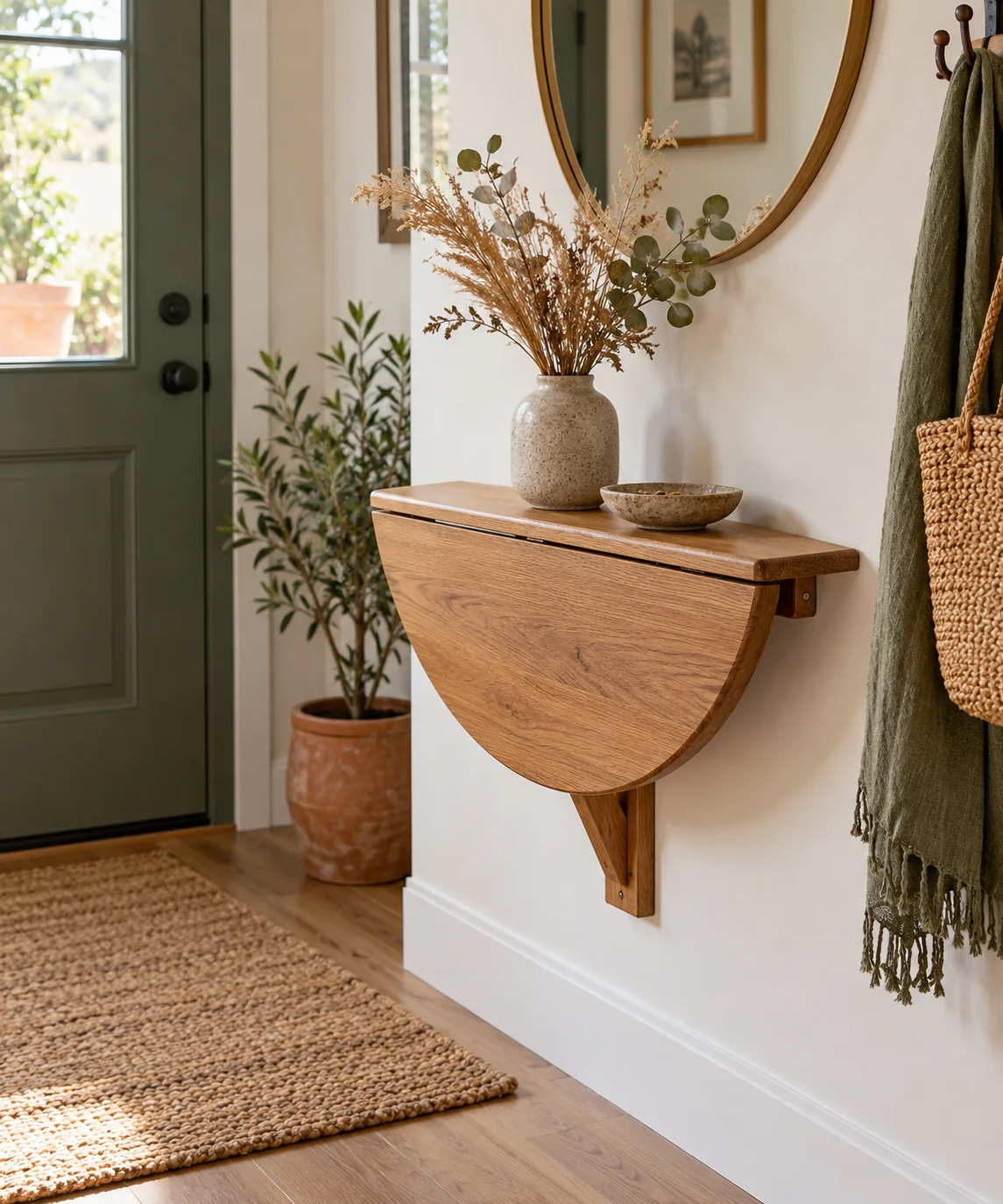
Assessing Pathway Clearances and Door Swings
Corridor planning requires thorough spatial evaluation before choosing a fold-down table. Measure the full width of your hallway and trace the complete operational swing of the entrance door and any nearby closet doors. When the table leaf is elevated, the remaining pathway should permit comfortable passage and comply with local egress expectations or building guidelines. Position the table far enough along the entry wall so an opening door does not contact the edge of the furniture, ensuring that household members can exit and enter smoothly even when items are resting on the open tabletop.
Evaluating Leaf Profiles and Support Hardware
Fold-flat tables typically feature either curved, half-round profiles or rectangular leaves supported by folding brackets or swing-out wooden supports. A rounded or radiused perimeter helps ease movement in tight foyers by eliminating sharp outer corners that can snag coats, bags, or passing sleeves. When reviewing product specifications, check the folded depth measurement from the wall surface. Narrower profiles reduce obstruction in shared corridors, but ensure the hardware locks securely according to the manufacturer's directions when extended.
Managing Daily Surface Loads Responsibly
The primary purpose of a flexible drop-leaf unit in an entrance is short-term transition staging rather than permanent heavy storage. Use the elevated leaf for brief tasks such as sorting daily mail, holding keys in a shallow bowl, or resting a small handheld item while taking off shoes. Avoid using folding wall surfaces for heavy book stacks, ceramic planters, or large shopping bags. Check the manufacturer's stated weight ratings, which depend on wall construction and appropriate fastener selection, and never sit or lean on an extended leaf.
Visualizing the Footprint Before Wall Attachment
Before committing to a specific location, create a full-scale template of the table leaf using cardboard or butcher paper representing both open and folded dimensions. Temporarily position the template against the wall at your preferred surface height, checking that it feels natural for setting down small items. Walk past the mock-up while carrying typical gear, such as work bags or shopping totes, to see how the extended profile impacts your standard traffic line. This visual check highlights potential clearance pinches before any holes are drilled.
Hardware Inspection and Routine Care
Long-term reliability relies on periodic hardware checks and sensible surface upkeep. Routinely inspect the folding brackets, hinge pivots, and wall attachment points to ensure fasteners remain tight and mechanisms engage cleanly. Keep moving joints free of accumulated dust by wiping them gently with a dry microfiber cloth. When lifting the drop-leaf, always verify that both support arms click or lock into their intended positions before placing items on top. Follow the furniture maker's guidelines for wood or laminate finishes to guard against moisture from wet items.
YOUR STARTING POINT
A little checklist.
Original editorial guidance. Images are AI-generated concepts, not photographs of completed projects. Our sources and approach.
Questions to consider
What height is practical for an entryway fold-down table?
Most household consoles sit around typical counter or waist height, often between thirty and thirty-four inches from the floor, but the ideal height depends on household preference, baseboard heights, and reaching comfort. Measure your family's natural drop height while ensuring the folded leaf does not interfere with electrical outlets or floor trim.
How much weight can a wall-mounted folding table support?
Weight capacity varies widely depending on bracket engineering, leaf depth, and the underlying wall structure. Always consult the furniture manufacturer's rated load specifications and follow their fastening guidelines for drywall, masonry, or wall studs. Avoid placing heavy loads, standing luggage, or body weight on cantilevered folding surfaces.
Why consider a rounded profile instead of a rectangular leaf?
A curved or half-round table leaf removes hard 90-degree corners in high-traffic corridors. In tight entryways where people frequently maneuver around one another or carry bulky bags, rounded edges provide smoother passage and reduce the risk of snagging clothing or bumping hips.