Warm Neutral Living Rooms · THE GUIDE
Position a Low Picture Shelf to Conceal Television Wires
A wall-mounted television often introduces visual clutter into a warm neutral living room when power cords and media connections hang visibly beneath the frame. While concealing cables inside wall cavities is not always practical or permitted in rental properties, a shallow picture ledge offers an adaptable decorative alternative. Placed beneath the screen, a ledge can serve as a resting surface for framed art, prints, or shallow decorative trays that visually mask descending cords. By coordinating frame heights, neutral mats, and careful cord routing, you can soften visible technology while respecting wall surfaces and equipment ventilation.
Jump to the checklist ↓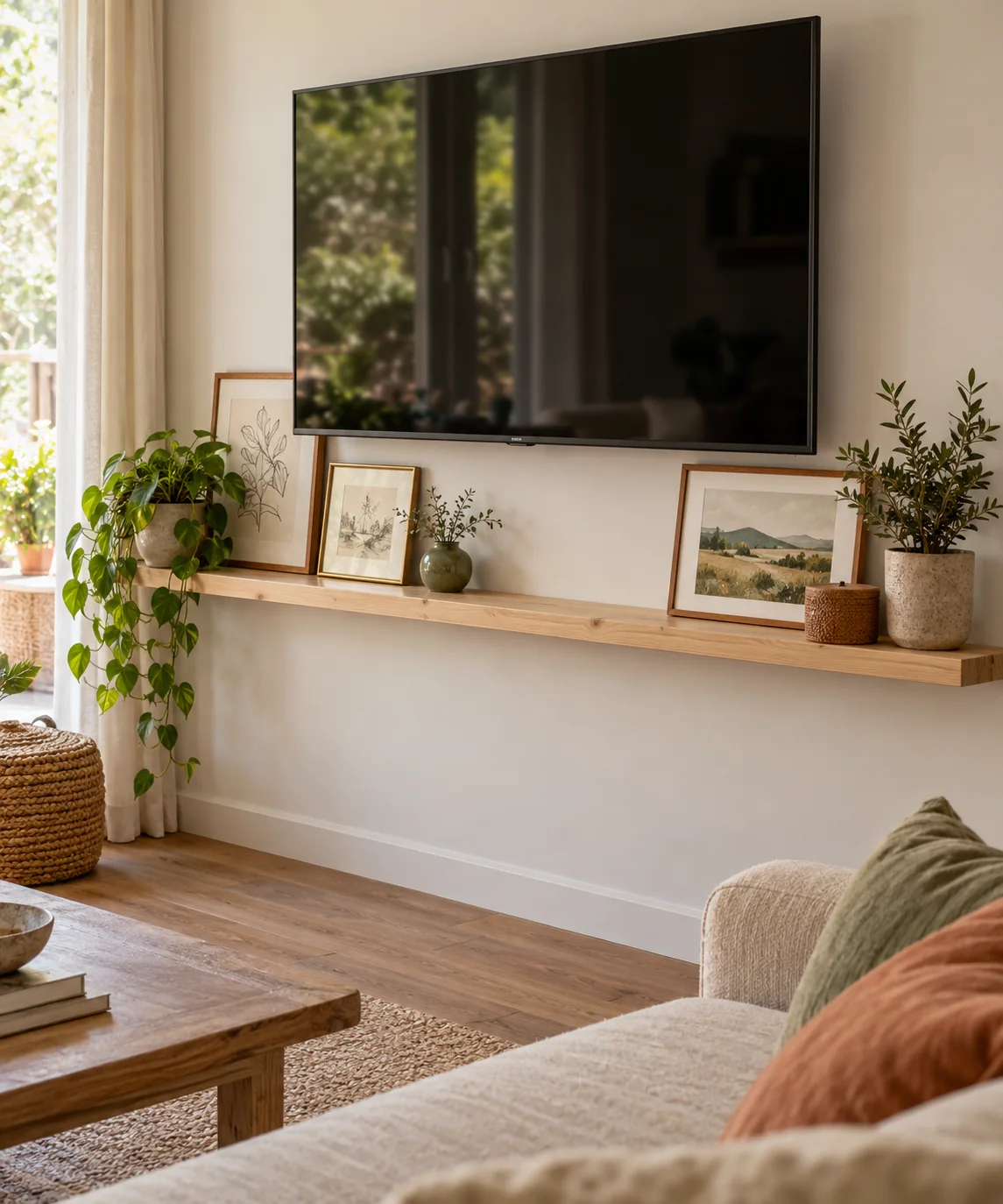
Assessing Shelf Proportions and Vertical Spacing
When planning a ledge beneath a wall-mounted screen, compare the depth of the shelf with the television's profile. A shallow profile prevents the ledge from projecting awkwardly into the room while still offering adequate space to rest frames securely. Spacing beneath the television should be determined by measuring your intended artwork rather than arbitrary rules; the frames need to overlap the gap sufficiently to conceal the cable drop without pressing against the bottom bezel or obscuring ventilation slots. Selecting a shelf width that roughly aligns with the television creates visual balance and anchors the display.
Arranging and Securing Cords Safely
Before arranging artwork on the shelf, gather the cords loosely along the wall surface. Use non-damaging adhesive clips, surface-mounted raceways, or fabric ties designed for electronics to guide cables along a neat vertical path. Avoid pulling cables taut, bending them beyond manufacturer minimum bend radii, or pinching cords between heavy frames and the wall. Ensure power cords and low-voltage signal lines have adequate slack so terminal plugs remain securely seated in their ports without lateral strain, and verify that cable pathways do not block television heat dissipation vents.
Layering Artwork to Obscure Cable Drops
Concealing cables depends on thoughtful arrangement rather than fixed covers. Choose lightweight frames with wide neutral mats, architectural sketches, or muted botanical prints that harmonize with warm beige, taupe, or cream interiors. Position a primary frame directly in front of the vertical wire drop to block the sightline. You can overlap a second, smaller frame slightly to one side to create visual depth and prevent the composition from looking like a deliberate barricade. Leaning frames on a grooved ledge allows you to shift them aside quickly whenever ports or cables require adjustment.
Selecting Finishes to Complement Neutral Interiors
To maintain visual continuity, choose ledge materials and finishes that echo existing architectural woodwork or furnishings. Pale hardwoods such as ash, birch, or white oak introduce subtle natural grain that complements linen textiles, woven rugs, and light timber accents. Alternatively, finishing the shelf in the exact hue and sheen of your wall paint allows the structure to recede, emphasizing the curated artwork rather than the shelf itself. Keep frame profiles slim and consistent in finish—such as pale timber or brushed metal—to avoid visual weight.
Verifying Clearances and Sensor Pathways
Before finalizing the display, confirm that leaning artwork does not interfere with daily operation. Check that frame tops remain clear of the active display area so no pixels are cut off from standard seating heights. In addition, locate your television’s infrared receiver, which is typically integrated into the lower edge or corner of the bezel. Position frames so they do not obstruct the line of sight between the remote control and the sensor, ensuring smooth operation from your primary seating without having to raise or angle the remote.
YOUR STARTING POINT
A little checklist.
Original editorial guidance. Images are AI-generated concepts, not photographs of completed projects. Our sources and approach.
Questions to consider
How can I access television ports once artwork is positioned on the shelf?
Because the artwork leans on the ledge rather than hanging from fixed fasteners, accessing connection ports is straightforward. Gently slide or lift the relevant frame away from the wall to reach HDMI or power inputs, then return the frame to its position once cables are adjusted.
Can television speakers cause leaning picture frames to rattle?
If low-frequency sound causes slight vibration against the wall, place small silicone or felt bumper pads onto the rear bottom corners of each frame. These pads provide gentle cushioning, protect wall paint, and prevent buzzing sounds during media playback.
How deep should a picture ledge be to safely support leaning frames?
Review the manufacturer specifications for the chosen ledge, as most shallow picture ledges feature a dedicated retaining groove or front lip designed to hold standard frame depths. Ensure the shelf depth accommodates your frame profiles without leaning them at an excessively steep or precarious angle.