Dining Nooks · THE GUIDE
Install a Plug-In Swing-Arm Sconce for Centered Nook Lighting
Positioning a dining table in an awkward kitchen corner often leaves place settings in shadow when overhead ceiling junction boxes are offset from the table layout. A plug-in swing-arm sconce offers an adjustable illumination strategy that avoids modifying hardwired ceiling electrical lines. Connected to a nearby standard wall outlet, an articulated fixture can extend outward to deliver focused downward light over dining surfaces. Evaluating extension reach, seated sightlines, safe cord routing, and manufacturer mounting specifications allows you to plan comfortable task lighting while preserving the flexibility to adjust furniture configurations as household needs evolve.
Jump to the checklist ↓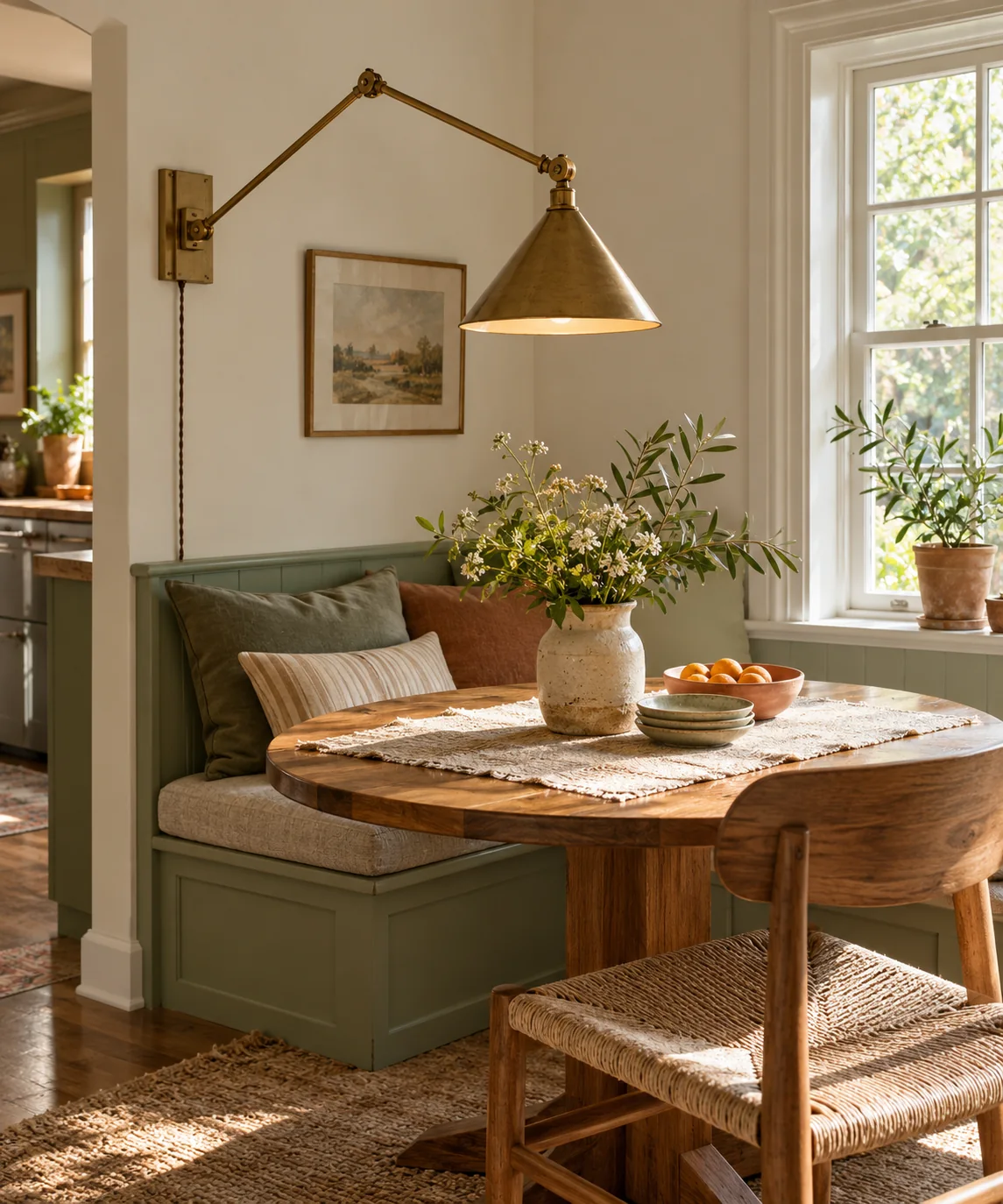
Evaluating Arm Extension and Sightline Clearance
Before selecting an articulated sconce, measure the distance from the intended wall position to the center of your dining table. Articulated fixtures vary widely in reach, so choose a model whose extended arm aligns comfortably over the tabletop without overextending its mechanical joints. Rather than relying on rigid height formulas, position the fixture so the lower rim of the shade hangs safely above the eye level of seated diners while remaining clear of standing pathways. Checking sightlines from across the table confirms that conversation remains unobstructed and diners can enter or exit corner seating without bumping the shade.
Planning Safe Cord Paths and Receptacle Access
Because plug-in sconces rely on exposed power leads, mapping an unobstructed path to the nearest electrical receptacle is essential for safety and order. Plan a clean vertical route that follows architectural trim or furniture edges to keep cords away from high-traffic footpaths and seated legs. Ensure the cord retains adequate slack near the articulated hinges so arm movement does not pull the wire taut or place mechanical tension on the wall outlet. Avoid running cords beneath rugs or pinching them behind heavy furniture, and inspect the insulation periodically for signs of wear.
Shade Selection and Glare Management
The profile and material of the sconce shade determine how illumination is distributed across the breakfast area. Opaque metal shades direct light primarily downward, accentuating tableware but leaving surrounding wall planes relatively dark. Translucent fabric or frosted glass shades emit a balance of downward task illumination and softened ambient glow, which can reduce harsh shadows in enclosed corners. To prevent uncomfortable glare for seated diners, select diffused LED bulbs or fixtures designed with shielded sockets that prevent direct exposure to bright filaments.
Mechanical Articulation and Periodic Inspection
Swing-arm sconces incorporate multiple pivot points at the wall bracket, arm elbows, and socket joint. When dining, the arm can be swung forward over the table to focus light directly onto meals; between meals, it can be pivoted back toward the wall to maintain open circulation. Because repeated movement places ongoing torque on mechanical connections, regularly check and hand-tighten pivot screws or adjustment knobs according to the manufacturer's care instructions. Keeping hardware snug prevents the arm from drifting out of alignment or sagging under shade weight.
Wall Surface Verification and Operating Limitations
Plug-in swing-arm fixtures are intended for localized dining task light rather than comprehensive room illumination. Their dynamic movement exerts pulling leverage on wall anchors, making it vital to follow manufacturer mounting guidelines and verify that fasteners are rated for the wall material and fixture weight. If securing into drywall rather than wall studs, utilize heavy-duty anchors specified by the manufacturer for moving loads. Keep the fixture away from moisture splash zones near sinks, and discontinue use if mounting brackets show signs of loosening from the wall surface.
YOUR STARTING POINT
A little checklist.
Original editorial guidance. Images are AI-generated concepts, not photographs of completed projects. Our sources and approach.
Questions to consider
How do you determine the right reach for a swing-arm dining sconce?
Measure the horizontal span from the wall surface to the center of your dining table. Choose an articulated arm length that reaches near the centerpoint without requiring the joints to be strained at their maximum mechanical limits.
How can cords be safely managed without permanently altering walls?
Route cords along vertical corners or behind furniture edges, using manufacturer-approved surface clips or removable cable organizers. Always maintain sufficient slack near the fixture hinge so pivoting the arm does not tug on the outlet.
What bulb characteristics provide comfortable illumination for a dining nook?
Diffused LED bulbs with a warm color profile and lower lumen output provide pleasant illumination for dining nooks. Shielded shades or frosted bulbs help prevent direct filament glare from reaching the eyes of seated diners.