Laundry Space Organization · THE GUIDE
Install a Pull-Out Valet Rod on a Cabinet Side Panel
Steaming and staging garments often requires temporary hanging space so textiles can air out before being moved to permanent closets. Using door frames or existing cabinet knobs can crowd circulation routes or rub against delicate finishes. Planning a pull-out valet rod on or alongside laundry cabinetry can provide an out-of-the-way staging zone. However, cabinetry construction varies widely, and cantilevering weight off side panels introduces mechanical leverage. Evaluating cabinet build, hardware specifications, and overall utility room clearances helps determine whether a side-mounted accessory suits your space.
Jump to the checklist ↓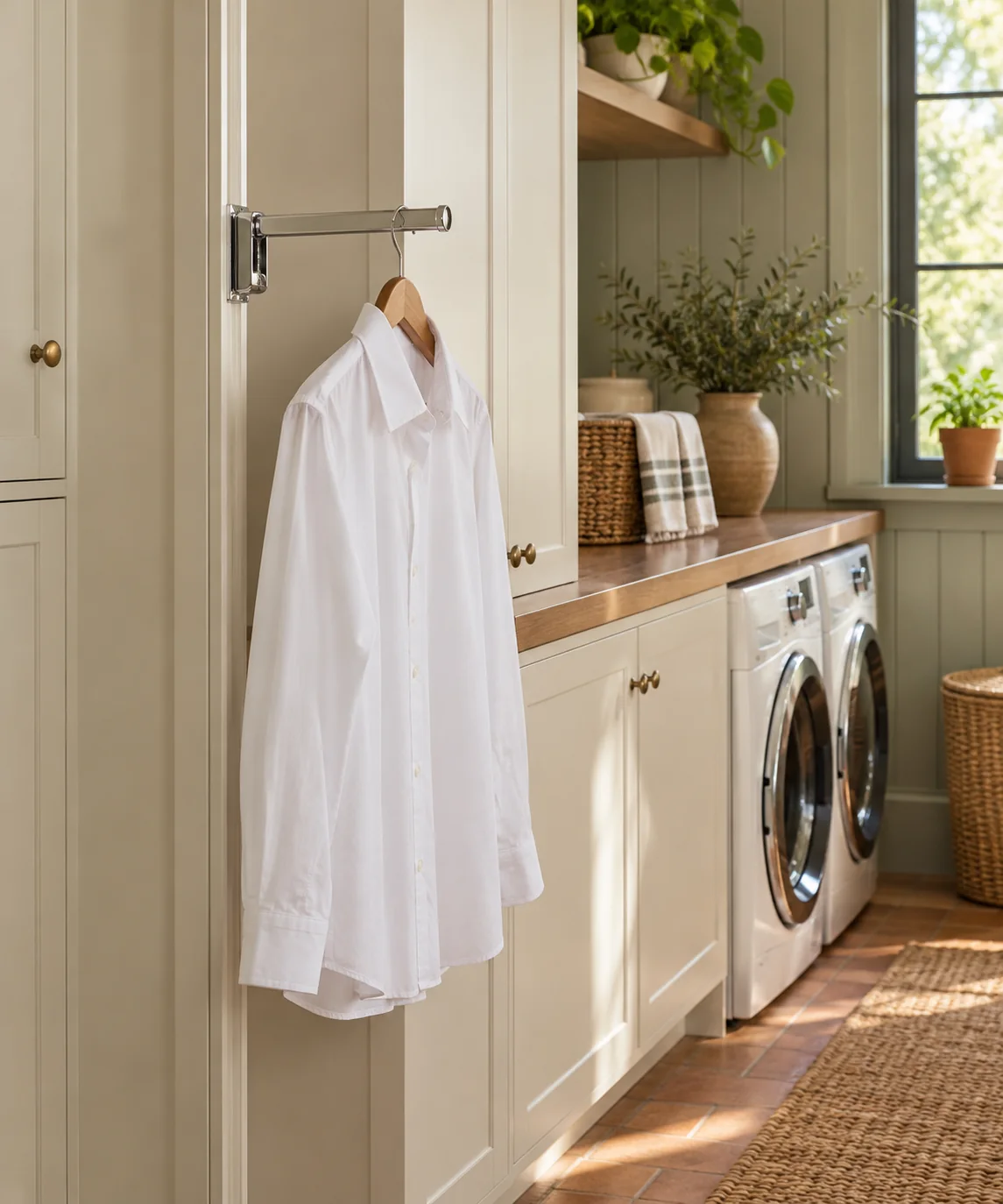
Assessing Cabinet Construction and Panel Type
Before selecting any add-on hardware, review the construction of your laundry cabinetry. Factory-built cabinets often feature end panels made from thin veneer, decorative skin panels, or engineered composites that are not intended to support pull-out hardware under downward load. Custom face-frame or solid-construction casework may offer more rigidity, but manufacturer documentation should be consulted first. If the cabinet is still under warranty or part of a modular system, drilling into side panels can void protections or compromise structural integrity. When in doubt, consult a qualified cabinetmaker or installer to confirm panel composition and load suitability.
Evaluating Garment Clearances and Room Flow
Plan hardware placement based on the types of garments you handle and the physical layout of the room. Full-length items such as trousers, dresses, and long coats need sufficient drop clearance so hems do not drag on flooring or brush against baseboards. Measure the typical hang length of your clothing, while also checking the swing path of adjacent cabinet doors, washer lids, and primary walkways. A valet rod must extend without creating an impact hazard in busy laundry corridors or blocking access to utility shut-offs and electrical switches.
Reviewing Hardware Design and Weight Ratings
Telescoping valet rods range from light-duty closet organizers to heavier metal models with ball-bearing slides. Review the manufacturer's published weight limits, noting that stated capacities generally decrease significantly when the rod is fully extended due to leverage. Look for hardware with smooth detents or end stops that prevent hangers from slipping off. Rather than relying on generic fasteners, follow the hardware manufacturer’s exact mounting specifications and verify that recommended fasteners will not penetrate through the finished interior cabinet face.
Staging Workflow and Garment Management
A valet rod functions best as a short-term transition point rather than a permanent storage solution. Overloading an extended rod can loosen attachment points or distort the track mechanism over time. For steaming workflows, hang garments individually to allow adequate air circulation and moisture dissipation. Concentrating multiple heavy, damp garments in one spot can introduce unnecessary stress to the cabinet side and increase ambient moisture near wooden surfaces. Allow items to cool and dry completely before transferring them to wardrobes.
Ongoing Observation and Operational Checks
Inspect the valet rod and surrounding panel periodically during regular cleaning. Check whether the glide mechanism operates smoothly without binding, catching, or tilting downward when extended. If you notice slight movement at the mounting plate, loose fasteners, or hairline cracking along the panel finish, discontinue use and evaluate the mounting structure. Keep the sliding track free of lint and dust by wiping it with a clean, dry cloth, avoiding heavy oils or liquid lubricants that attract laundry debris.
YOUR STARTING POINT
A little checklist.
Original editorial guidance. Images are AI-generated concepts, not photographs of completed projects. Our sources and approach.
Questions to consider
Can valet rods be mounted inside a laundry cabinet instead?
Yes, interior mounting is often an option if the cabinet interior has compatible partition walls and adequate depth. Interior placement keeps garments concealed, though exterior placement generally offers easier accessibility and better air circulation for steaming.
How much weight can a side-mounted valet rod hold safely?
Weight capacity depends entirely on the specific hardware model, panel material, and fastening method. Always refer to the hardware manufacturer's published specifications and the cabinet builder's recommendations rather than assuming a universal load limit.
What should I do if my cabinet side panel is made of thin engineered board?
Thin or decorative side panels often lack the density to hold pull-out accessories under load. In such cases, avoid drilling into the panel and consider freestanding clothing racks, over-the-door hooks, or professional cabinet reinforcement.