Laundry Space Organization · THE GUIDE
Install a Tension Hanging Rod Over a Deep Laundry Sink
Hand-washed textiles, delicate garments, and synthetic athletic wear frequently call for drip drying away from high heat. Setting up a temporary tension rod across an alcove or recess over a deep laundry basin creates a self-contained dripping zone where runoff flows directly into the drain. This setup directs moisture away from finished flooring and reduces the need for floor-standing drying racks in tight spaces. Because tension rods rely purely on compression and friction, selecting a stable span, respecting surface limits, and checking manufacturer weight guidelines are critical to keep the fixture secure over the basin.
Jump to the checklist ↓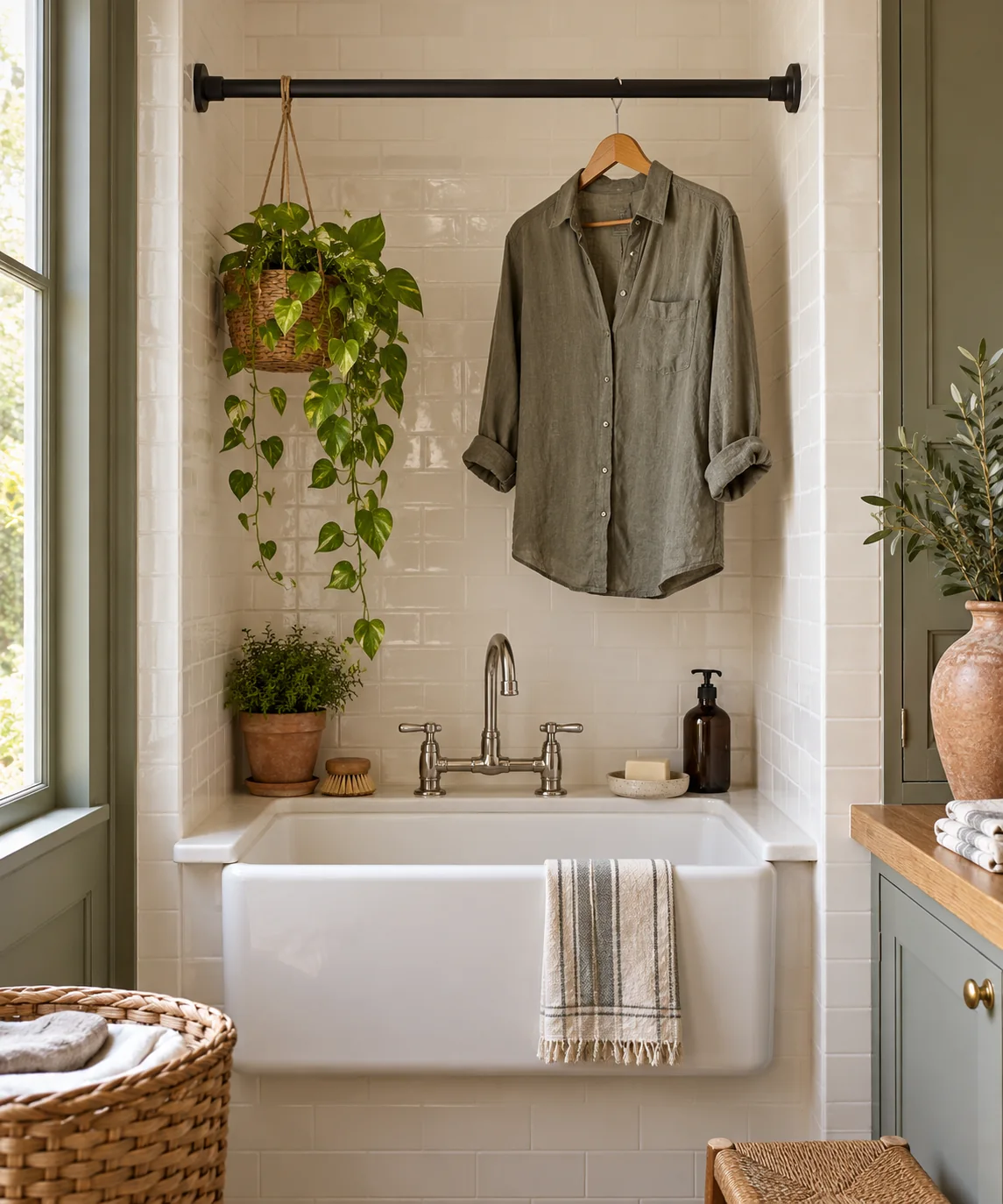
Assessing Wall Substrates and Span Distance
Before positioning a tension rod, check the rigidity of the opposing wall surfaces. Glazed ceramic tile, reinforced partition walls, and solid framing tolerate compression well, while hollow drywall and thin fiberglass surrounds can flex, crack, or indent under heavy spring pressure. Measure the alcove width at the intended height to confirm your rod length sits comfortably within the manufacturer's operational range. Tension rods generally maintain better outward resistance when used toward the middle of their adjustable length rather than near full extension, which helps reduce the risk of mid-span sagging when supporting damp items.
Planning Vertical Clearance and Reach
Position the rod high enough so hung items clear the sink faucet, basin rim, and standing water, while remaining comfortable to reach without straining. Garment lengths vary widely, from short athletic tops to long shirts or dresses, so test the height using your longest typical wash item on a hanger before setting final tension. Ensure adequate space above the bar so hangers can be lifted on and off without striking overhead cabinets or light fixtures, and verify that the sink faucet remains accessible for rinsing tasks while clothes are suspended above.
Managing Weight and Garment Distribution
Tension rods are held in place by friction pads and internal springs or twist-lock threads, meaning downward shear forces must remain within conservative boundaries. Damp fabrics—particularly heavy cottons, denims, and thick linens—retain significant water weight right out of a rinse cycle. Check the rod manufacturer's listed load rating and err on the side of caution by spreading garments across the bar to avoid concentrated center loads. Allowing space between items also facilitates natural room airflow, supporting faster drying times without overloading the compression fit.
Selecting Waterproof Non-Staining Hangers
Choose hanger materials that will not degrade, rust, or transfer color onto damp fabrics. Standard unfinished or varnished wooden hangers can swell from sustained moisture contact and may leach tannins onto pale textiles, while thin wire hangers can corrode and cause fabric puckering at the shoulders. Sturdy molded plastic hangers or coated, rust-resistant metal designs are practical alternatives over a sink. Broad-shouldered profiles help hold fabric open for steady air circulation while keeping shoulder seams from stretching under wet weight.
Maintaining Contact Points and Routine Checks
Moisture, airborne detergent film, and laundry room humidity can gradually reduce grip between rubber end pads and smooth wall surfaces. Wipe down the intended contact spots on the wall with a mild surface cleaner or isopropyl alcohol before mounting to remove residual dust and soap oils. Periodically inspect the ends for signs of slipping or shifting down the wall, and re-check the locking mechanism according to the manufacturer's instructions. If the rubber pads show signs of hardening, chalking, or lint accumulation, clean or replace them to maintain steady surface contact.
YOUR STARTING POINT
A little checklist.
Original editorial guidance. Images are AI-generated concepts, not photographs of completed projects. Our sources and approach.
Questions to consider
Can heavy knitwear be dried on an overhead tension rod?
Hanging heavy wet knits on hangers is generally not recommended, as water weight can stretch the fibers out of shape and challenge the rod's friction hold. Lay heavy sweaters flat on ventilated mesh drying screens instead.
Will tension rod pads leave permanent marks on painted drywall or tile?
Soft rubber or silicone pads usually leave sound tile undamaged, though prolonged pressure on soft latex paint can leave slight impressions. Avoid over-tightening against unbacked hollow drywall, which can crush or indent under high point pressure.
How can garments be kept from sliding toward the center of the rod?
Ensure the bar is leveled horizontally using a small bubble level. If slick hangers still shift, adding silicone bands or removable cord loops onto the rod provides non-damaging friction points to keep garments separated for airflow.