Garden Tool Organization · THE GUIDE
Plan a Compact Cedar Slat Organizer for Balcony Garden Tools
Balcony gardening often requires creative organization to prevent floor-resting buckets, containers, and hand tools from obstructing primary walkways. Incorporating a freestanding or reversibly mounted cedar slat organizer creates practical, slender storage while keeping floor space clear for safe movement. Cedar is widely valued for outdoor applications due to its natural resistance to decay and moisture fluctuations, providing a tidy backdrop for small hand gear. By planning a reversible arrangement that relies on non-invasive supports rather than structural wall drilling, gardeners can keep essential tools accessible, protect equipment from floor moisture, and respect property management regulations.
Jump to the checklist ↓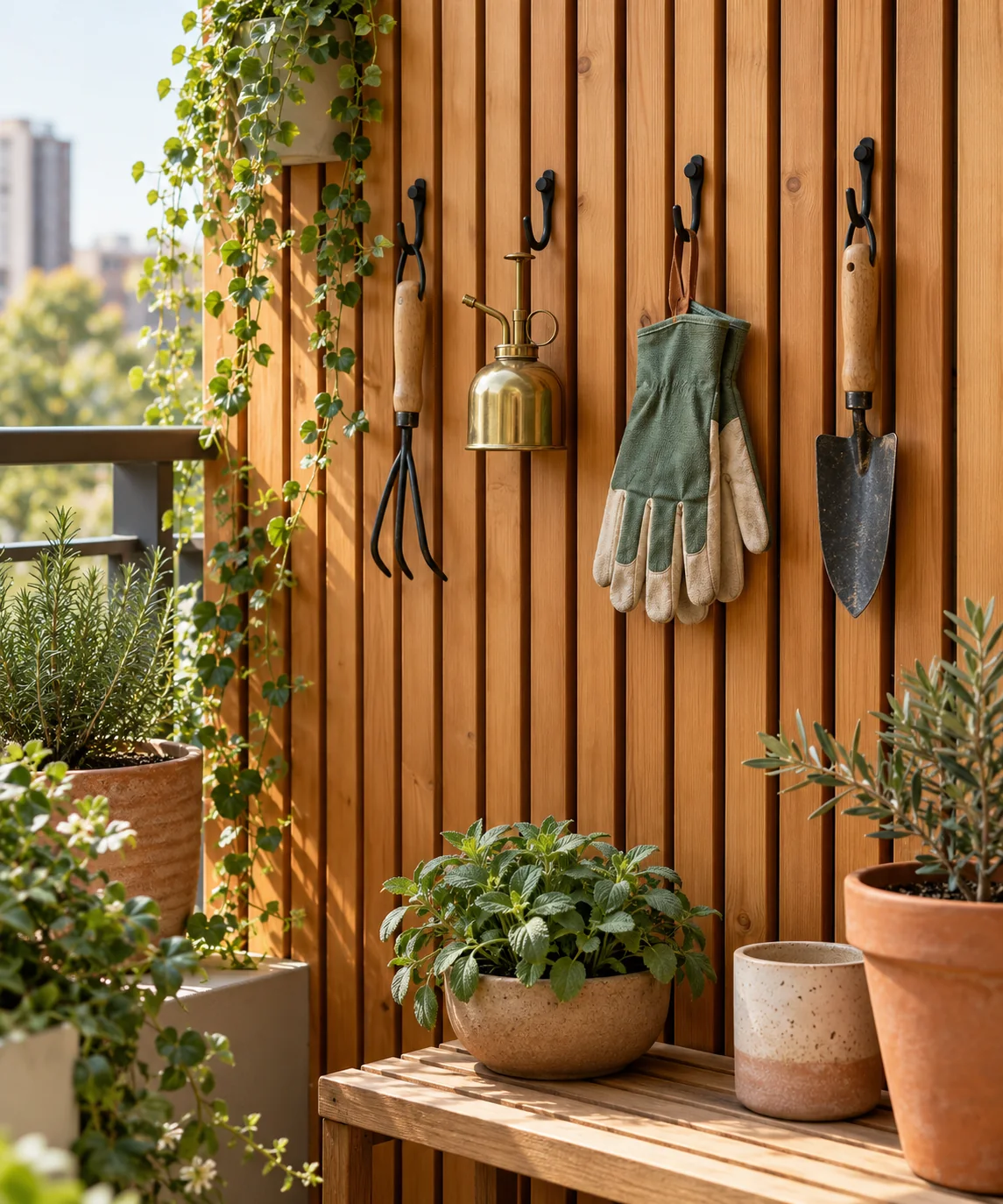
Balcony Pathway and Egress Planning
Balcony layouts demand careful planning to ensure doors, emergency exits, and daily walking corridors remain completely unobstructed. Before introducing any vertical panel, observe how screen doors swing and note the natural path traveled when carrying full watering cans or potting supplies. Avoid establishing exact or arbitrary clearances found online, as actual door swings, railing setbacks, and local fire code egress minimums differ across buildings. A slender vertical slat panel should occupy minimal profile depth, keeping hanging items flush enough that shoulders and loose clothing will not snag against trowels or pruners during regular plant care.
Slat Spacing and Hook Selection
Choosing appropriate horizontal slat spacing depends on the dimensions of the hanging accessories you intend to use. Many gardeners opt for powder-coated exterior S-hooks, utility loops, or over-panel brackets that slip over individual boards without requiring fasteners or permanent modifications. Spacing slats to comfortably fit standard hook curves allows effortless repositioning as seasonal tool needs shift. Keep frequently reached tools such as bypass pruners and hand snips positioned at natural working height, while placing flatter gear like kneeler pads lower down to prevent protruding profiles from intruding into walking lines.
Load Balance and Wind Considerations
High-rise balconies and elevated decks experience turbulent air movements that can easily displace loose items. Vertical slat organizers should remain reserved exclusively for small, lightweight hand tools—such as trowels, dibbers, twine, and cultivating forks—rather than heavy shovels or cumbersome soil sacks. Distribute hanging items evenly across the width of the panel rather than clustering tools on a single slat. To prevent wind gusts from dislodging implements or causing metal tools to strike noisily against wood, select deep-throated hooks, attach security straps, or stow tools inside canvas pouches hung flush to the slats.
Moisture Drainage and Wood Care
Unfinished exterior-grade cedar gracefully shifts toward a muted silvery-gray patina when exposed to ambient sunlight and rain. To maintain the wood's longevity, position the organizer where it will not catch persistent runoff from balcony overheads or steady condensation drips from air-conditioning units. Maintain adequate airflow between the panel backing and any adjacent partition so damp air circulates freely after storms. Check that all associated metal hardware, hooks, and fasteners feature rust-resistant outdoor coatings like stainless steel or powder-coated finishes to prevent waterborne iron stains from discoloring the wood grain.
Property Guidelines and Reversible Support
Most multi-family buildings, condominiums, and rental communities enforce strict restrictions regarding outdoor boundaries, prohibiting drilling into exterior building cladding, masonry, or partition dividers. Never anchor organizers directly into exterior walls or railing assemblies without written property management approval and engineering verification. Instead, explore stable, freestanding modular frames, tension assemblies designed specifically for covered balconies, or weighted bases that do not breach the building envelope. During severe weather warnings or off-season months, take moisture-vulnerable tools indoors to prevent rust, leaving the weather-resilient cedar panel clean and secure.
YOUR STARTING POINT
A little checklist.
Original editorial guidance. Images are AI-generated concepts, not photographs of completed projects. Our sources and approach.
Questions to consider
Can cedar slat organizers be used without drilling into balcony walls?
Yes. Many gardeners utilize freestanding modular frames or weighted bases to support vertical cedar panels without puncturing exterior walls or balustrades. Always confirm that freestanding structures are stable, low-profile, and fully compliant with your building's rules on wind safety and exterior furnishings.
How can I prevent outdoor tools from rusting while hanging on the slats?
Wipe soil, plant sap, and water from hand tools after each gardening session before hanging them up. Applying a light coat of camellia or food-grade mineral oil to carbon-steel blades creates a barrier against atmospheric moisture, while keeping the organizer sheltered from direct roof drips extends tool life.
What should I do with the slat organizer during high wind advisories?
Prior to high-wind events or severe storms, remove all hanging hand tools, hooks, and accessories and bring them indoors to eliminate dangerous projectile hazards. If the organizer itself is freestanding, secure it flat against the ground or move it inside as recommended by building storm safety protocols.