Small Bathroom Storage · THE GUIDE
Install Adhesive Steel Racks on the Inside of Cabinet Doors
The hollow interior faces of bathroom vanity doors offer underutilized vertical space that can streamline daily grooming routines. Mounting adhesive steel racks inside cabinet doors converts wasted volume into specialized drop zones for cleansing sponges, pump bottles, and facial washes. This strategy clears crowded countertop surfaces without drilling into finished millwork. By planning positions around interior shelves, drain pipes, and door hinges, you establish orderly, hidden storage while protecting cabinet integrity and maintaining smooth door closure in compact master or powder rooms.
Jump to the checklist ↓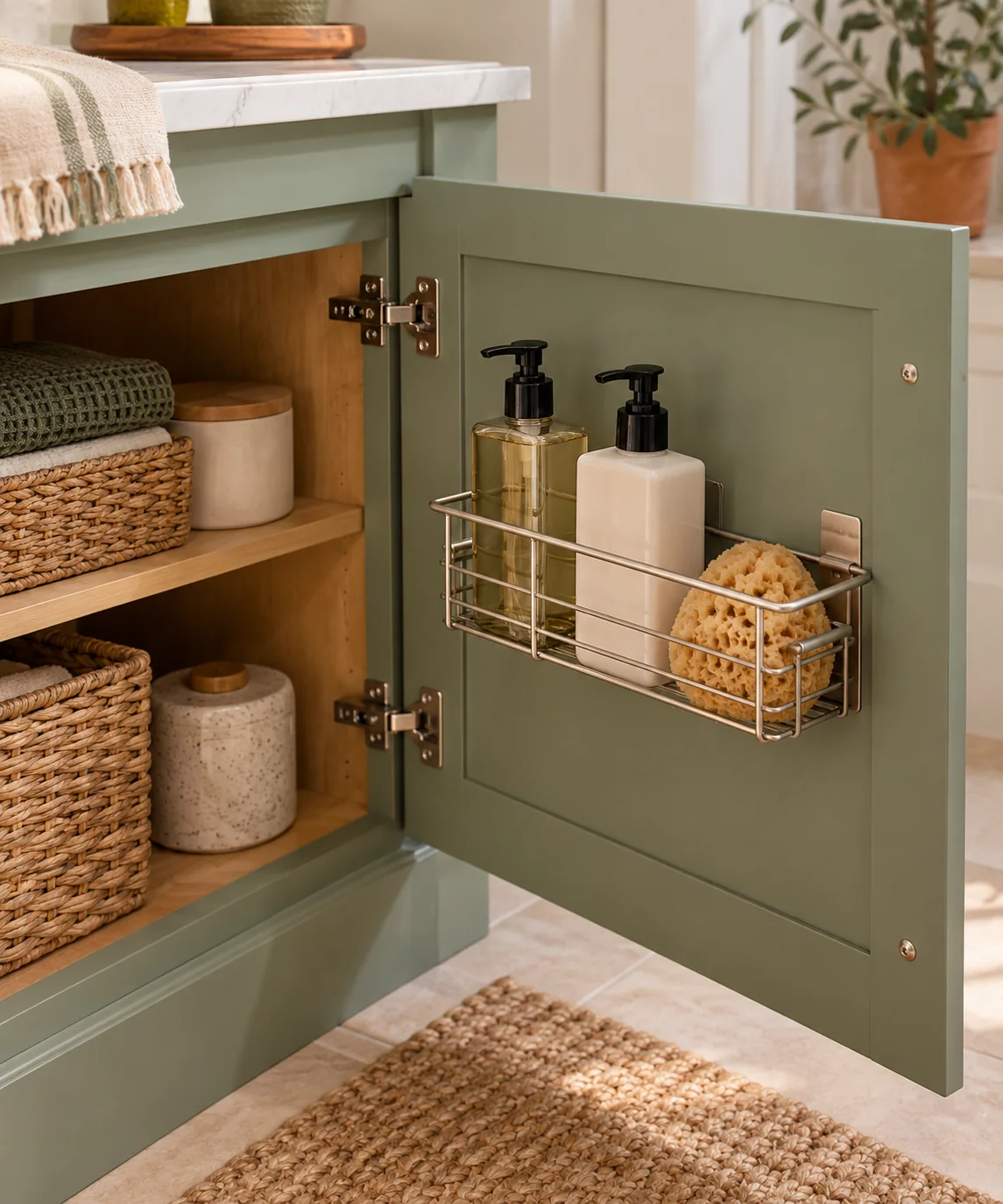
Verifying Internal Clearances and Pipe Offsets
The primary reason door racks fail to close properly is collision with interior elements. Before attaching any rack, close the cabinet door slowly while holding a measuring tape inside to inspect clearances. Map the exact locations of interior shelf fronts, pull-out caddies, and the curved trap of the sink drainpipe. Ensure the chosen basket depth—typically two to four inches—has clear breathing room when the door seals completely, preventing sudden impacts that loosen adhesive bonding or jar stored bottles.
Preparing Door Surfaces for Reliable Bonding
Adhesive failure stems from residue on painted wood or laminate door panels. Clean the designated mounting zone thoroughly using isopropyl alcohol on a lint-free rag to strip away greasy product film and soap dust. Avoid household spray cleaners that leave behind moisture-attracting silicones. Allow the surface to dry fully for five minutes. Mark the horizontal level lightly with removable painter's tape, ensuring the rack installs straight and distributes bottled weight evenly across the sticky footprint.
Selecting Appropriate Storage Items and Weight Limits
While heavy-gauge steel caddies look robust, the true weak point is door balance and adhesive shear strength. Restrict rack contents to daily lightweight essentials: cellulose facial sponges, shaving tubes, daily cleansers, and small toner spritzers. Avoid storing large family-sized shampoo bottles, glass apothecary jars, or liquid bleach. Distributing four pounds or less across the rack keeps the door hinges aligned, prevents door sagging, and eliminates unnecessary stress on soft-close hinge dampeners.
Facilitating Proper Airflow for Damp Sponges
Cabinet interiors often trap residual humidity, creating a stagnant microclimate. When using inside-door racks for damp beauty blenders or natural sea sponges, open wire steel construction is far superior to solid acrylic trays. The wire grid promotes airflow around all sides of the sponge, speeding drying time. Ensure sponges are squeezed dry before stowing, and leave the cabinet door cracked for twenty minutes after steamy showers to cycle fresh room air through the vanity base.
Reversing Installation and Removing Adhesive Safely
In rental properties or when reconfiguring cabinetry, removing adhesive strips must not damage delicate veneer or paint. Never pry a metal basket away with screwdrivers. Instead, detach the steel rack from its adhesive backing hooks if designed with modular clips. Warm the adhesive backing pad using a household hair dryer on medium heat for sixty seconds to soften the bond, then gently roll the foam tape downward parallel to the wood grain.
YOUR STARTING POINT
A little checklist.
Original editorial guidance. Images are AI-generated concepts, not photographs of completed projects. Our sources and approach.
Questions to consider
Will adding door racks make the cabinet door sag?
Door sag occurs only when racks are overloaded. Keep total contents under four pounds and center the rack laterally. If your cabinet hinges feel loose, tighten the mounting screws into the cabinet frame before installing racks.
Can I mount adhesive racks on recessed door panels?
Recessed panels often feature thinner wood that flexes during opening. Mount your adhesive pads directly to the thicker outer stiles of the door frame or verify the central panel is rigid enough to support dynamic movement.
How long should I wait before placing bottles in the rack?
Wait a full twenty-four hours after pressing adhesive strips to the door before loading items into the steel rack. This curing period ensures the adhesive bond reaches maximum holding power against vertical shear weight.