Small Bathroom Storage · THE GUIDE
Install an Ultra-Slim Mirrored Wall Cabinet Over the Toilet
A narrow powder room often lacks both floor area and vanity storage, leaving everyday grooming supplies scattered across limited counter space. Planning an ultra-slim mirrored cabinet above the toilet utilizes vertical space while keeping the lower footprint clear. The mirrored surface reflects available ambient light across narrow walls, visually opening tight enclosures. Selecting a shallow depth avoids awkward overhangs while accommodating basic hygiene necessities. Careful planning of clearances, door swings, and wall support ensures the cabinet integrates smoothly without hindering fixture maintenance or personal mobility.
Jump to the checklist ↓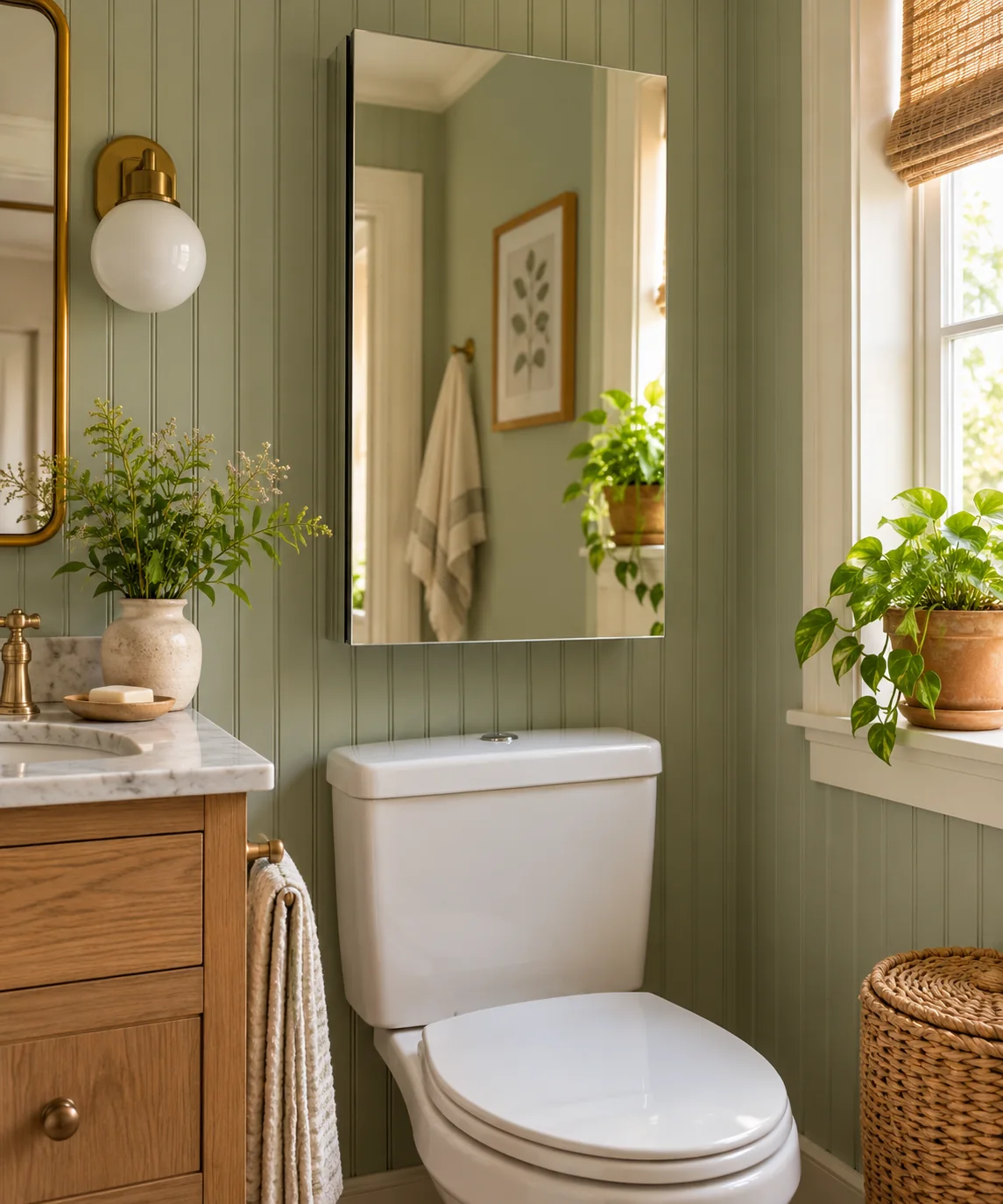
Planning Tank and Standing Clearance
Before choosing an over-toilet location, check the specific clearance needed to remove the ceramic toilet tank lid for maintenance and flushing repairs. Measure user standing headroom and verify that the proposed cabinet bottom will not sit in the natural path of movement when standing up from the fixture. Marking the profile lightly with painter's tape helps visualize how the cabinet aligns with the tank and prevents accidental head bumps during daily use.
Assessing Cabinet Depth and Door Swings
Standard medicine cabinets often measure four to six inches deep, but ultra-slim variants hover around three to four inches. This shallow profile accommodates basic toiletries without extending intrusively into the room's primary circulation path. Before committing to a position, verify the door's full operating swing. Whether the door hinges left, right, or pivots vertically, ensure the open door clears light fixtures, towel rings, and adjacent doorframes.
Evaluating Lighting and Sightlines
A mirrored front reflects light and can soften the enclosed feel of restricted powder rooms. Position the unit where ambient light from ceiling fixtures or wall sconces illuminates the user without creating sharp downward shadows or harsh direct glare. Test sightlines from the doorway to confirm the mirror reflects open wall space rather than cluttered utility corners, ensuring the reflective surface enhances rather than clutters the room.
Organizing Shallow Interior Shelving
A depth of three to four inches restricts double-stacking, preventing items from becoming lost at the back of shelves. Organize items by frequency of use, keeping heavier bottles and jars on the lowest shelf and reserving higher tiers for light backup supplies. Non-slip shelf liners or shallow containers keep small bottles stable when opening and closing the door, preventing items from falling out toward the plumbing fixture below.
Structural Planning and Fastener Selection
Wall-mounted cabinets require secure attachment directly into structural wall framing or using wall anchors rated specifically for your wall substrate (such as drywall, plaster, or masonry) and total loaded weight. Consult manufacturer installation instructions for fastener specifications, weight capacities, and mounting bracket requirements. In rental properties or homes with older plaster walls, consult property management or a qualified tradesperson before drilling into wall surfaces.
YOUR STARTING POINT
A little checklist.
Original editorial guidance. Images are AI-generated concepts, not photographs of completed projects. Our sources and approach.
Questions to consider
Can an ultra-slim cabinet hold standard rolls of toilet paper?
Most ultra-slim cabinets measuring three to four inches deep cannot fit standard toilet paper rolls, which generally require at least five inches of clearance. Reserve shallow cabinets for medication containers, dental care items, and compact toiletries.
How can I check spatial clearance before purchasing a cabinet?
Create a cardboard template matching the cabinet's outer height, width, and depth. Hold or temporarily tape it to the planned wall location to verify clearance when opening doors and standing up from the toilet.
What structural considerations apply when mounting over a toilet?
Cabinets should be secured according to manufacturer instructions using fasteners compatible with the specific wall type. Fastening into wall studs provides the most reliable support, and a qualified professional should be consulted if wall composition is uncertain.