Laundry Space Organization · THE GUIDE
Install Deep Floating Shelves Scaled for Top Loaders
Planning overhead shelving above a top-loading washing machine requires careful coordination between the appliance's upward swing and your personal reaching comfort. Unlike front loaders, top-loading machines require clear vertical space for the open lid and room for you to bend forward to reach the base of the drum. Standardizing shelf dimensions without reviewing manufacturer specifications often leads to awkward collisions or blocked lids. By verifying machine dimensions, mapping lid arc clearances, and anchoring shelves securely to framing studs according to bracket weight ratings, you can create functional storage that supports your laundry routine without compromising appliance operation.
Jump to the checklist ↓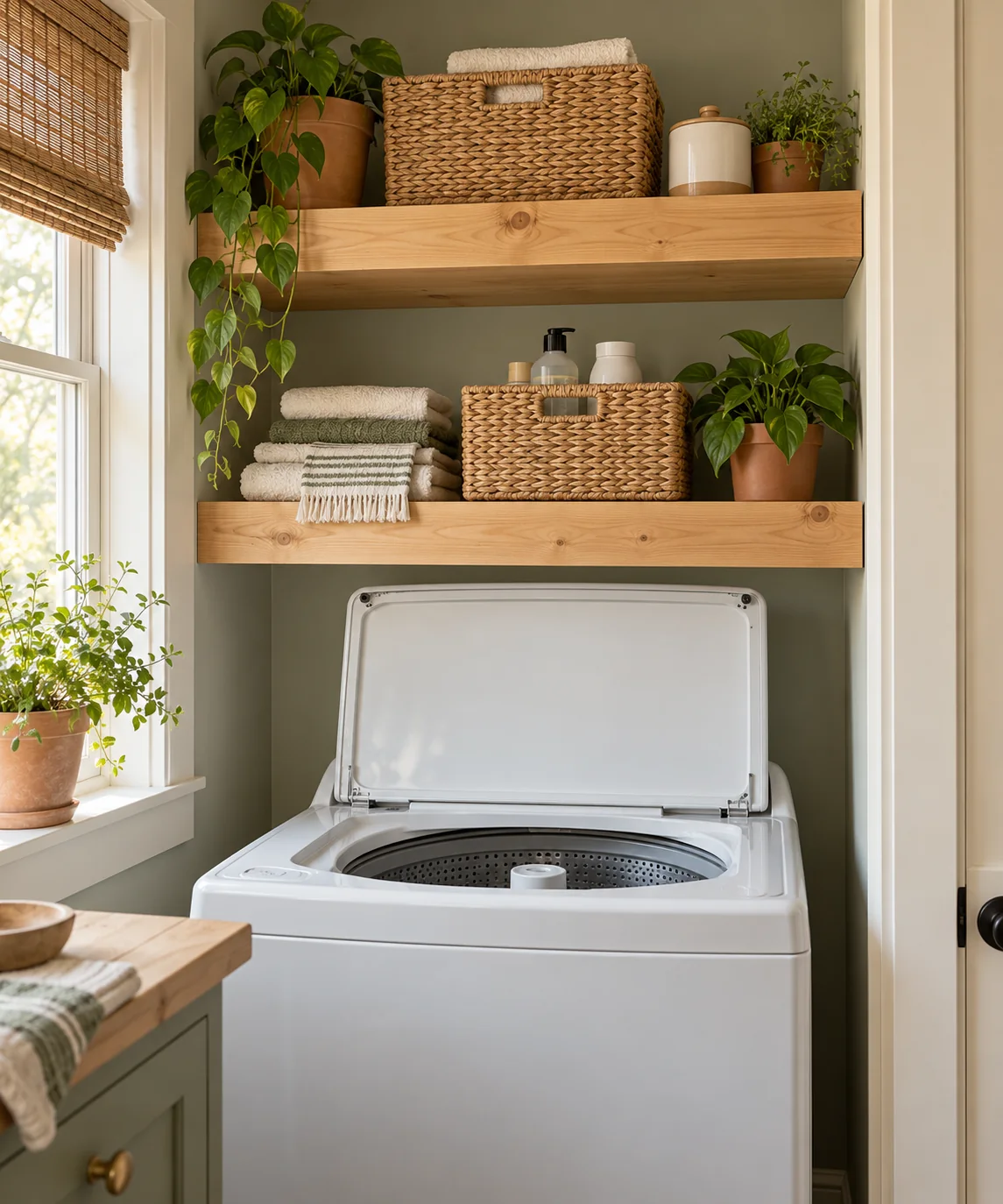
Checking Manufacturer Lid Dimensions
Top-loading washer lids differ significantly across models. Some feature full-length solid glass or metal lids that stand tall when opened, while others incorporate bi-fold hinges that reduce total vertical clearance. Consult your appliance's manual or measure the unit with the lid fully raised against its stop. Take note of the highest point of the lid, including any rear console bevels or hinge rises. Plan the position of your lowest shelf so the lid can rest fully open without striking the shelf edge or vibrating against it during high-speed spin cycles.
Evaluating Shelf Depth and Reach Ergonomics
Overhead shelf depth directly affects how easily you can access items and lean into the washer drum. While deep shelves provide greater storage surface, an overly deep lower shelf can create an uncomfortable reach or obstruct your sightline when unloading wet laundry. Moderate shelf depths—often between eight and twelve inches, depending on wall clearance—tend to minimize head clearance issues while still accommodating standard laundry baskets. Test your comfortable reach angle before settling on shelf depth.
Testing Clearance with Temporary Templates
Before drilling into drywall or mounting brackets, test your proposed layout using a lightweight cardboard template cut to the dimensions of the shelf. Hold or temporarily tape the template to the wall at your planned height. Open and close the washer lid several times to ensure it moves smoothly past the template without catching. Practice lifting a load of wet towels or reaching to the bottom of the drum to verify that your head and shoulders do not contact the mock shelf during typical movement.
Weight Distribution and Wall Support
Floating shelves rely on concealed brackets or wall cleats that must be fastened directly into structural wall studs rather than drywall anchors alone, especially in utility spaces where laundry supplies can add substantial weight. Verify the manufacturer weight rating for both the brackets and the shelf material. Place heavier liquid containers, bulk cleaners, or large vinegar jugs on lower, floor-supported carts or cabinets rather than overhead shelves, reserving floating shelves for lightweight items like wool dryer balls, scrub brushes, and folded cloths.
Monitoring Vibration and Fastener Security
Washing machines generate regular mechanical vibrations, especially during unbalanced spin cycles, which can transfer through adjacent walls and loosen poorly secured shelving over time. After installation, periodically inspect mounting screws, brackets, and shelf levelness to confirm fasteners remain tight. Check that storage containers are set back from shelf edges to prevent items from walking forward with appliance vibration. If a shelf flexes or shows sign of strain, reduce its load immediately.
YOUR STARTING POINT
A little checklist.
Original editorial guidance. Images are AI-generated concepts, not photographs of completed projects. Our sources and approach.
Questions to consider
How do I determine the right height for a shelf above a top-loading washer?
Measure the total height of the washer with its lid fully propped open against its stop. Position the lowest shelf comfortably above this mark so the lid opens completely without contact, allowing adequate space for your hands when lifting bulky items from the drum.
Can drywall anchors hold floating shelves loaded with laundry detergent?
Drywall anchors alone are generally insufficient for utility shelves holding heavy liquids or frequently handled bins. Floating shelf brackets should be secured directly into wall studs, and heavy liquid jugs should be stored on sturdy base cabinets or floor carts.
What shelf depth works best above a top loader?
Shelf depths typically between eight and twelve inches work well for most setups, but the best depth depends on your reaching height and the machine's front-to-back dimension. Shallower shelves minimize head interference when bending over the appliance.