Entryway Organization · THE GUIDE
Install Dual-Height Coat Hooks for Family Independence
Young children quickly abandon coats, hats, and backpacks on entryway floors when the only available storage sits at an unreachable adult height. Standard builder-grade hooks typically mount around sixty to sixty-six inches above the floor, placing them far outside a toddler or early elementary student's physical reach. Establishing a dedicated lower hanging zone encourages daily responsibility and autonomy while simultaneously reducing entryway visual clutter. By carefully planning horizontal spacing, vertical clearance, and safe hook profiles, households create an accessible system where both heavy winter parkas and small school bags hang neatly without interference.
Jump to the checklist ↓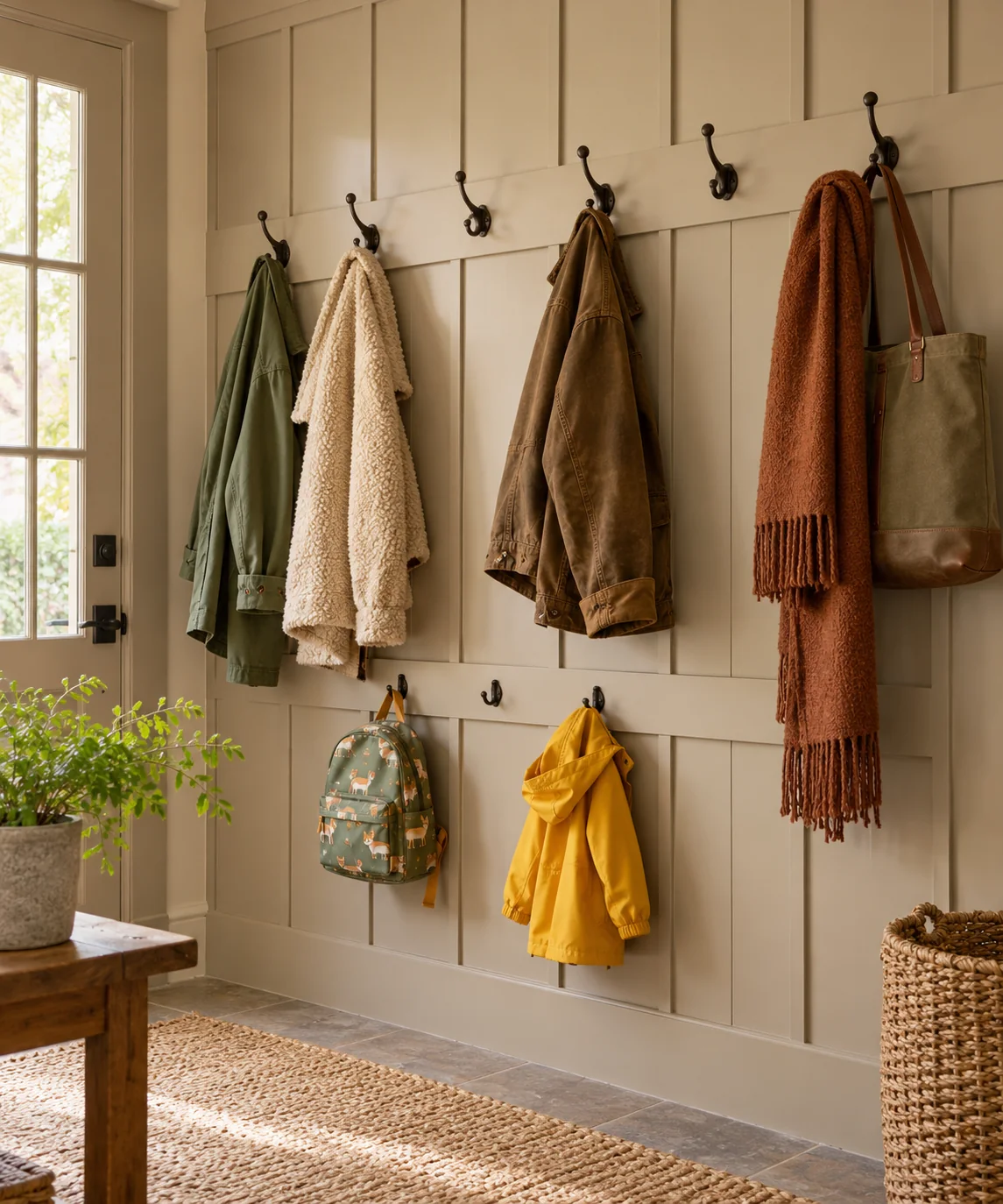
Planning Vertical Spacing for Shared Access
Accommodating both adults and young children on an entryway wall requires establishing two distinct hanging zones. Measure the comfortable reach of household members to identify practical baseline levels rather than relying on rigid universal measurements. Ensure there is enough vertical separation between the upper and lower tiers so that long adult coats or rainwear do not completely drape over the lower tier. This vertical gap keeps lower items accessible and prevents garments from tangling.
Staggering Hardware for Clearance and Visibility
Arranging lower hooks in a staggered pattern between the positions of upper hooks improves visibility and access. When lower pegs sit directly below adult hooks, bulky jackets often conceal children's items beneath them. Staggering the hardware allows smaller backpacks, hats, and jackets to remain visible and easy to grasp. Spacing hooks along a rail or wall section should provide adequate shoulder clearance for the types of outerwear commonly used in the household.
Selecting Safe Hook Profiles for Low Levels
Hardware installed at child eye level requires careful selection to ensure physical safety and fabric protection. Opt for broad, blunt wooden pegs or rounded metal hooks with smooth edges rather than narrow, pointed designs. Lower hooks should provide enough depth and hook curvature so that hanging loops and backpack straps stay secure without slipping, while avoiding sharp projections that could cause injury during accidental contact in a busy hallway.
Marking Layouts with Low-Tack Tape
Before fastening hardware, visualize the arrangement by placing low-tack painter's tape on the wall at the proposed hook locations. Hold typical coats, school bags, and seasonal layers against the markings to confirm that items hang naturally without touching the floor or interfering with adjacent trim. Involving family members in this visual check confirms that the lower tier matches the user's natural reaching range and prevents premature adjustments.
Adapting Hooks Across Changing Needs
Entryway hanging requirements evolve as household members grow and seasonal gear changes. Routinely review hooks at both heights to clear away items that have accumulated, such as outgrown outerwear, unused sports gear, or redundant accessories. Over time, lower pegs can be repurposed for dog leashes, umbrella loops, market totes, or gym bags. Keeping each hook assigned to active daily items prevents excessive weight accumulation and preserves open floor space.
YOUR STARTING POINT
A little checklist.
Original editorial guidance. Images are AI-generated concepts, not photographs of completed projects. Our sources and approach.
Questions to consider
How can overlapping between adult coats and lower hooks be minimized?
Offset lower hooks horizontally so they sit midway between upper hooks, or place the children's hanging rail on an adjacent open wall section to keep both tiers completely independent.
What hook style is safest for households with young children?
Choose wide, rounded pegs or blunt double hooks without sharp edges or narrow points. Smooth wooden pegs or broad metal hooks reduce the risk of snags and accidental bumps.
How can heavily loaded school bags be safely supported?
Consult wall anchor and hardware manufacturer instructions to confirm that fasteners match your specific wall material and expected load weights, or store heavy packs on low benches or floor cubbies.