Small Balcony Layouts · THE GUIDE
Install Non-Drill Tension Rod Shelving for Vertical Plants
Vertical gardening offers a way to incorporate greenery on compact balconies where floor space is limited. Floor-to-ceiling tension poles with plant platforms are sometimes considered by apartment dwellers seeking non-permanent, non-drill shelving. However, using tension-based systems outdoors requires careful evaluation. Balcony environments introduce wind loads, vibration, temperature fluctuations, and moisture that indoor tension assemblies are not engineered to withstand. Reviewing building rules, structural surfaces, product ratings, and safe placement strategies is essential before considering any vertical storage framework on an elevated balcony.
Jump to the checklist ↓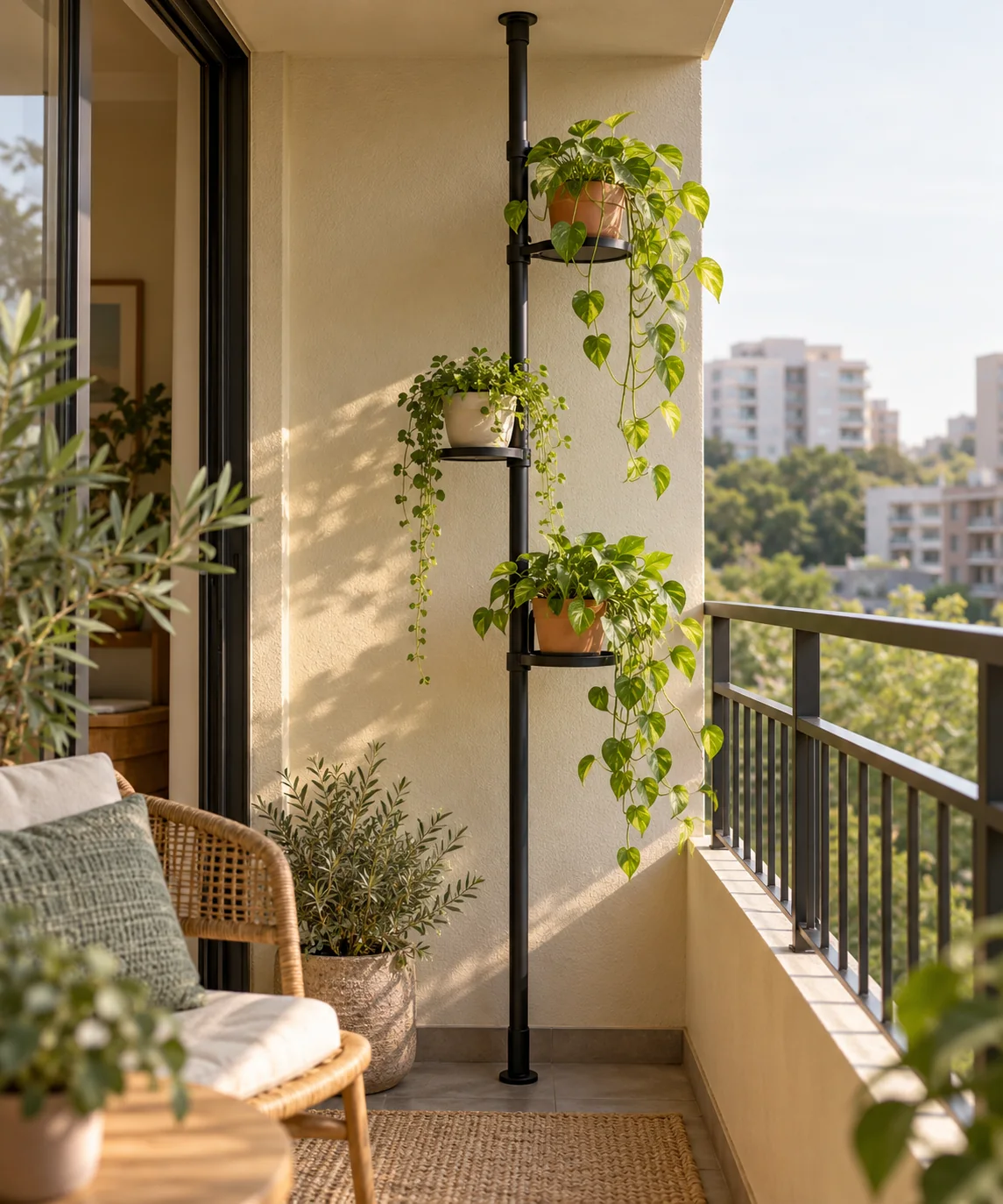
Structural Evaluation and Building Rules
Tension poles rely on continuous compressive force exerted between two rigid, parallel horizontal surfaces, such as a concrete balcony floor and an overhead concrete slab. Before exploring this option, consult your lease agreement, building management, or condominium bylaws, as many properties restrict freestanding vertical structures or overhead attachments on exterior facades. Furthermore, verify that the upper surface is solid structural masonry or concrete. Tension systems must never be placed against hollow vinyl soffits, aluminum fascia, or lightweight exterior cladding that can deform, crack, or fail under pressure.
Outdoor Environmental Factors and Stability Limitations
Unlike controlled indoor rooms, balconies are dynamic outdoor spaces subject to shifting thermal cycles and wind forces. Fluctuating temperatures can cause metal poles to expand and contract, potentially altering the compression tension that holds the unit upright. Moisture, humidity, and coastal salt spray can also degrade rubber foot pads and internal locking springs over time. Check manufacturer specifications to verify whether an assembly is explicitly rated for exterior use, and recognize that gusty conditions can exert lateral loads that friction pads alone may not reliably resist.
Container Selection and Load Management
If an outdoor-rated tension shelf is permitted, container choice directly influences overall stability. Overloading shelves creates top-heavy balance hazards. Utilize small, lightweight plastic or composite nursery pots rather than heavy ceramic, stone, or terracotta containers. Keep the total mass well below the manufacturer's stated tray limits, taking into account the added weight of wet soil after watering. Positioning any heavier pots on the lowest tiers helps keep the assembly's center of gravity closer to the floor.
Safety Zones and Perimeter Precaution
Any elevated shelving unit on a balcony must be situated to prevent dropped objects or falling hazards. Avoid positioning vertical shelving immediately adjacent to balcony railings where containers could fall onto pedestrian paths or neighboring balconies below. Keep all shelves entirely within the protected interior perimeter of the balcony. Additionally, ensure the vertical pole does not obstruct emergency escape pathways, sliding door access, or fire evacuation routes required by local safety codes.
Routine Maintenance and Severe Weather Protocols
Freestanding tension systems require frequent visual inspection and mechanical checks. Regularly examine contact pads for signs of perishing, cracking, or shifting grit that could reduce grip against concrete finishes. Test tension stability frequently according to manufacturer instructions. During periods of stormy weather, high-wind advisories, or seasonal vacancies, remove all plants and containers from elevated tiers and store the assembly flat or indoors to prevent wind displacement and structural hazards.
YOUR STARTING POINT
A little checklist.
Original editorial guidance. Images are AI-generated concepts, not photographs of completed projects. Our sources and approach.
Questions to consider
Are standard indoor tension plant rods suitable for balcony use?
No. Standard indoor tension poles are typically not engineered to handle wind gusts, UV exposure, moisture, or thermal expansion. Only assemblies explicitly designed and rated by the manufacturer for outdoor conditions should be considered.
How can I prevent markings on balcony surfaces from tension pads?
Ensure that both the contact surfaces and the pads are clean and free of abrasive grit before setup. Use manufacturer-recommended protective pads, and inspect the contact points regularly to detect moisture accumulation or surface wear.
What should I do with vertical shelving during high wind forecasts?
Clear all potted plants from elevated trays immediately and place them safely on the balcony floor. If sustained severe weather is predicted, dismantle the pole and store it indoors to eliminate tipping risks.