Garden Tool Organization · THE GUIDE
Install PVC Tube Sleeves Inside a Shed Wall for Long-Handled Hoes
Long-handled cultivating tools like Dutch hoes, swoe hoes, and draw rakes often tip over or tangle when leaned loosely against shed walls. Using vertical tube sleeves along interior perimeter framing creates designated resting channels that hold tool shafts upright without occupying floor space with bulky racks. Planning a sleeve arrangement allows tool blades or heads to rest directly on the shed floor, transferring the physical weight to the ground while the sleeve acts as a lateral guide. Assessing handle diameters, wall clearance, and reversible attachment options helps maintain an organized workspace while keeping access aisles clear.
Jump to the checklist ↓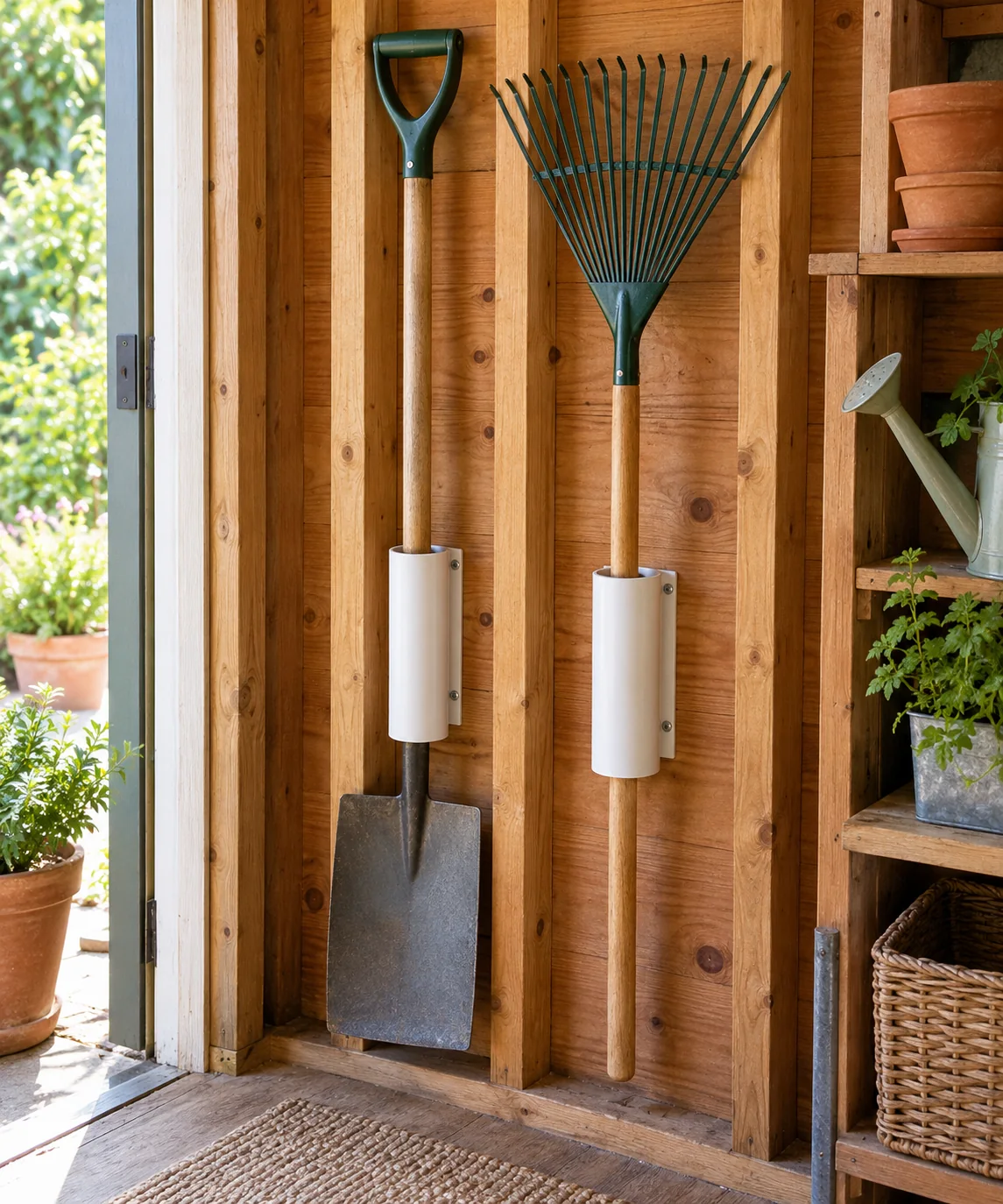
Assessing Tool Dimensions and Sleeve Sizing
Before organizing long-handled tools, examine handle circumferences and ferrule widths across your cultivating equipment. Standard commercial garden tools typically feature ash or fiberglass handles that fit comfortably within one-and-a-half to two-inch interior diameter tubing. Selecting pipe material with adequate internal clearance ensures that flared metal collars and rubber grip caps slide smoothly without catching. Pre-formed rigid plastic conduit or durable tubing options provide a smooth inner surface that limits friction against wooden shafts during repeated retrieval.
Evaluating Shed Framing and Reversible Planning
Examine your shed's interior framing before planning any vertical tool storage layout. Check building manufacturer specifications and lease agreements, as some prefabricated outbuildings or rented utility sheds restrict drilling or driving fasteners into structural studs. Where attachment is permitted, position sleeve guides so the working end of each tool rests completely on the shed floor rather than hanging from wall fasteners. Grounding the tool heads ensures the outbuilding's framing experiences minimal pull, using wall-mounted sleeves solely for lateral stability.
Planning Clearance and Tool Head Widths
Cultivating hoes, border spades, and garden rakes feature widely varying head profiles that dictate how closely sleeves can be situated. Broad implements such as bow rakes or winged weeding hoes require ample horizontal separation to prevent adjacent heads from tangling or damaging wooden handles. Measuring the widest tools in your inventory beforehand helps determine spacing that permits unobstructed removal of an individual implement. Staggering guide heights for tools with wide heads can also help prevent blade interference along the wall.
Non-Invasive and Fastener Considerations
When considering how to secure sleeve organizers, evaluate methods that avoid compromising stud integrity. Clamping sleeves to existing freestanding shelving units, utilizing heavy-duty utility hook systems, or mounting tubes to a dedicated backer board can reduce the need to drill multiple holes directly into structural framing. If mechanical fasteners are used in owner-built wooden sheds, consult manufacturer load ratings for hardware and avoid overtightening brackets, which can pinch or distort tubular sleeves and impede smooth tool movement.
Debris Management and Long-Term Handle Care
Open-ended sleeve designs allow loose garden soil and dried grass clippings to fall freely onto the floor rather than collecting inside the channel. Sweeping the perimeter floor regularly prevents grit accumulation around the base of tool shafts. Seasonal humidity shifts inside unheated outbuildings can cause wooden handles to swell slightly or steel tool heads to accumulate surface rust. Inspecting tools periodically and wiping wooden shafts with a light coat of boiled linseed oil or paste wax helps them glide freely through guide channels.
YOUR STARTING POINT
A little checklist.
Original editorial guidance. Images are AI-generated concepts, not photographs of completed projects. Our sources and approach.
Questions to consider
Why should tool heads rest on the floor rather than hanging from sleeves?
Resting the tool base directly on the floor transfers all gravitational weight to the foundation. The wall-mounted sleeve functions strictly as a lateral guide to prevent tipping, minimizing strain on shed framing and mounting hardware.
How do I select the right tubing diameter for mixed garden tools?
Measure the thickest section of each tool handle, including any end grips or flared ferrules. A tube with an internal diameter slightly larger than your widest handle ensures tools insert and lift out smoothly without binding.
What should I check before attaching tool holders to shed walls?
Review the shed manufacturer's warranty terms and structural documentation to confirm framing attachment guidelines. In prefabricated metal, resin, or rented sheds, consider freestanding or clamp-on tool storage racks to avoid voiding warranties or damaging wall panels.