Dining Nooks · THE GUIDE
Install Under-Bench Sliding Drawers for Bulky Kitchen Appliances
Deep banquette seating often becomes a resting place for forgotten clutter when equipped only with awkward top-hinged lids. Lifting seat cushions and disturbing seated diners just to retrieve a slow cooker makes everyday access impractical. Planning under-bench sliding drawers or pull-out compartments provides a practical way to store bulky kitchen equipment, such as bread makers, Dutch ovens, and stand mixers. When properly planned around the bench's structural framing and table clearances, horizontal slides bring heavy gear directly into reach. Evaluating internal dimensions, weight limits, and hardware specifications ensures functional storage without compromising the structural stability of your dining seating.
Jump to the checklist ↓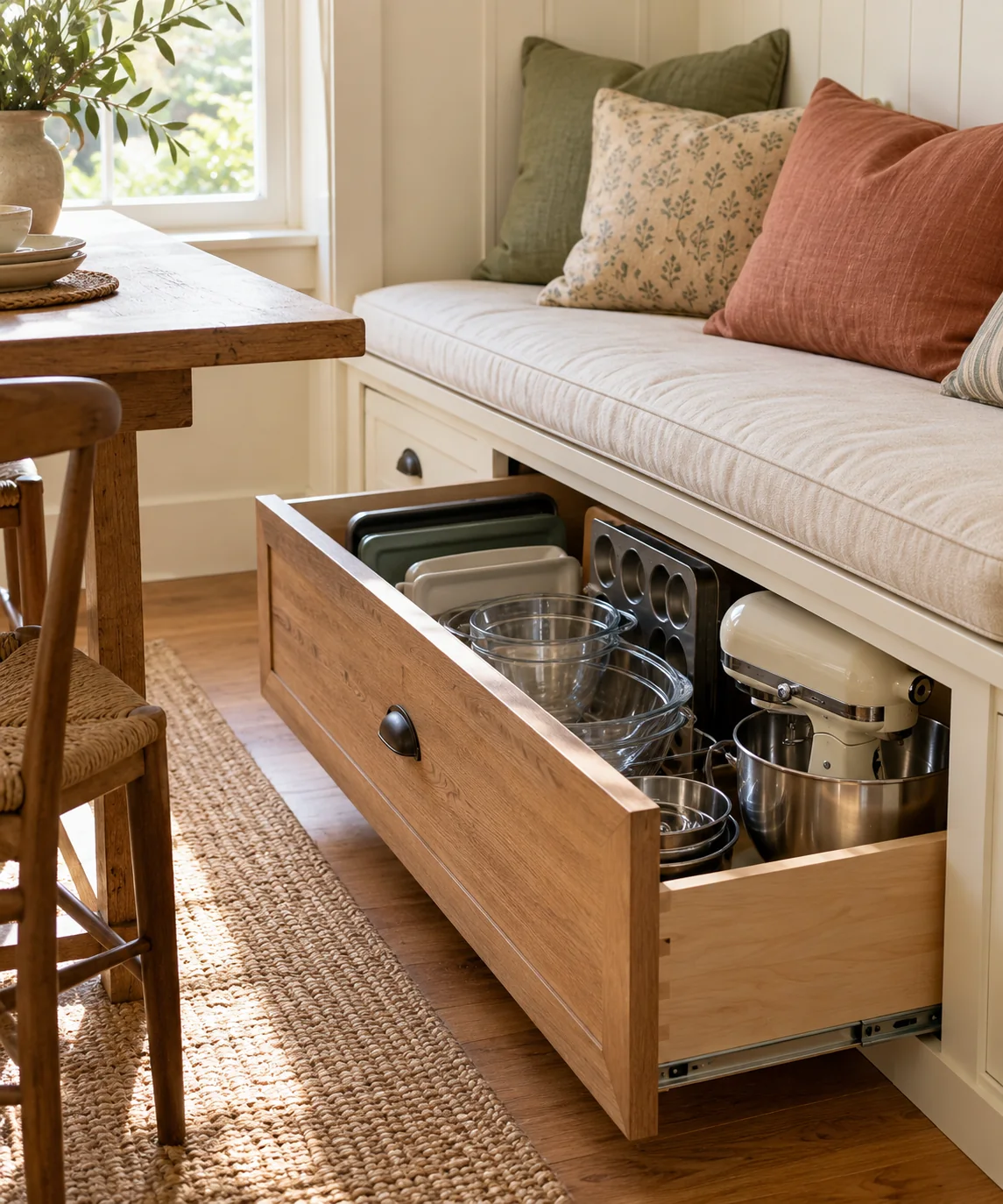
Assess Bench Structure and Weight Capacity
Before modifying any built-in banquette or purchasing drawer units, evaluate the existing bench structure. Banquettes are load-bearing furniture pieces designed to support the dynamic weight of multiple seated adults. Never cut into structural face frames, center support ribs, or load-bearing stiles without qualified carpentry guidance, as compromising these members can cause the seat to sag or fail. If you are designing a new bench or working with an existing carcass, ensure the internal framing is designed to support both overhead seating loads and heavy internal drawer contents simultaneously.
Verify Interior and Floor Clearances
Measure the usable interior cavity of the bench box alongside external floor clearances before selecting drawer hardware. Bulky countertop appliances require substantial vertical and horizontal clearance, often needing at least 12 to 14 inches of usable interior height. Externally, test the full extension path of the drawer. Pulling a drawer open must not collide with dining table legs, trestle bases, or nearby floor registers. In tight dining nooks, consider whether the dining table can be shifted easily or if sliding drawers should be oriented only on exposed bench ends.
Select Appropriate Hardware and Mounting Substrates
Bulky culinary equipment adds substantial weight to moving components. Review manufacturer load ratings for drawer slides, choosing heavy-duty, full-extension ball-bearing glides rated to handle the combined weight of the drawer box and your heaviest intended appliance. Full extension is essential to let you lift heavy appliances straight upward with two hands rather than tilting them out. Fasteners must anchor firmly into solid wood framing or reinforced blocking rather than thin decorative plywood or hardboard panels that could strip under load.
Incorporate Non-Slip Protection and Interior Dividers
Heavy metal cookware and motorized appliances can shift abruptly during drawer movement, scratching the drawer base or damaging internal mechanisms. Line drawer bottoms with thick, non-adhesive rubberized mats or wipeable silicone liners to cushion equipment and dampen vibration. If a single wide drawer accommodates multiple items, install adjustable wooden dividers or peg organizers to keep glass bowls, lids, and motor bases separated, preventing hardware from colliding when the drawer opens and closes.
Establish Safe Ergonomics and Regular Maintenance
Lifting heavy kitchen equipment from near floor level requires careful attention to lifting posture. Maintain a wide, stable stance and ensure the drawer pulls out far enough to permit an uninhibited, two-handed lift close to your body. For ongoing maintenance, periodically inspect the drawer slides for loose mounting screws caused by repetitive movement. Vacuum the runner tracks with a brush attachment to clear away crumbs, floor dust, and debris that can impede smooth travel or damage slide bearings over time.
YOUR STARTING POINT
A little checklist.
Original editorial guidance. Images are AI-generated concepts, not photographs of completed projects. Our sources and approach.
Questions to consider
Can any existing banquette bench be retrofitted with sliding drawers?
Not all banquettes can accept sliding drawers. Many benches rely on their solid front face panels for structural rigidity to carry seated weight. Consult a professional carpenter or the bench manufacturer to verify whether openings can be framed out safely without compromising the seat's structural support.
How can I prevent appliances from sliding around inside the drawer?
Use dense, textured non-slip silicone or rubber drawer liners on the base of the drawer box. For extra stability, insert adjustable interior dividers or dowel peg systems that hold heavy appliance bases securely in place during drawer travel.
What clearance is needed between the table and the bench for drawer operation?
The open path must exceed the full drawer depth plus several inches for your body while lifting. If space is tight, choose a movable dining table on felt pads, or install drawers only on the exposed ends of the bench where table legs do not block access.