Bookshelf Styling · THE GUIDE
Integrate a Compact Wooden Desktop File Sorter on Mid-Tier Shelving
Standard bookshelf compartments are sized for uniform book heights, leaving vertical notebooks, loose receipts, pamphlets, and unfolded mail prone to slumping into messy piles. Inserting a compact wooden desktop file sorter onto an eye-level or waist-level shelf creates immediate internal organization without permanent alterations. The stepped dividers hold thin paper goods upright, preventing folded edges and clutter. When balanced alongside standard book rows, a desktop organizer turns an ordinary open bookcase into a functional everyday administrative hub while blending smoothly with surrounding wood tones and library styling.
Jump to the checklist ↓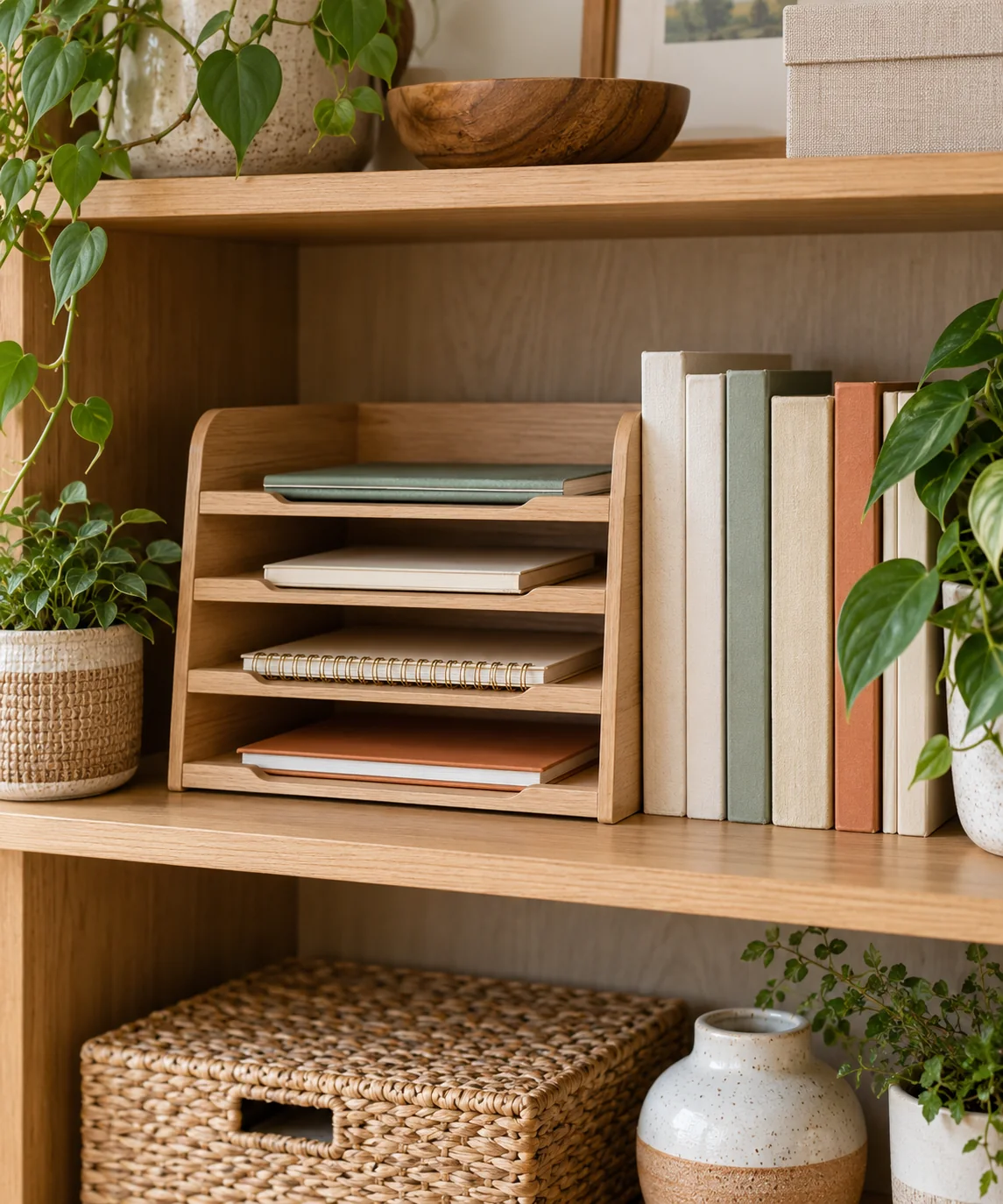
Measure Shelf Clearance and File Retrieval
Before purchasing or repurposing an organizer, record your shelf compartment's exact height, width, and depth alongside the dimensions of the paperwork you plan to store. A desktop sorter requires adequate vertical clearance above its tallest rear divider so folders, notebooks, and tall envelopes can tilt forward and lift out without catching the underside of the shelf above. Rather than relying on arbitrary clearance rules, test your tallest actual documents inside the organizer to verify removal clearance. Ensure the sorter base does not protrude beyond the shelf front edge, where passing foot traffic might bump it. A sorter occupying roughly one-third of the compartment width leaves practical room for neighboring books while maintaining straightforward access.
Select Complementary Material and Joinery
Choose a sorter made from unfinished birch plywood, solid oak, or stained pine that complements the existing bookcase finish. Matching wood species or coordinating tonal values—such as a warm maple sorter on a walnut bookcase—helps the insert appear intentional rather than like misplaced office plastic. Simple box joints or grooved dividers provide structural rigidity without adding unnecessary bulk, ensuring the sorter holds heavy cardstock and notebooks without flexing sideways under regular use.
Organize Contents by Height and Frequency
Utilize the stepped dividers to categorize active paperwork by size and access urgency. Place tall spiral notebooks, file folders, and oversized booklets in the deepest rear slots where the backing provides adequate physical support. Reserve middle dividers for incoming envelopes, standard notepads, and postcards, while placing small postage supplies, index cards, or folded transit maps in the front pocket. This stepped arrangement keeps labels and tabs visible at a glance and stops small documents from slipping behind large binders where they become lost.
Counterbalance the Sorter with Book Rows
Position the file sorter on either the far left or far right side of your mid-tier shelf rather than dead center. Fill the remaining two-thirds of the compartment with a clean row of vertical books, using a simple flat bookend between the volumes and the organizer. This side-by-side pairing balances functional utility with classic library styling, anchoring the sorter neatly so it does not shift sideways whenever you pull out a single folder or notebook.
Establish an Administrative Purge Routine
Because open file sorters are easily accessible, they can quickly accumulate expired receipts, junk flyers, and obsolete notes. Dedicate a short recurring window every two weeks to empty each stepped slot, discard outdated correspondence, and file permanent documents into closed archive boxes elsewhere. Keeping each divider limited to a manageable handful of active items preserves the upright vertical alignment of paperwork and stops the shelf from degrading into an untidy drop zone for general household paper waste.
YOUR STARTING POINT
A little checklist.
Original editorial guidance. Images are AI-generated concepts, not photographs of completed projects. Our sources and approach.
Questions to consider
Can I use a metal wire file sorter instead of wood?
Metal sorters work functionally, but bare wire can scratch shelf surfaces and catch fragile paper corners. Wooden sorters offer broad, smooth support that protects shelf finishes and integrates more naturally alongside book bindings.
Which bookshelf tier is best for a file sorter insert?
Mid-tier shelves between waist and chest height work best. This elevation allows you to read document tabs clearly and retrieve contents comfortably without bending down or reaching overhead into tight shelf clearances.
How do I prevent the wooden sorter from sliding on smooth shelves?
Apply small, thin clear silicone bumper pads or felt dots to the four bottom corners of the sorter base. These pads grip shelf surfaces securely without damaging wood finishes or adding noticeable height.