Bookshelf Styling · THE GUIDE
Integrate Family Board Games Cleanly Beneath Casual Reading Stacks
Shared living spaces often balance diverse entertainment needs, requiring storage that houses both leisure reading and boxed family games. When combined haphazardly, mismatched game packaging quickly overwhelms a bookshelf with visual noise. Integrating games into bottom cubbies anchors the furniture piece visually and functionally, establishing a grounded base beneath lighter paperback stacks. This deliberate zoning preserves immediate accessibility for family game nights while shielding upper reading tiers from bulky clutter. With careful attention to box orientation, stack heights, and shelf depth, everyday games blend smoothly into a refined home library.
Jump to the checklist ↓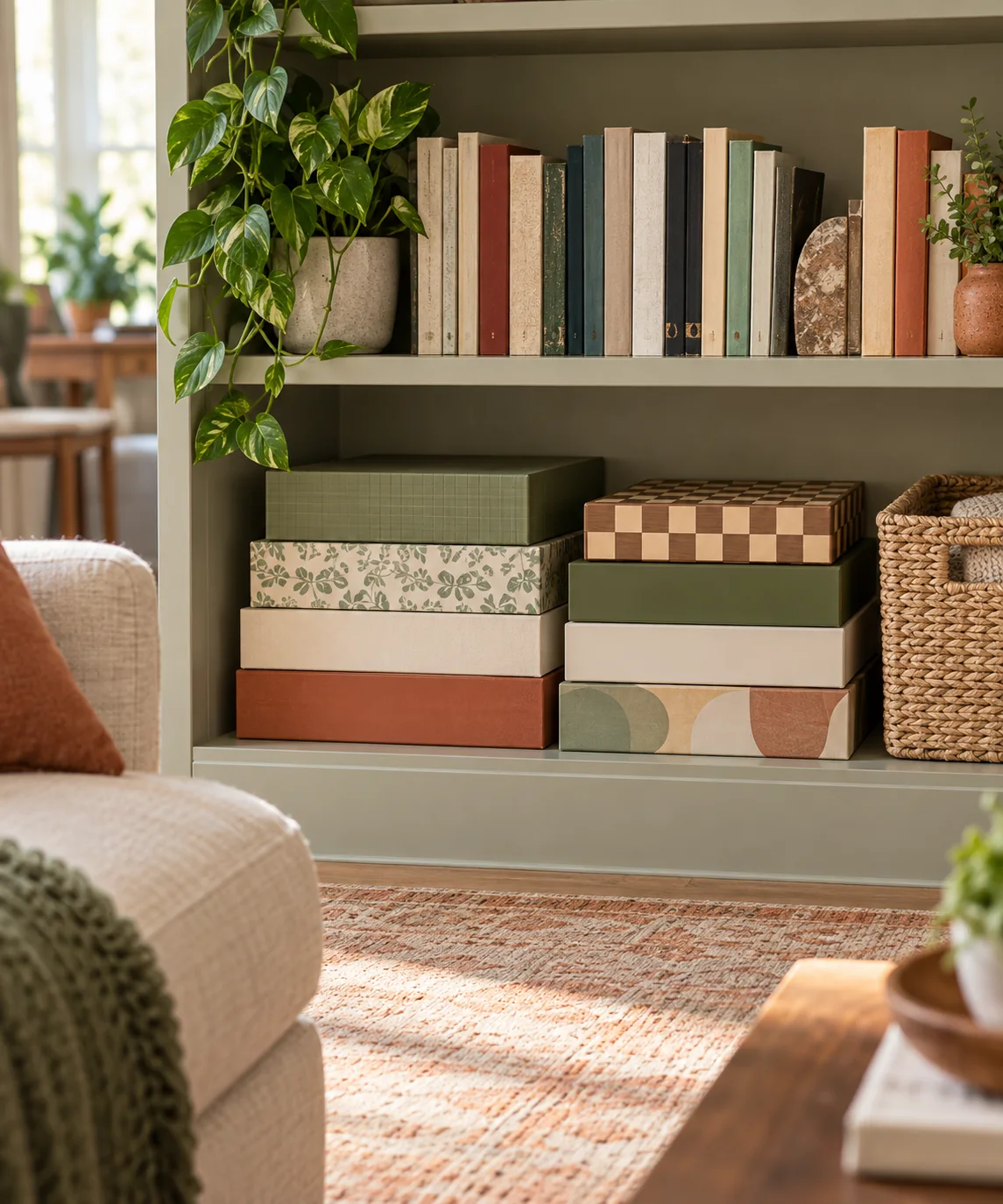
Grounding the Base with Heavy Packaging
Placing large game boxes on bottom shelves establishes structural balance and functional safety. Boxed games carry substantial weight and volume, making upper shelves appear top-heavy when stored overhead. Test your cubby dimensions by measuring the largest rectangular boards first. Slide these oversized items into the lowest shelf level to serve as a visual foundation. This low placement keeps heavy lifting near the floor, reducing the risk of dropped boxes and stabilizing the overall appearance of the entire bookcase.
Spine Orientation and Label Alignment
Boxed games feature varied graphic branding along their edges, which can create visual chaos if turned haphazardly. Position every box horizontally with the primary title edge facing squarely forward toward the room. Align the front edges of the boxes flush with one another, maintaining a consistent line across the cubby. If box depths vary, align them to the front shelf lip rather than pushing them back unevenly, creating an orderly, intentional row that simplifies title selection.
Managing Stack Heights and Box Preservation
Stacking boxes horizontally prevents loose internal components from scattering, but stacking too many creates practical retrieval problems. Limit stacks to three or four boxes maximum to prevent bottom box lids from bowing under excess weight. Place the widest, sturdiest box at the bottom and taper upward to smaller containers. This conservative height limit lets family members slide out an individual game without causing the upper tiers to topple or damaging vintage cardboard corners.
Transitioning from Base Cubbies to Reading Tiers
Creating a clear visual boundary between games and books keeps the bookcase looking tailored rather than disorganized. Dedicate the lowest tier or two exclusively to boxed entertainment, reserving the shelves above solely for vertical book arrangements. This separation creates a distinct functional break. Use plain bookends on the first book tier to contain casual novels, establishing a rhythmic vertical texture that contrasts pleasantly with the solid horizontal blocks resting directly below.
Accommodating Irregular Tins and Accessories
Card games, travel editions, and metal tins rarely match standard board game proportions and disrupt clean horizontal stacks. Group these smaller, irregular items inside an open-top fabric bin or wooden crate sized to fit alongside your stacked boards. Storing accessory decks within a unified container conceals visual discord while keeping components together. Evaluate the bin periodically to return wandering dice, score pads, and stray cards to their proper boxes.
YOUR STARTING POINT
A little checklist.
Original editorial guidance. Images are AI-generated concepts, not photographs of completed projects. Our sources and approach.
Questions to consider
Is it better to store board games vertically or horizontally?
Horizontal stacking protects internal trays and heavy components from shifting, while limiting stacks to three boxes prevents lid sagging. It also forms a stable, grounded platform beneath the vertical book arrangements on upper shelves.
How do I handle game boxes that overhang the shelf?
Avoid placing overhanging boxes on open walkways where they present bumping hazards. Reassign oversized editions to deeper base cabinets or store them flat on the floor beneath an elevated, leg-supported bookcase frame.
What should I do with visually loud, bright game boxes?
Group similarly colored boxes together, or place the loudest graphics on the lowest possible tier. Housing especially vibrant games inside neutral storage baskets conceals packaging while keeping titles immediately accessible.