Bookshelf Styling · THE GUIDE
Integrate Trailing Houseplants on Mid-Level Bookshelves Safely
Introducing live trailing greenery to a bookshelf softens rigid linear woodwork and adds organic texture to dense book compartments. However, pairing potted plants with paper collections introduces genuine risks of water damage, moisture rings, and humidity buildup on valuable bindings. To safely showcase cascading vines at eye level, thoughtful planning is essential. By employing non-porous glazed saucers, protective cork pads, and solid bookends, you can position trailing houseplants directly alongside reading stacks. This method safeguards book spines from accidental dampness while providing foliage with adequate airflow and light for healthy, steady domestic growth.
Jump to the checklist ↓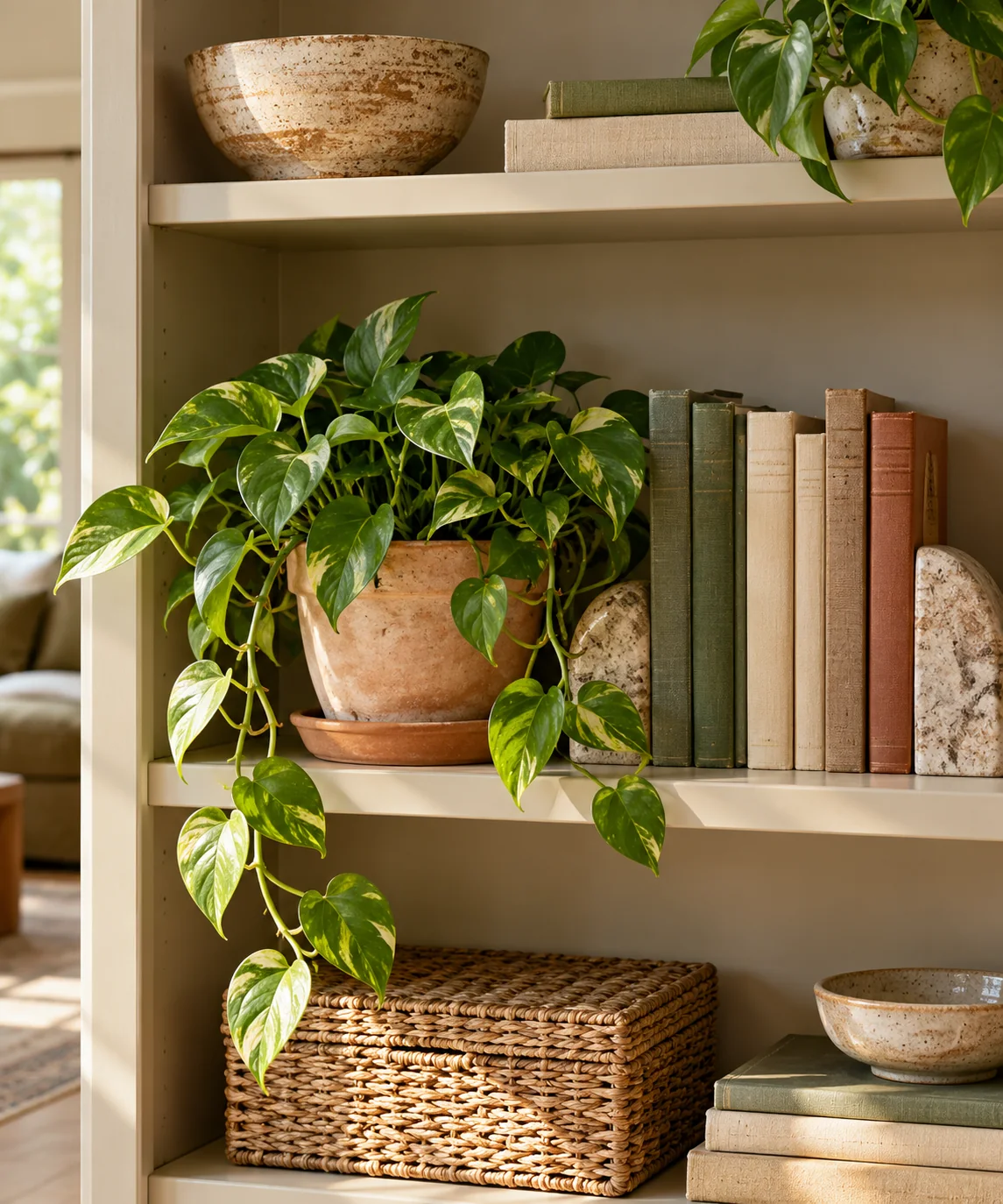
Selecting Watertight Saucers and Protective Barriers
Moisture transfer poses a significant risk when displaying potted plants alongside paper collections. Porous terracotta and unglazed ceramic saucers allow moisture condensation to seep through to shelf surfaces and adjacent page blocks over time. Place nursery pots inside non-porous, glazed ceramic saucers or sealed cachepots that have no bottom drainage holes. Beneath the saucer, add a protective coaster made of cork, silicone, or felt to prevent surface scratches and buffer minor thermal condensation. Ensure the outer container or saucer has high enough sides to contain any residual water draining through potting soil.
Establishing Separation Zones with Protective Bookends
Trailing foliage should not rest against paper page edges or cloth book bindings, as regular leaf transpiration and elevated local humidity can cause paper fibers to cockle or harbor mildew. Position sturdy, non-porous bookends—such as coated metal, polished stone, or sealed wood—between the plant container and neighboring book stacks. Maintain a visible buffer space between the plant saucer and book edges to allow continuous air circulation around both the foliage and the volumes. This open spacing prevents leaves from becoming trapped against bindings where moisture cannot evaporate.
Guiding Vine Growth Away from Books
Trailing plants like Epipremnum aureum (pothos) or Philodendron hederaceum naturally spread across ledges and can work their way behind vertical book rows. Guide wandering stems forward so they cascade over the front shelf lip into the open room. Avoid using strong adhesive clips on finished furniture, as adhesives can strip wood veneer, paint, or laminates upon removal. Instead, gently train stems around heavy, freestanding bookends or use smooth, non-damaging clips attached solely to the plant's own stake or pot rim to redirect growth away from paper.
Watering Logistics Away from Bookshelf Tiers
Never pour water into planters while they sit on the shelf directly next to books. Accidental splashes, overflows, and slow saucer leaks can permanently ruin paper bindings in moments. Establish a routine of carrying the potted plant away from the bookshelf to a sink, basin, or work surface before watering. Allow excess water to drain completely through the container's bottom holes for twenty to thirty minutes. Wipe the bottom and sides of the pot completely dry before returning it to its protective saucer on the shelf.
Monitoring Light, Humidity, and Environmental Conditions
Mid-level shelves typically receive less natural light and ventilation than upper surfaces or open window sills, which slows soil drying and may encourage fungal issues. Choose plants that tolerate moderate, indirect indoor light and do not require heavy misting, as airborne water droplets should never be sprayed near books. Check surrounding books monthly for any sign of warped page blocks, musty odors, or elevated dampness. If the shelf interior remains persistently damp or dark, move the plant to a brighter, well-ventilated location.
YOUR STARTING POINT
A little checklist.
Original editorial guidance. Images are AI-generated concepts, not photographs of completed projects. Our sources and approach.
Questions to consider
Can I keep terracotta planters directly on a wooden bookshelf?
Terracotta is naturally porous and slowly releases moisture through its walls and base, which can warp wood and damage paper. If you use a terracotta pot, place it inside a sealed, watertight cachepot or on a fully glazed saucer lined with a protective mat.
How can I prevent trailing stems from creeping behind books?
Regularly guide new vine growth forward over the front shelf edge toward the light. If stems continue wandering toward the back, trim them back gently or support them with a small trellis or hoop placed inside the pot rather than adhering anything to shelf surfaces.
How do I know if books on the shelf are absorbing moisture from plants?
Inspect books for wavy or warped paper edges, stiffness in bindings, or a damp, musty smell. If any of these signs appear, remove the plant from the bookshelf immediately and allow the books to air out in a dry, well-ventilated room.