Patio Seating Ideas · THE GUIDE
Integrated Planter Box Bench for Kitchen Herb Patios
Placing an integrated planter box bench along the perimeter of a kitchen-adjacent patio provides convenient outdoor seating while keeping fresh culinary herbs close at hand. Compact ground-level patios benefit from furnishings that serve practical dual purposes without impeding primary access doors or cooking prep circulation. Positioning seating between or alongside dedicated planter boxes helps define the usable paved footprint while containing potting media. Because many common kitchen herbs require consistent, direct sunlight to remain productive, selecting an unobstructed, sun-facing section of the patio supports plant health while keeping seating practical and accessible.
Jump to the checklist ↓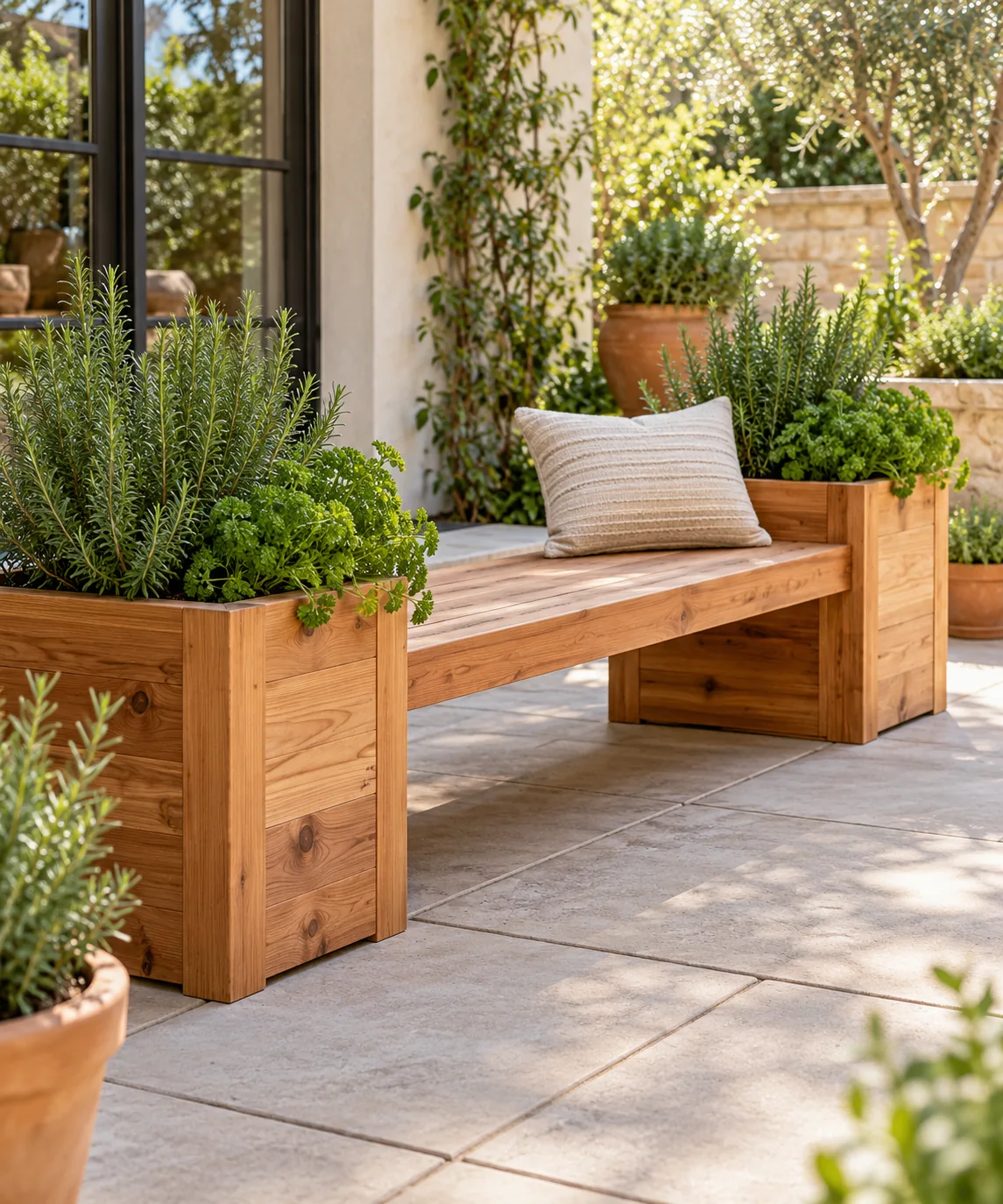
Dimensioning and Circulation Planning
Functional outdoor seating generally targets a finished seat height between 17 and 19 inches from the paved surface, paired with an adequate depth for comfortable upright rest. Flanking planter containers should be proportioned to match the scale of the bench without encroaching on primary door thresholds or steps. Rather than relying on arbitrary dimensions, test the layout on-site by laying painter's tape across the pavers to mark planned edges, ensuring ample clearance remains for carrying trays, moving chairs, and walking through door frames comfortably during outdoor dining.
Sunlight Realities for Culinary Herbs
Popular culinary staples such as rosemary, thyme, chives, and flat-leaf parsley generally require several hours of unfiltered direct sun each day to prevent leggy growth and maintain concentrated foliage. Tucking planter arrangements beneath deep architectural eaves, awnings, or dense porch overhangs can restrict light levels below what sun-loving cultivars need. For patios receiving only partial or indirect sunlight, more shade-tolerant herbs like mint, lemon balm, or chervil may prove more reliable. Keeping individual varieties in dedicated drop-in pots within the outer box prevents vigorous root systems from competing for moisture and nutrients.
Liners and Drainage Management
Placing loose potting soil directly against timber framing invites premature moisture degradation and can lead to persistent staining on underlying concrete or stone pavers. Setting independent nursery pots or drop-in plastic liners equipped with drainage holes onto interior support cleats protects the wood structure and simplifies seasonal replanting. Placing shallow saucers or trays underneath container liners helps catch initial runoff, preventing concentrated mineral and organic leachate from discoloring patio surfaces while avoiding prolonged water saturation around roots.
Weight Considerations and Base Stability
Potting containers filled with damp growing media add considerable weight to an outdoor seating setup. On ground-level patios, this assembly must rest across sound, level concrete or compacted pavers rather than uneven turf or bare soil to prevent differential settling over time. When selecting or assembling commercial bench units, follow manufacturer specifications regarding span limits, internal bracing, and designated weight capacities rather than assuming soil weight or timber species alone will provide sufficient structural rigidity. Cedar and cypress offer natural resistance to rot, though all outdoor woods require appropriate framing to remain stable.
Seasonal Inspection and Maintenance
Debris such as dropped foliage, loose soil, and standing water can collect between seating slats and around planter rims, creating moisture traps that encourage fungal growth. Periodically lifting out drop-in herb containers allows homeowners to inspect the supporting framework for moisture accumulation, insect nesting, or early surface wear. Before winter conditions arrive, clearing organic debris and ensuring wood surfaces dry out prevents freeze-thaw damage. Applying a breathable exterior wood sealer according to product guidelines helps reduce surface checking and UV fading across exposed horizontal surfaces.
YOUR STARTING POINT
A little checklist.
Original editorial guidance. Images are AI-generated concepts, not photographs of completed projects. Our sources and approach.
Questions to consider
Can planter boxes drain directly onto patio pavers?
Direct drainage can cause water mineral deposits, organic stains, and soil residue on concrete or natural stone pavers. Using internal drip trays beneath container inserts, or elevating boxes on low feet to promote air circulation and prompt drying, helps keep the underlying paving clean.
Which culinary herbs work best in modular patio planters?
Herbs that share similar sunlight needs, such as rosemary, thyme, oregano, and chives, work well in sunny spots. Keeping them in separate internal pots inside the common planter box allows you to accommodate distinct moisture requirements without root crowding.
How do you protect wood benches from potting soil moisture?
Avoid putting bulk soil in direct contact with structural wood. Utilizing removable plastic liners or nursery pots seated on elevated interior cleats maintains an air buffer that prevents continuous moisture transfer to the bench frame.