Household Reset Routines · THE GUIDE
Ironing Station Tidy and Water Spritzer Refill
An impromptu ironing station can quickly dominate a multi-use utility room or bedroom corner if left assembled between pressing tasks. Creating an efficient wind-down routine safely cools the appliance, manages residual moisture, and restores floor space without tangled cords or tipped boards. Pairing an over-the-door hanger with a methodical winding process protects both the iron wiring and interior door surfaces. Taking two minutes to prep the board, spritzer bottle, and cord creates an orderly setup that is immediately ready for subsequent pressings without cluttering room walkways.
Jump to the checklist ↓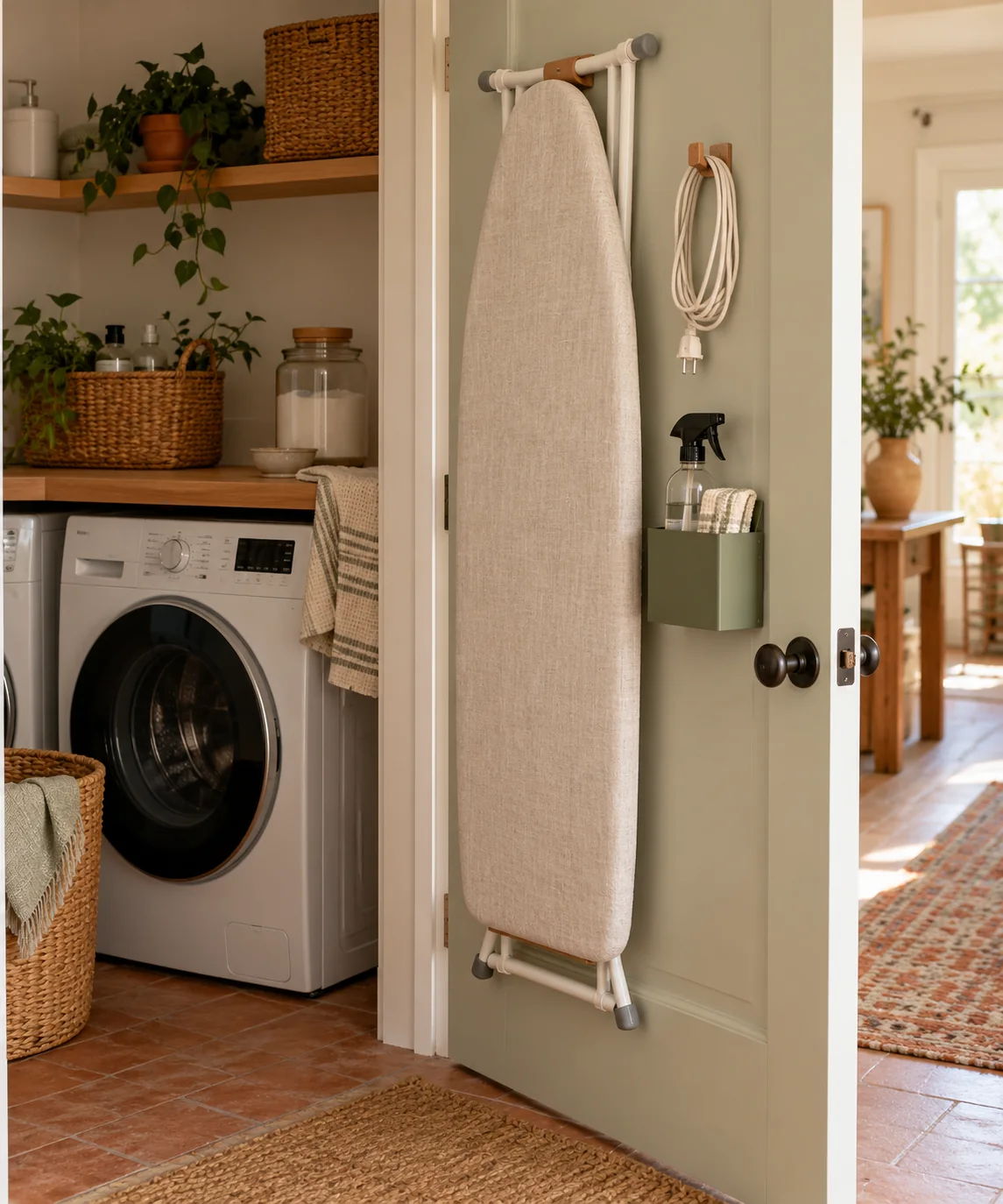
Cooling Protocol and Safe Surface Placement
Never pack away an iron immediately after turning off the power. Unplug the appliance from the electrical outlet and set it upright on a stable, heat-resistant surface well away from counter edges and walkways. Allow the metal soleplate to cool thoroughly to room temperature before coiling cords, wrapping accessories, or mounting the unit in a storage caddy. Rushing this step introduces thermal hazards, such as melting nearby cord insulation, marring door surfaces, or overheating storage brackets that are not rated for hot contact.
Water Spritzer Drain and Refill Sequence
Dedicated handheld spray bottles supply topical misting during pressing without causing mineral scale inside the iron's internal steam chamber. Inspect the water remaining in your spray bottle before stowing. If the water has remained stagnant for several weeks, empty and rinse the reservoir to prevent mineral buildup and stale odors, then refill with fresh water. Avoid overfilling past the bottle neck so the dip tube and pump mechanism seat cleanly without spilling. Wipe the exterior container dry before returning it to its utility holder.
Protecting the Power Cord from Mechanical Strain
Winding a power cord tightly around an iron base strains the internal copper wiring and weakens the flexible rubber strain-relief sleeve at the appliance entry point. Instead, fold or coil the cooled power cord into loose, gentle loops without sharp bends or kinks. Fasten the bundle using a reusable hook-and-loop strap or the manufacturer's integrated cord clip if provided. Maintaining loose coiling prevents internal wire fatigue, reduces outer sheath wear, and supports long-term electrical safety.
Over-the-Door Hanger Alignment and Clearance
Examine the mounting brackets of your over-the-door organizer to verify that they rest flush across the top edge of the utility door. To minimize surface vibration and protect door trim paint from friction scuffs, apply thin adhesive felt or foam pads beneath the contact hooks. Gently close the door to verify that the top jamb and frame header clear the bracket thickness without rubbing, binding, or putting strain on the door hinges. If the door sticks or resists latching, discontinue over-the-door mounting.
Board Collapse and Secure Hooking
Depress the height adjustment release lever to collapse the ironing board flat, guiding the tubular steel legs until the travel lock snaps securely into place. Engaging the mechanical leg lock prevents the frame from unfolding unexpectedly while being lifted or transported. Lift the board by its central structural spine and position its curved feet or crossbar firmly onto the dedicated hooks of your storage hanger. Confirm the board hangs vertically and rests flat against the door panel without swinging freely.
YOUR STARTING POINT
A little checklist.
Original editorial guidance. Images are AI-generated concepts, not photographs of completed projects. Our sources and approach.
Questions to consider
Why must the iron cool completely before being placed in a storage holder?
Storing an iron while the soleplate is still warm or hot can scorch painted doors, soften plastic storage caddies, or damage nearby power cords. Waiting until the soleplate reaches room temperature eliminates potential thermal damage and contact burn risks.
Is distilled water strictly necessary for handheld spritzer bottles?
While distilled water is beneficial for internal iron reservoirs to prevent internal scale accumulation, ordinary clean tap water is generally acceptable in external misting bottles. Empty and rinse the bottle regularly to avoid standing sediment or nozzle clogs.
How can I tell if an over-the-door hanger will fit without damaging the door frame?
Hang the bracket without weight and close the door slowly to inspect clearance along the top header. The bracket must pass through the frame gap without rubbing the jamb, scraping paint, or requiring force to latch the door shut.