Rental-Friendly Decor · THE GUIDE
Keep Balcony Herbs Hydrated with a Self-Watering Planter Trough
Balcony container gardens face rapid moisture loss due to elevated airflow and intense perimeter heat. Shallow pots often dry out quickly during sunny days, and improper drainage can create water runoff that inconveniences lower units. A sub-irrigated self-watering planter trough placed on the balcony floor helps regulate moisture through an internal bottom reservoir while retaining excess water. However, water and soil add considerable weight to outdoor structures. Before installing sizable troughs, balcony gardeners must verify allowable load limits with property management or structural guidance, while observing local wind patterns and microclimates.
Jump to the checklist ↓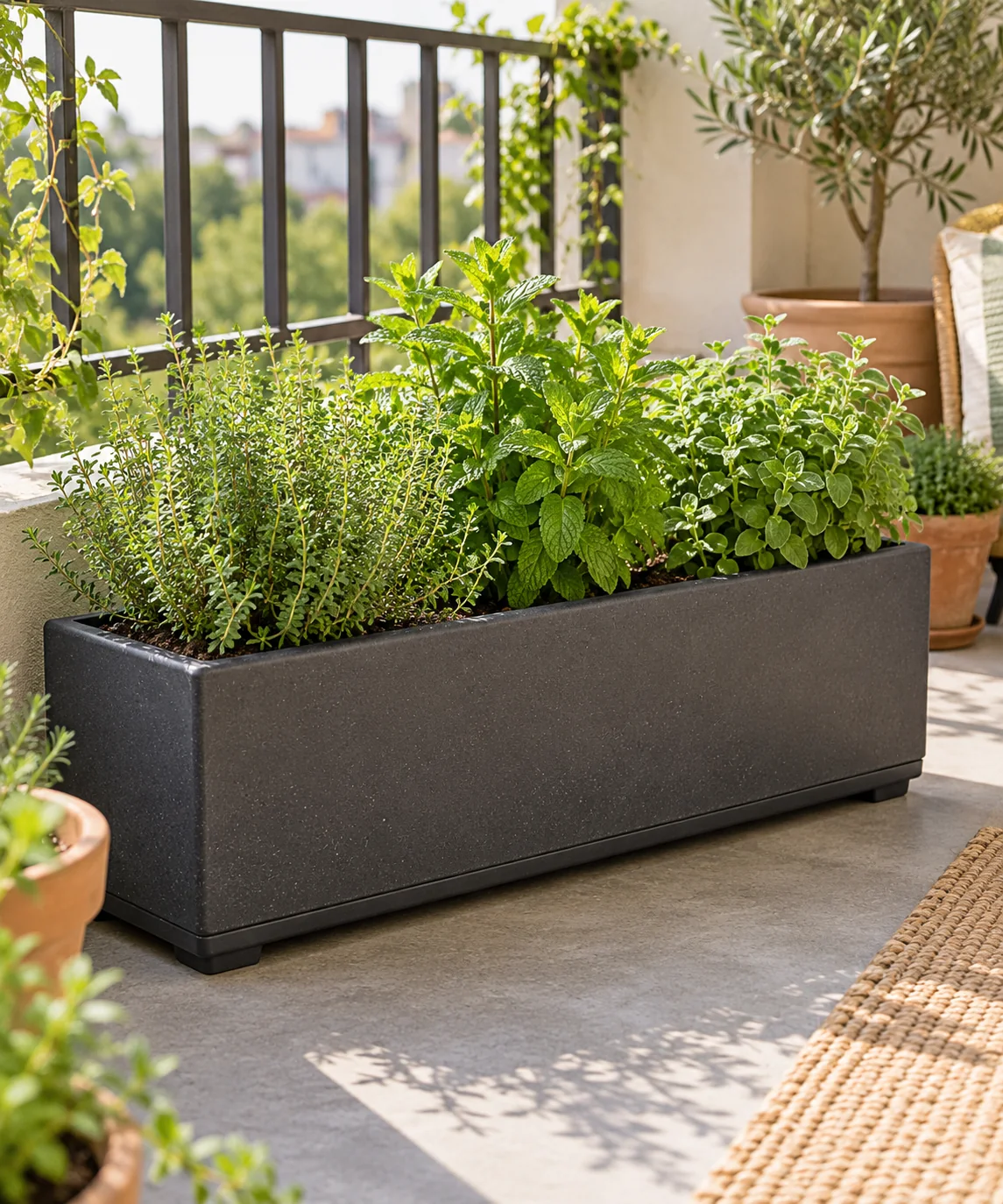
Verifying Structural Capacity and Placement
Before introducing large planter troughs filled with damp soil and water reservoirs, consult your building management or lease rules regarding permissible balcony live loads. Saturated growing media and full water chambers add substantial weight that can stress cantilevered structures. Never rely on visual assumptions or corner positions to guess load capacity. Once permissible limits are confirmed, position planters on the balcony deck well clear of sliding doors, exterior furniture pathways, and designated emergency egress routes, ensuring the container does not block essential building access.
Understanding Balcony Wind and Sun Exposure
Balcony environments exhibit unique microclimates characterized by shifting solar angles and turbulent air currents at varying building heights. While positioning a container near an interior balcony wall can offer modest shelter from prevailing breezes, it cannot eliminate gusting or turbulence entirely. Monitor your specific balcony across several days to determine actual sunlight patterns rather than relying on generic outdoor sun rules. If your space experiences intense heat or persistent wind, choose resilient culinary herbs and monitor soil moisture closely.
Assembling the Sub-Irrigation Assembly
Self-watering planters rely on a perforated aeration screen that separates the bulk soil volume from the bottom water chamber. Capillary wicks or soil-filled columns draw moisture upward as plants transpire. When assembling the trough, avoid adding gravel, broken pottery, or loose stones across the separator plate, as coarse materials sever the capillary contact needed for wicking. Confirm that the integrated overflow port remains open and unobstructed so heavy rains can exit freely without saturating the roots or leaking haphazardly.
Selecting Potting Media and Herb Arrangements
Fill the planting chamber with a lightweight, porous potting mix formulated with peat moss, coconut coir, and perlite to encourage capillary lift and root aeration. Heavy garden loam or dense topsoils compact easily, preventing water from wicking upward and suffocating root zones. Group herbs with comparable moisture preferences within the same planter, ensuring fast-growing varieties do not crowd out slower companions. Water thoroughly from above upon initial planting to settle the media and establish the capillary moisture connection.
Reservoir Management and Seasonal Cleaning
Use the container's built-in float gauge or manual dipstick as a helpful reference, but periodically inspect actual soil moisture by inserting a finger a few inches below the surface. Top up the reservoir through the dedicated fill tube according to manufacturer instructions, allowing brief drying intervals between refills to maintain root aeration. At the end of the growing season or before freezing weather, drain the reservoir completely to prevent freezing water from cracking the basin, and flush out accumulated mineral salts.
YOUR STARTING POINT
A little checklist.
Original editorial guidance. Images are AI-generated concepts, not photographs of completed projects. Our sources and approach.
Questions to consider
Can I mount a self-watering trough to my balcony railing?
Do not attach troughs to balcony railings unless the planter and mounting system are specifically certified by the manufacturer and approved under your building's tenancy guidelines. Full reservoirs and wet soil create heavy loads and severe fall hazards if dislodged by wind or impact.
How do I know if my herbs are getting enough light on a covered balcony?
Observe plant growth over two to three weeks. Herbs receiving insufficient sunlight will develop pale foliage, elongated weak stems (etiolation), and diminished aroma. If these signs appear, relocate the planter to a spot receiving brighter, indirect or direct natural light as layout allows.
How do I prevent the planter from overflowing onto neighboring balconies during storms?
Ensure the planter's overflow port is fitted with a collection saucer or routed where drainage is permitted by building rules. Inspect the overflow opening periodically to clear debris and prevent water from accumulating past safe root levels.