Kitchen Garden · THE GUIDE
Plan a three-pot kitchen herb garden
Start with herbs you already cook with. A manageable collection gives you time to learn how light, wind and watering behave in your home. Basil, mint and rosemary offer different textures and uses, but they should not automatically share a planter.
Jump to the checklist ↓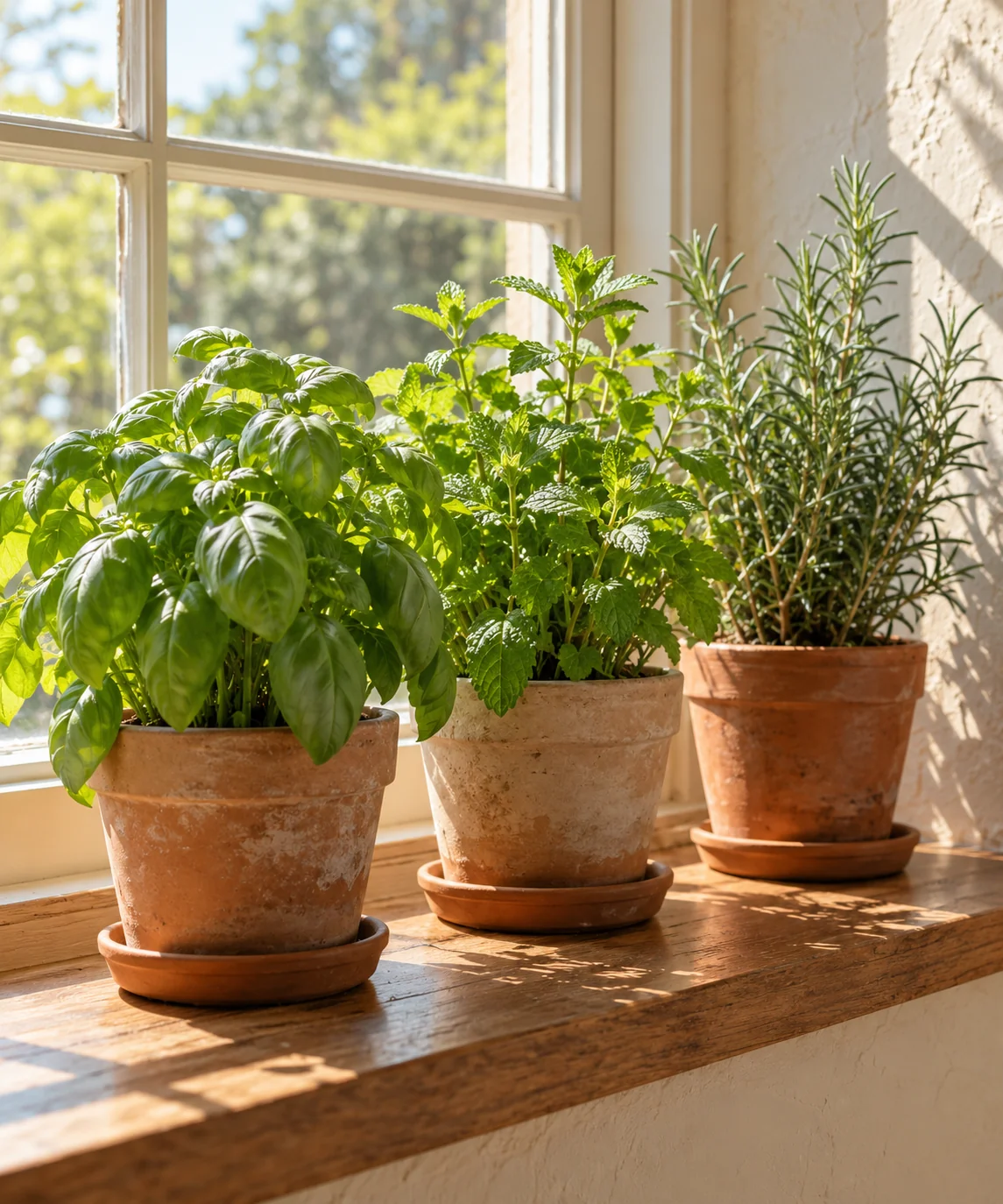
Watch the light
Observe the intended location across a normal day. Most culinary herbs perform best with at least six hours of direct sunlight; a bright-looking indoor corner may provide much less. Choose plants suited to your exposure or move the project to a sunnier position.
Separate the containers
Use pots with drainage holes and suitable container potting mix. Separate pots make it easier to adjust care for different moisture needs. Empty standing water from saucers after watering. Begin with labeled nursery plants so you know exactly what you are growing.
Make harvesting useful
Keep clean scissors with your supplies and follow the growing instructions for each herb. Take modest harvests while leaving growth for recovery. Label culinary plants and keep them apart from decorative plants; never assume an unfamiliar leaf is edible. Wash harvested herbs before use.
Keep an observation note
Once a week, record the location, watering observations and new growth. Change one variable at a time if a plant struggles. Move small harvests into your usual cooking routine rather than expanding the garden before you can maintain it.
YOUR STARTING POINT
A little checklist.
Further reading: University extension guidance ↗. Adapt growing advice to your climate and plant variety.
Original editorial guidance. Images are AI-generated concepts, not photographs of completed projects. Our sources and approach.
← Back to the journal