Kitchen Herb Gardens · THE GUIDE
Kitchen Island End-Cap Niche Herb Planter
Planning an open niche on the exterior panel of a kitchen island frees prep counters while keeping culinary greens within arm's reach. Herbs require substantial light, so an island alcove needs either direct line of sight to a bright window or a dedicated low-profile grow light. Positioning containers along an outer end panel protects delicate leaves from hot cookware and grease splatters. A drop-in waterproof liner prevents spills from soaking internal cabinetry. This structural alcove holds standard rectangular containers, establishing an orderly workstation while maintaining comfortable kitchen walkway clearances.
Jump to the checklist ↓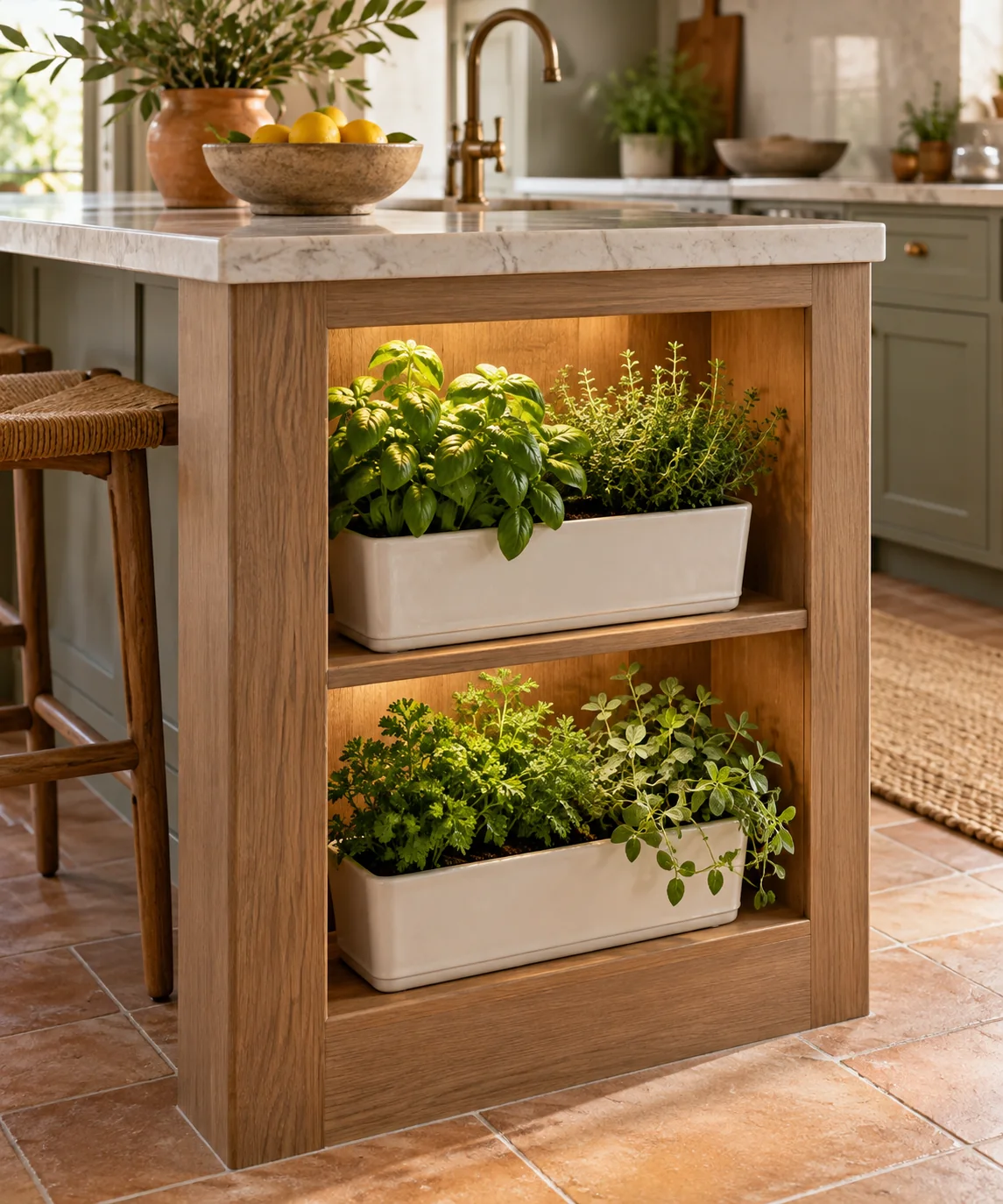
Island Circulation and Spatial Planning
Integrating an herb niche on a kitchen island end panel requires evaluating surrounding traffic flows, door swings of nearby appliances, and cabinet structural integrity. Rather than relying on generic dimensions, assess how cooks and household members move through the workspace. Ensure that recessed containers do not project beyond the decorative panel or interfere with passage between the island and perimeter counters. Consult cabinet manufacturer specifications or a qualified millwork installer before cutting into existing island framework, as structural end gables and internal supports bear significant countertop weight.
Light Exposure and Supplemental Lighting Safety
Culinary herbs require substantial light to maintain compact foliage, which island ends rarely receive unless directly aligned with large windows or skylights. When ambient daylight proves insufficient, supplemental grow lighting may be necessary. If installing artificial lighting, use certified plug-in fixtures designed for damp kitchen zones and follow manufacturer mounting clearances. Avoid routing power cords through enclosed cabinet cavities or wall cavities without consulting local electrical codes and a licensed electrician, as concealed household wiring must comply with specific safety standards.
Cabinet Moisture Protection and Containment
Kitchen cabinetry manufactured from wood veneers, solid hardwood, or composite materials readily absorbs moisture, leading to swelling, finish degradation, and mold growth. To avoid damaging the island, never place moist soil directly against cabinet millwork. House herbs in independent, leakproof interior pots resting inside sealed drip trays or removable waterproof liners made of food-grade silicone or acrylic. Remove pots to a kitchen sink for watering, permitting them to drain completely before returning them to the recess, which eliminates moisture accumulation inside the niche.
Plant Selection for Enclosed Niches
Sheltered niches have limited air circulation, which can foster fungal issues if dense foliage traps humidity against timber surfaces. Select compact, upright herbs such as chives, upright thyme, parsley, or bush basil rather than vigorous, sprawling species like mint or sprawling oregano. Allow adequate spacing between individual containers to support passive air exchange around foliage. Regularly prune stems that make contact with niche walls, which helps prevent condensation transfer to cabinet finishes and maintains an organized culinary harvest zone.
Daily Maintenance and Kitchen Workspace Hygiene
An end-cap herb niche sits close to active cooking and prep areas, exposing plants to airborne grease, dust, and foot-traffic debris. Wipe exterior cabinet surfaces promptly with a clean microfiber cloth to remove spilled soil or water droplets. Check soil moisture manually by feeling the potting medium rather than adhering to rigid watering schedules, as interior microclimates vary with season and HVAC use. Regularly remove dead foliage or fallen leaves from the niche base to maintain clean food-safe surroundings adjacent to meal preparation surfaces.
YOUR STARTING POINT
A little checklist.
Original editorial guidance. Images are AI-generated concepts, not photographs of completed projects. Our sources and approach.
Questions to consider
Can I cut an open niche into any standard kitchen island?
Not all island end panels can be altered safely. Many end panels serve as structural shear supports holding stone or solid-surface countertops. Always review cabinet construction drawings or consult a qualified carpenter before removing or modifying island framing.
How should supplemental grow lights be powered safely in a kitchen island?
Use certified low-voltage fixtures plugged into accessible, code-compliant exterior kitchen outlets with ground-fault protection. Do not thread loose cords through interior cabinet walls or voids unless the installation meets local electrical and building standards.
Which herbs perform best in recessed kitchen niches?
Upright, compact varieties with moderate spread, such as bush basil, chives, curly parsley, and upright common thyme, perform best. Vigorous runners or large shrubs quickly crowd the space, restrict air circulation, and press moisture against surrounding woodwork.