Kitchen Herb Gardens · THE GUIDE
Kitchen Pegboard Wall with Wire Herb Pot Baskets
A wall-mounted pegboard offers a flexible, modular arrangement for displaying small culinary herbs without sacrificing kitchen counter workspace. Utilizing wire ring brackets and wire baskets allows gardeners to position potted herbs near natural window light and adjust layouts as foliage develops. Because wall-mounted systems carry cumulative weight from containers, potting medium, and water, thoughtful planning is essential. By observing practical weight limits, selecting appropriate hardware, and designing around natural window light, an interior pegboard can function as a productive, organized station for everyday cooking herbs.
Jump to the checklist ↓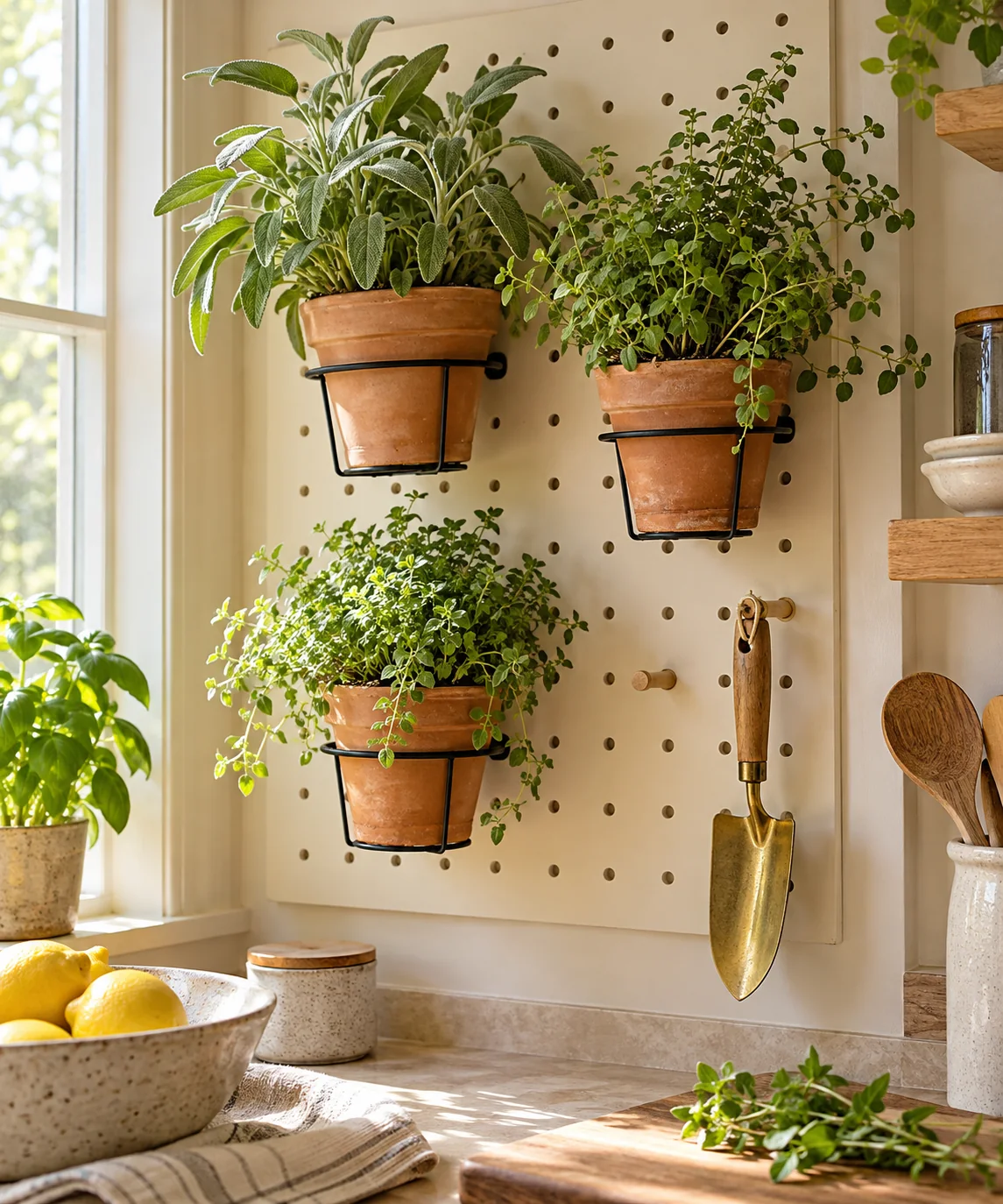
Selecting Sturdy Wire Brackets and Containers
Wire pot holders and hanging baskets must be matched to both container dimensions and the board's hole spacing. Heavy-gauge coated steel brackets resist corrosion from kitchen moisture and routine pot handling. Flared-rim terracotta or lightweight plastic containers between three and five inches in diameter fit securely inside matching wire rings. Ensure each hook engages the pegboard perforations firmly without slipping or tilting forward. Because damp soil adds substantial mass, verify that the combined weight of pots, brackets, and plants remains well within the pegboard manufacturer's rated load limit.
Assessing Natural Light and Kitchen Placement
Herbs like thyme, sage, and oregano demand bright, direct sunlight to sustain sturdy stems and concentrated aromatic oils. Position the pegboard on a wall surface that receives several hours of unshaded natural light through adjacent windows. Avoid placing the board directly above cooking ranges, dishwashers, or heating vents, where steam, grease, and localized hot air currents can stress foliage and dry out soil unevenly. If only part of the board catches direct rays, group light-loving plants within that footprint and reserve shaded areas for non-living kitchen utensils.
Drainage Management and Surface Protection
Hanging containers without drainage risk waterlogging roots, while free-draining pots can drip onto painted pegboards and lower surfaces. Use a double-pot strategy or remove pots entirely during watering. Slip simple plastic nursery pots with drainage holes inside sealed outer decorative vessels, or transport individual pots to the kitchen sink for watering. Allow all drainage water to stop dripping completely before returning containers to their wire rings. This approach prevents mineral water stains, prevents wood swelling, and keeps wall surfaces clean.
Arranging Layouts for Light and Growth
Plan vertical and horizontal spacing according to the natural habit of each herb variety rather than following rigid measurement formulas. Provide sufficient vertical headroom so upright growers, such as sage or rosemary, do not press against the bottom of containers above them. Allow enough lateral clearance between adjacent pots so air circulates freely around foliage, reducing conditions that favor powdery mildew. Place compact or trailing varieties on lower tiers where their cascading stems will not shade companion pots beneath.
Routine Maintenance and Weight Balancing
Wall-mounted herb displays require periodic inspection to ensure stability over time. Check brackets and pegboard wall anchors regularly for signs of loosening, deflection, or material fatigue caused by continuous loading. Wipe down the pegboard periodically with a dry or lightly dampened cloth to clear away shed leaves and potting grit. As herbs expand, root systems may outgrow small wall pots; repot overgrown plants into larger standalone containers and replace them on the board with young starter plants to maintain balanced wall loading.
YOUR STARTING POINT
A little checklist.
Original editorial guidance. Images are AI-generated concepts, not photographs of completed projects. Our sources and approach.
Questions to consider
How can I prevent water runoff from damaging the pegboard?
Remove each pot from its bracket and water it thoroughly in the sink, allowing excess water to drain out completely before returning it to the wall. Alternatively, place potted herbs inside solid cachepots that catch runoff, checking regularly to ensure roots do not sit in standing water.
Which herbs are best suited for pegboard wire rings?
Compact, slower-growing culinary herbs such as creeping thyme, Greek oregano, and dwarf sage are well suited to small wall containers. Fast-growing, vigorous herbs like mint or large-leaf basil can quickly outgrow small pots and require frequent root division or pruning.
Can any standard pegboard support potted herbs?
Pegboard weight limits vary widely depending on whether the board is made of hardboard, composite wood, or metal, as well as how securely it is anchored to wall studs. Consult the manufacturer guidelines for weight capacities and ensure mounting hardware is rated for the combined load of wet soil and containers.