Kitchen Herb Gardens · THE GUIDE
Kitchen Step Stool Dual-Purpose Plant Stand
In compact kitchens with limited sill space, finding direct sunlight for culinary herbs requires creative spatial planning. A sturdy, freestanding wooden step stool positioned near a low window can serve as an effective daytime sun platform without requiring permanent cabinetry alterations. By utilizing the wide upper tread to hold a compact tray of potted herbs, you capture valuable sun patches across the morning hours. When kitchen chores require high-cabinet reach, the lightweight herb tray lifts away instantly, restoring the stool to its original utility without disrupting daily meal preparation.
Jump to the checklist ↓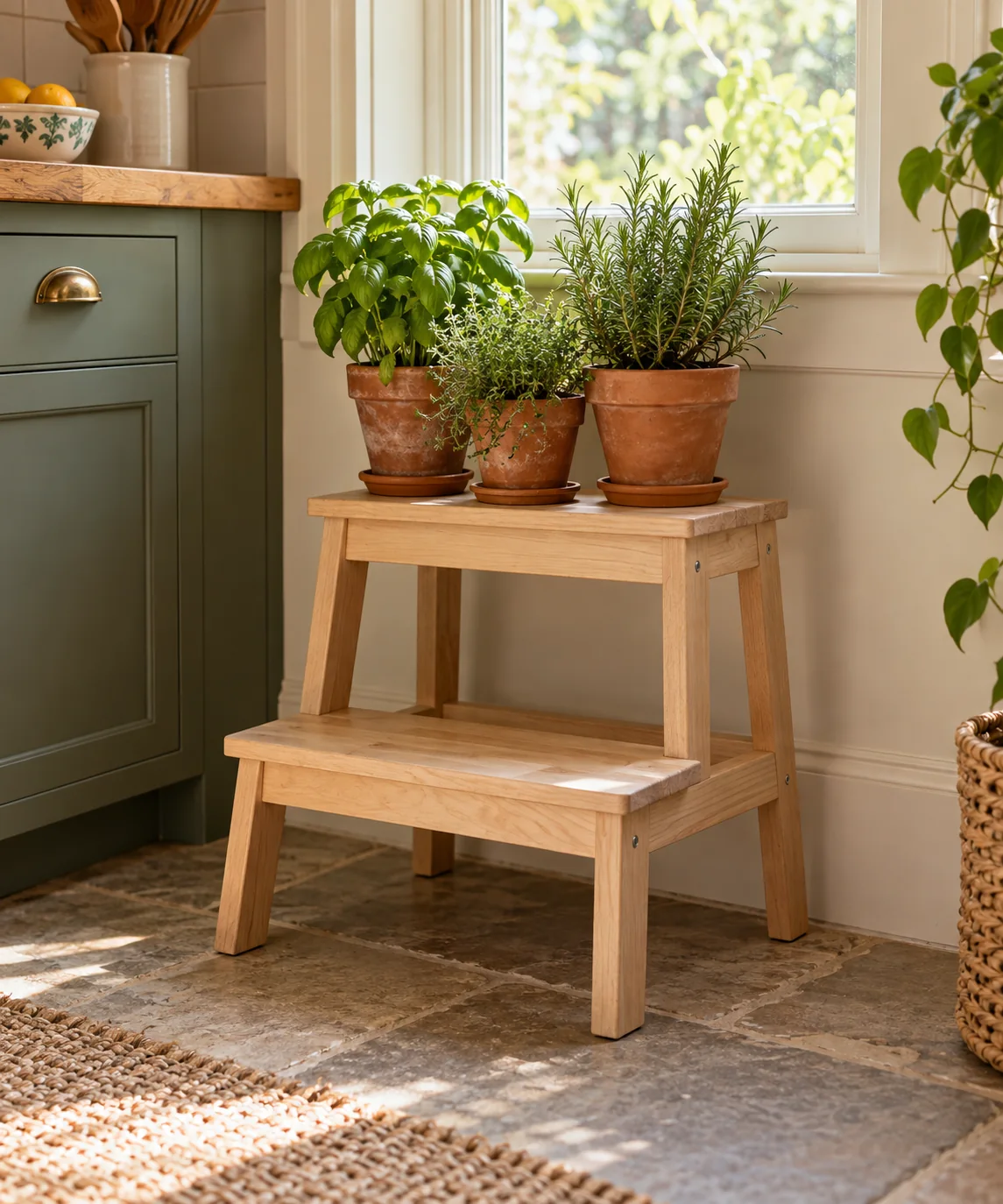
Placement Planning and Circulation Paths
Position the step stool near daylight while keeping it clearly outside active work triangles between the sink, refrigerator, and cooking surface. Rather than relying on rigid clearance measurements, evaluate the functional walking space of your specific kitchen layout. A stool should never impede cabinet doors, appliance drawers, or primary exit pathways. Placing the stool adjacent to a low window or in an underused corner preserves natural movement through the room while reducing the likelihood of accidental bumps or snagged clothing during busy meal prep.
Selecting and Securing the Herb Tray
Placing loose pots across the top tread creates clutter and complicates fast access when the stool is needed for climbing. Instead, organize small containers within a single rimmed tray fitted with protective non-slip pads beneath its base. The tray should sit flush across the upper tread surface without overhanging edges that could catch on aprons or passing pets. A self-contained tray enables a swift two-handed transfer to an adjacent worktop whenever you need the steps for reaching upper cabinets.
Daylight Considerations for Kitchen Herbs
Culinary herbs such as basil, thyme, and oregano generally require strong, direct light to maintain compact foliage and robust growth. Low-set windows often cast bright patches onto floor surfaces where containers remain vulnerable to accidental kicks. Elevating pots on the stool platform lifts them into incoming light beams without occupying valuable countertop work zones. Monitor sunlight angles across the room throughout the year, as seasonal shifts may change how deeply daylight penetrates your kitchen.
Weight Distribution and Center of Gravity
While domestic step stools are manufactured to support adult foot traffic when used as intended, resting objects on the top tread introduces different balance considerations. Keep the plant arrangement modest by using small, shallow containers made of lightweight materials rather than heavy ceramic or stone urns. Tall planters raise the overall center of gravity, increasing top-heaviness if the stool is disturbed. Keep pot heights low and confirm the stool sits evenly on all feet before placing any greenery on top.
Establishing a Safe Daily Routine
Using a step stool as a temporary plant perch requires consistent maintenance habits. Always designate a clear, nearby counter surface ready to receive the herb caddy before moving the stool. Remove the tray entirely before stepping onto the treads; never attempt to climb or stand on a stool with pots still in place. Inspect the wooden treads regularly for stray water drops or loose soil particles, wiping the surfaces dry immediately to prevent slip hazards or moisture degradation over time.
YOUR STARTING POINT
A little checklist.
Original editorial guidance. Images are AI-generated concepts, not photographs of completed projects. Our sources and approach.
Questions to consider
Can a folding step stool be used as a temporary plant stand?
A folding stool should only be considered if it features an active locking mechanism that secures the frame open, and the manufacturer permits static resting loads on the treads. Never rely on an unlocked or loosely hinged mechanism.
How can wooden treads be protected from moisture damage?
Use a completely sealed, non-porous tray beneath the pots and empty any drainage runoff promptly. Do not allow water to stand beneath the tray, as trapped moisture can warp wood and create a slippery tread surface.
Is a dual-purpose stool safe in households with children or pets?
Household activity increases the chance of accidental collisions. If pets or young children frequently use the room, keep the stool out of travel paths and assess whether a dedicated, stable plant stand or windowsill bracket is a more reliable alternative.