Patio Seating Ideas · THE GUIDE
L-Shaped Corner Storage Bench for Small Courtyards
Small brick courtyards frequently suffer from awkward boundary zones where intersecting walls create unusable dead space. Individual chairs scattered around a modest terrace crowd the central area and make yard maintenance cumbersome. An L-shaped corner bench resolves this issue by consolidating seating along the perimeter while embedding hidden utility within its frame. Beneath lift-up seat lids, spacious storage compartments conceal trowels, twine, hoses, and spare containers from view. This arrangement opens up central paving stones for foot traffic, creating an organized outdoor retreat that doubles your seating capacity without generating visual clutter.
Jump to the checklist ↓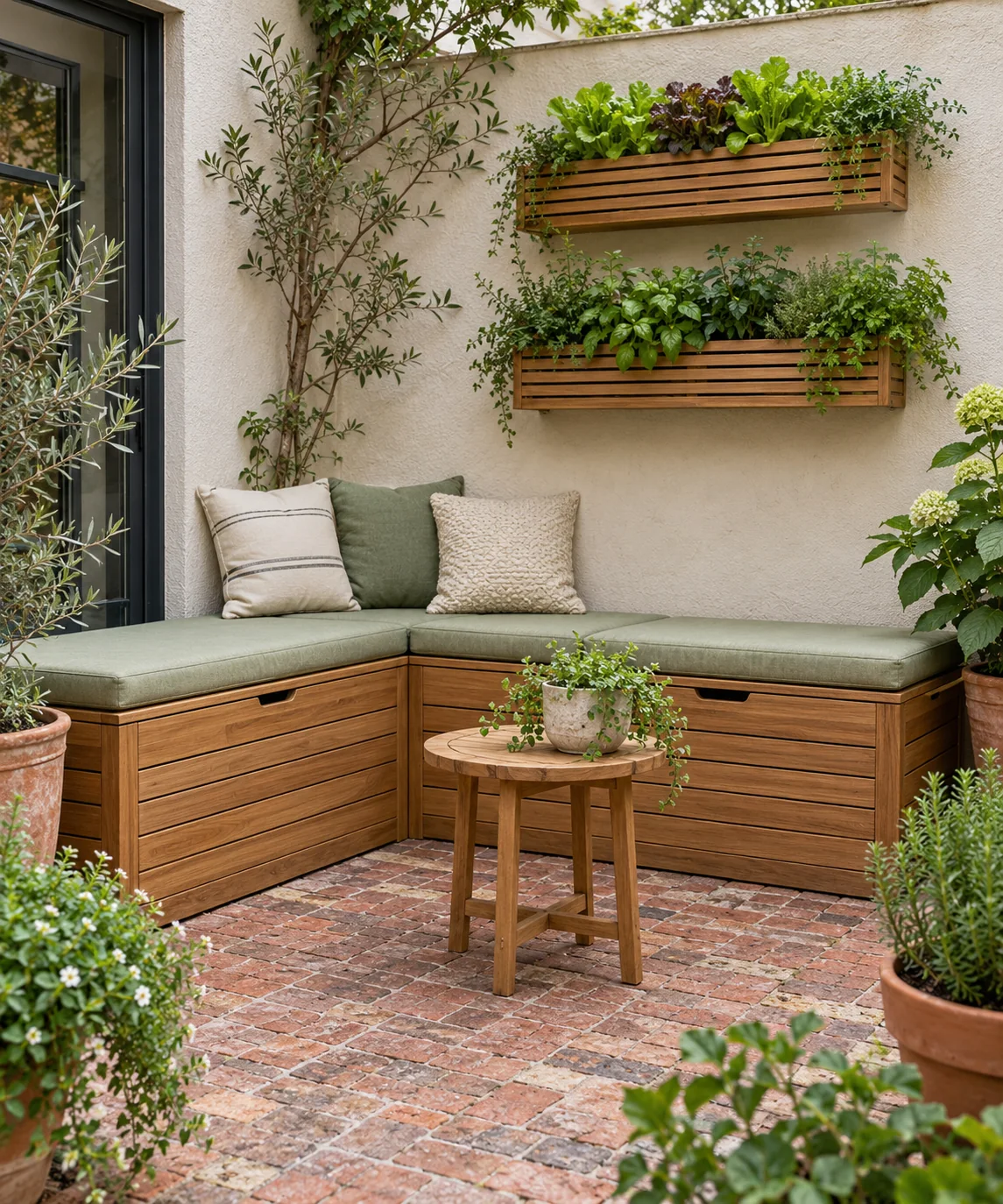
Measuring Corner Geometry and Brick Clearance
Before positioning an L-shaped unit against exterior brick, verify that the corner forms a true 90-degree right angle. Historic or older brick masonry often bows outward or possesses uneven mortar joints that push modular furniture out of alignment. Maintain a two-centimeter air gap between the back panels of the wooden bench and the brickwork. This clearance prevents trapped moisture, allows ambient airflow to dry the masonry after rain, and avoids staining the wood with efflorescence deposits that naturally migrate through porous exterior brick surfaces.
Compartment Ventilation and Water Protection
Enclosed wooden benches must protect stored gardening tools from dampness without turning into airless moisture traps. Build or select benches featuring internal lift-out plastic storage tubs or breathable slatted bases lined with water-resistant fabric rather than hermetically sealed interiors. Drill small ventilation weep holes into the underside of each compartment floor to allow condensation drainage. Storing hand tools inside secondary waterproof tool rolls or plastic bins prevents rust if rainwater briefly penetrates the lid seams during intense storms or sideways cloudbursts.
Hinge Selection and Seat Lid Clearance
Functional corner benches require careful clearance planning for lift-up lids. If two bench sections meet at an inner corner, adjacent lids can collide if opened simultaneously. Design the inner corner as a fixed stationary seat square, running hinged lids only along the extending bench wings. Equip each lid with stainless steel continuous piano hinges and soft-closing lid stays. Friction stays prevent lids from slamming down on hands while retrieving shears, protecting both user fingers and the timber framing from shock damage.
Timber Finishing and Ground Moisture Defense
Brick courtyards remain cool and damp longer than elevated decks, exposing bench footings to ground-level humidity. Elevate the bench frame slightly by attaching dense rubber or nylon leveling feet to the base posts, keeping bottom wood fibers from wicking water from damp bricks. Treat the exterior timber with a breathable water-repellent sealer rather than a thick polyurethane coat that can bubble or peel under outdoor weathering. Inspect the timber base annually to clean away accumulated soil, leaf litter, and moss.
Balancing Courtyard Flow with Peripheral Planting
With seating pushed into the corner, the remainder of the courtyard remains open for circulation and container gardening. Keep heavy planters away from the seat lid swing path so compartments remain accessible without shifting heavy pots. If integrating vertical planter boxes nearby on slatted screens, select shallow troughs for leafy salad greens or trailing foliage. Ensure these planters do not overhang the bench cushions, preventing falling soil, dripping irrigation water, or insect activity from disrupting the clean seating area below.
YOUR STARTING POINT
A little checklist.
Original editorial guidance. Images are AI-generated concepts, not photographs of completed projects. Our sources and approach.
Questions to consider
How do I keep tools dry inside an outdoor wooden storage bench?
Use inner waterproof storage bins with gasketed lids beneath the bench seat. Combining an external slatted wood bench lid with sealed interior containers stops condensation and windblown rain from causing corrosion on metal garden tools.
What type of wood is best for small courtyard benches?
Durable hardwoods or naturally rot-resistant woods like cedar and cypress perform best. These timbers withstand ground moisture, insect pressures, and seasonal temperature shifts far better than untreated pine or painted composite boards in damp courtyards.
Can the storage bench lid double as an everyday dining bench?
Yes, provided the lid supports standard sitting weight. Frame the top with sturdy dimensional timber supported by intermediate cross braces, ensuring the platform remains rigid under load and does not bow across the storage box span.