Pantry Organization · THE GUIDE
Label Jar Lids with Removable Water-Soluble Tags for Bulk Staples
Storing dry pantry staples in uniform glass jars creates a tidy, insect-resistant system, but identifying ingredients inside pull-out drawers can be challenging. When jars sit below waist height, side labels become invisible, forcing you to lift individual containers to check their contents. Placing clean, water-soluble paper tags directly onto jar lids establishes clear aerial visibility across the whole drawer. Because water-soluble labels dissolve completely under warm tap water without leaving gummy adhesive residue behind, you can change bulk ingredients as needed without scraping or damaging your lid surfaces.
Jump to the checklist ↓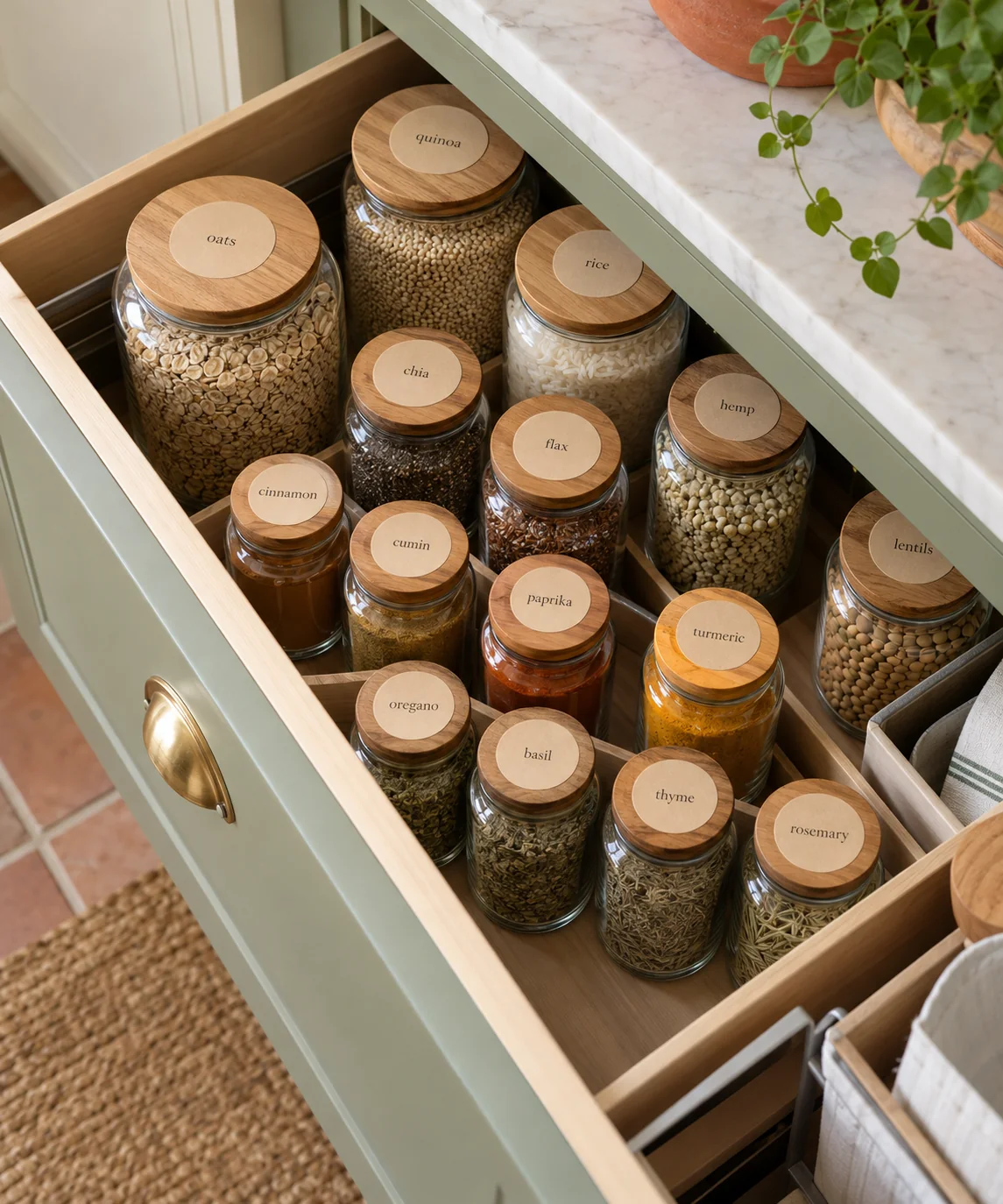
Sizing Labels to Match Lid Geometry
Select circular or square paper tags sized slightly smaller than your jar lids, leaving a clean margin around the edge. For a standard wide-mouth jar lid measuring roughly three and a half inches across, a two-inch label provides ample writing space without overlapping curved bevels. Keeping the label centered on the flat plane prevents the paper edges from curling when opening lids or brushing against drawer walls during retrieval.
Maximizing Aerial Visibility in Low Drawers
Aerial readability relies on consistent, uncluttered lettering across all containers. Write the primary ingredient name in bold block letters across the top half of the tag using a smudge-resistant, fine-tip pigment marker. Use the bottom line for secondary details such as whole versus refined grain types, purchase dates, or cook times. Consistent layout allows you to scan deep pantry drawers quickly without handling each jar to find dinner staples.
Applying Soluble Tags to Clean Surfaces
Before applying water-soluble adhesive tags, thoroughly clean the lid surface using rubbing alcohol to remove residual oils, dust, or grease films. Allow the metal or finished wood surface to dry completely before smoothing down the label from center to edge. Firm, uniform pressure removes trapped air pockets, ensuring complete contact so the label remains secure under normal kitchen handling yet dissolves immediately upon planned washing.
Dissolving Tags for Fast Inventory Rotation
When a bulk staple runs out and you choose to refill the jar with a different ingredient, removing the old tag takes seconds. Place the lid under running warm tap water for fifteen to thirty seconds. The specialized starch-based paper and adhesive dissolve into a fluid suspension that washes down the sink drain, leaving zero gummy residue on the lid and eliminating the need for harsh chemical adhesive removers.
Managing Kitchen Moisture and Humidity
Because water-soluble tags react quickly to moisture, handling jars with wet hands or placing them near steam will compromise the paper. Keep jars stored in dry drawers away from sink splashes, stovetop vapors, or high-humidity zones. When filling jars with bulk goods, wipe the rims and lids dry before sealing them to prevent stray condensation from dissolving your lettering prematurely.
YOUR STARTING POINT
A little checklist.
Original editorial guidance. Images are AI-generated concepts, not photographs of completed projects. Our sources and approach.
Questions to consider
Can I use water-soluble labels on bamboo or wooden jar lids?
Yes, water-soluble tags adhere well to smooth wood lids. However, when dissolving the label, rinse briefly and dry the wood immediately with a towel to prevent moisture warping or grain swelling.
What type of pen works best on water-soluble paper labels?
Use quick-drying pigment ink pens or ballpoint pens. Water-based gel pens or fountain ink markers can bleed or smudge across starch-based paper surfaces if exposed to slight kitchen moisture.
Do soluble labels dissolve inside a standard household dishwasher?
Yes, water-soluble labels disintegrate completely in the dishwasher wash cycle. However, washing jar lids by hand prevents loose dissolved paper fibers from collecting in your dishwasher pump or filter assembly.