Small Balcony Layouts · THE GUIDE
Lay Out a Compact Dining Setup with Tuck-Under Stools
Balconies with shallow depths benefit from careful furniture selection to support occasional dining without obstructing essential transit paths. Using a freestanding, counter-height table paired with backless stools offers a functional surface while retaining a modest footprint. Stools without backrests can slide under the tabletop when not in use, helping keep narrow walkways clear for access to doors. Selecting weather-tolerant materials and verifying dimensions against your specific balcony layout ensures the arrangement remains practical and comfortable. Planning with freestanding, reversible pieces makes it straightforward to adapt the space while respecting building rules and manufacturer guidelines.
Jump to the checklist ↓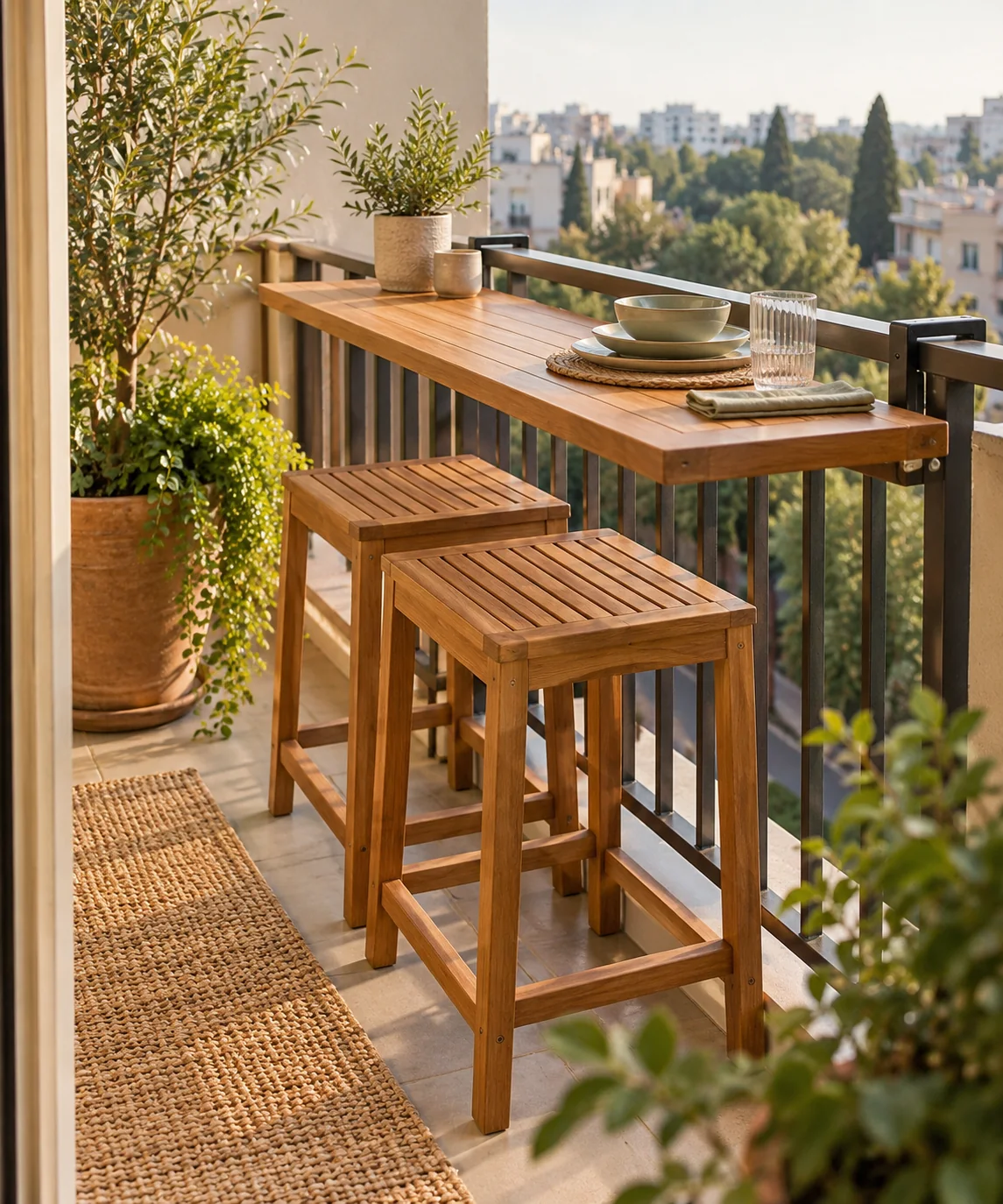
Evaluating Table Proportions and Open Space
A compact dining surface needs sufficient depth for basic tableware while leaving adequate room for movement. Narrow table depths often function well in tight footprints, but exact requirements vary according to available balcony width and door swing paths. Rather than relying on fixed measurements, map out your space using painter tape to confirm that chairs or stools do not block access corridors when in use. Counter-height tables generally sit higher than conventional dining tables, so review manufacturer dimensions alongside your chosen seating height to ensure adequate legroom beneath the top.
Selecting Stool Heights and Footprints
Backless stools are a practical choice for small footprints because their frames can sit fully within the table structure. When choosing seating, measure the interior span between the table legs to confirm both stools can rest beneath the apron without bumping into each other. Consider whether the stool design includes built-in foot rails, which provide resting support for your feet during meals. Check that the overall stool height leaves comfortable space between the seat and the underside of the table surface based on the manufacturer's paired recommendations.
Material Selection and Exterior Durability
Outdoor furniture faces temperature fluctuations, sunlight, and moisture, making material choice important for long-term maintenance. Dense hardwoods, treated timbers, and powder-coated metal frames provide good resilience when maintained according to manufacturer care instructions. Untreated softwoods and interior-grade composite boards tend to deteriorate when left exposed to the elements. Review joint construction, such as exterior-grade hardware or traditional joinery, and plan for seasonal protective treatments like exterior oil or breathable furniture covers to reduce moisture wear.
Transit Clearances and Building Guidelines
Maintaining an unobstructed pathway across the balcony is critical for accessibility and safety. Position the dining set so that sliding doors, outward-swinging doors, and emergency exit access points remain completely unhindered. Review your property management guidelines or bylaws before finalizing furniture placement, as some buildings restrict high-profile furniture near railings or prohibit items above certain heights. Keeping the arrangement entirely freestanding ensures it can be shifted or stored whenever maintenance, inspections, or changing weather conditions require.
Care, Levelling, and Seasonal Storage
Routine upkeep preserves outdoor furniture and protects underlying balcony flooring. Many balcony floors incorporate a slight slope to assist with rainwater drainage, which can cause furniture to rest unevenly. Adjustable, non-marking glides attached to stool and table legs help accommodate subtle surface variations without scratching floor tiles. During severe weather or colder months, tuck-under stools can be stacked or brought indoors to prevent unnecessary weathering, while regular wipe-downs with a damp cloth remove accumulated surface dust.
YOUR STARTING POINT
A little checklist.
Original editorial guidance. Images are AI-generated concepts, not photographs of completed projects. Our sources and approach.
Questions to consider
What should I consider when pairing stools with a compact table?
Check manufacturer height specifications to ensure comfortable clearance between the stool seat and the lower edge of the table apron. Verifying both the width between table legs and the stool seat diameter ensures the seating can tuck under neatly when not in use.
How do building guidelines affect small balcony dining sets?
Some multi-family properties have specific rules regarding furniture height, placement near perimeter railings, and wind exposure protocols. Consulting building management or community bylaws helps ensure your layout complies with local safety standards.
How can I stabilize furniture on a sloped balcony floor?
Balconies commonly have subtle drainage slopes. Adjustable leveling glides or rubber pads attached beneath table and stool legs can accommodate slight variations without requiring permanent modifications to the flooring.