Dining Nooks · THE GUIDE
Layer a Compact Flatweave Rug to Visually Define the Eating Space
In open kitchens, dining nooks often blur into food preparation routes, creating visual disorder and ambiguous traffic patterns. Introducing a low-profile flatweave rug creates a distinct psychological threshold separating the prep triangle from the eating surface without introducing physical barriers. Flatweave textiles, such as tightly woven cotton, low-pile wool, or smooth polypropylene, prevent chair legs from catching during entry and exit. By intentionally sizing the textile to frame both table and perimeter seating, you establish a dedicated dining zone that clarifies room circulation while protecting underlying flooring from recurrent chair friction.
Jump to the checklist ↓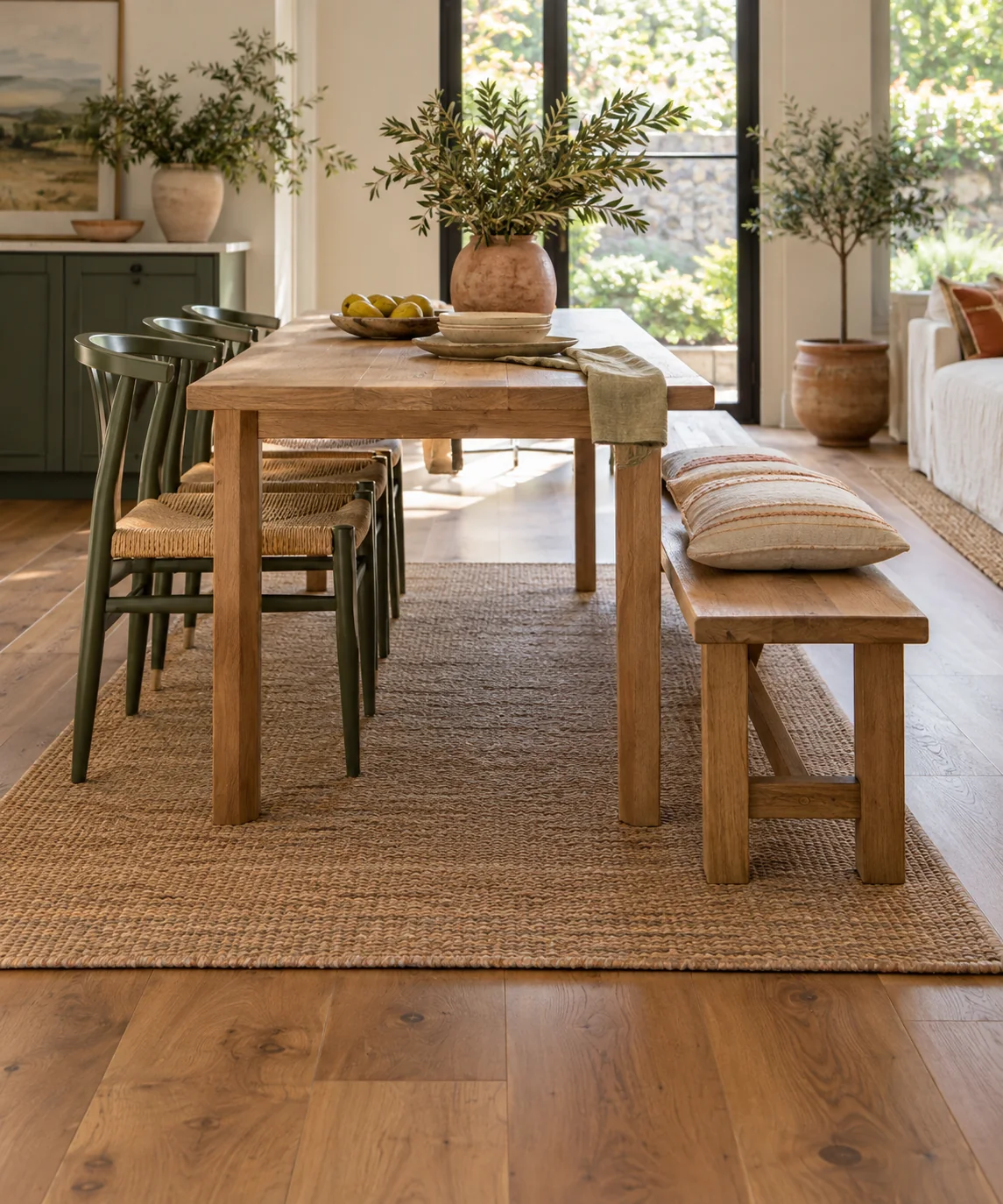
Sizing for Functional Chair Travel
A dining rug should ideally accommodate chair movement rather than merely framing the table legs. When sizing a rug for a dining nook, aim to allow sufficient textile margin—often approximately twenty to twenty-four inches beyond the tabletop—on sides where chairs slide out during use. This extra boundary helps keep rear chair legs on the textile when seated diners push back from a meal. In compact alcoves featuring a built-in wall bench, the rug only needs to extend along the open, movable seating sides. Testing your existing chair travel before ordering prevents awkward edge catches and keeps the perimeter neat.
Selecting Low-Pile and Reversible Weaves
Deep pile shags and looped carpets trap crumbs, resist easy vacuuming, and cause dining chairs to wobble or drag. Flatweave textiles present a stable, compact surface across which furniture slides with minimal friction. Tightly woven cotton, wool dhurries, and washable synthetic fibers maintain structural integrity under table pressure points. Reversible weaves provide the added benefit of extended service between deep cleanings, allowing a quick flip if localized spotting occurs. Check that the material is woven tightly enough to prevent stretching or rippling when chair feet slide across it repeatedly.
Stabilizing the Foundation Against Shifts
Because flatweave textiles lack heavy backing, they tend to shift, bunch, or slide across polished hardwood, tile, or laminate flooring. Placing a quality non-slip underlay beneath the entire footprint prevents hazardous creeping. Cutting the underlay approximately one to two inches inside the rug perimeter keeps the padding hidden while maintaining flat, well-anchored borders. A firm felt-and-rubber combination pad delivers necessary grip without adding excessive height that could create a tripping threshold along the transition between the kitchen and dining areas.
Managing Daily Spills and Surface Care
Dining rugs inevitably encounter dropped food and beverage spills, making material maintenance an essential consideration. Keep basic cleaning supplies accessible so liquid stains can be blotted promptly with clean cloths and mild, fiber-safe detergent, avoiding harsh scrubbing that frays natural weaves. Periodic rotation helps distribute daily foot traffic and uneven window sunlight across the rug. In households where spills are frequent, solution-dyed synthetic flatweaves or dedicated washable rugs offer greater moisture resistance than delicate bast fibers such as unsealed jute.
Assessing Perimeter Clearances and Cabinet Swings
Before finalizing rug placement, check the swing radius of nearby architectural elements, including lower cabinet doors, dishwashers, and pantry entries. Low-profile flatweaves reduce clearance issues under standard doors, but a thick border binding can still catch on low-hanging door sweeps. If the dining nook sits immediately adjacent to food preparation counters, ensure the rug boundary remains comfortably clear of high-spatter areas near the stovetop or sink. Keeping floor coverings outside primary cooking zones reduces grease accumulation and simplifies daily kitchen maintenance.
YOUR STARTING POINT
A little checklist.
Original editorial guidance. Images are AI-generated concepts, not photographs of completed projects. Our sources and approach.
Questions to consider
Can I use a natural jute rug under a kitchen dining nook?
Jute works visually but absorbs spills quickly, making stain removal challenging. If you choose jute, select a tightly woven, thin variety and clean liquid spills immediately with minimal water to prevent fiber swelling.
How do I prevent flatweave rug corners from curling upwards?
Use low-profile silicone corner grippers beneath the flatweave. Combined with a dense underlay pad, these grippers secure the corners flush against the floor without damaging the finish or creating uneven ridges beneath chair legs.
What should I do if a dining chair catches on the rug edge?
Confirm your rug extends at least twenty-four inches beyond the tabletop. If space limits rug size, swap individual chairs for a backless bench that remains permanently stationed on the rug surface, eliminating back-and-forth travel.