Reading Corners · THE GUIDE
Layer a Compact Sunroom Corner with Botanical Screenings
A sunroom corner flooded with daylight provides an inviting setting for an indoor botanical retreat. By arranging layered potted greenery around a cane armchair, you can establish an organic boundary that feels private and calm. This arrangement helps filter harsh glare, creates visual separation from the rest of the home, and introduces rich textural interest. Using movable containers allows you to accommodate plant light requirements while keeping your reading retreat comfortable, flexible, and easy to adjust across changing seasons.
Jump to the checklist ↓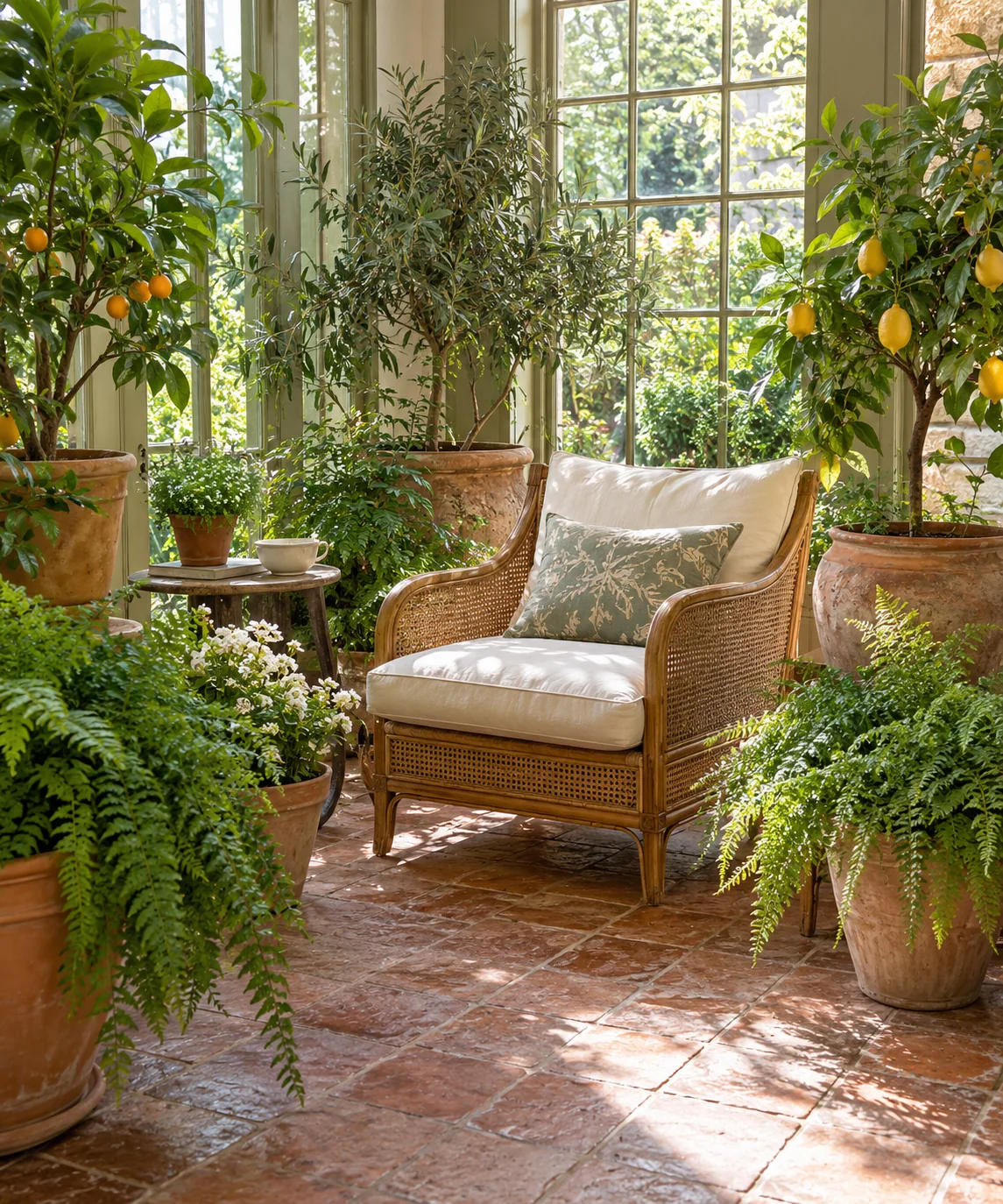
Assessing Daylight and Circulation
Sunrooms receive shifting natural light throughout the day, making plant placement dependent on species-specific exposure needs. Position light-demanding specimens closest to primary window glass where they receive maximum direct exposure, while plants adapted to bright indirect light can sit slightly recessed. Ensure a clear, uninhibited pathway between the room entrance and your armchair so you can sit down without brushing against pots. Check that foliage does not catch on clothing or block access to window latches needed for ventilation.
Grouping Foliage for Visual Screening
To build an effective green enclosure, arrange containers in a tiered formation flanking your chair. Position taller plants as background anchors, then layer mid-height foliage alongside them for broader visual coverage. Add smaller potted specimens on low stands or floor trays to conceal nursery containers and bare lower stems. This staggered grouping wraps your reading nook in layered foliage without relying on permanent partitions or obstructing overall room sightlines.
Selecting Cane Seating and Natural Fabrics
Cane armchairs offer visual lightness and dependable support in bright sunroom environments. Their open-weave construction allows ambient light to filter through, preventing compact corners from feeling closed off. Fit your chair with loose cushions upholstered in breathable linen, cotton canvas, or UV-resistant textiles that hold up under sun exposure. Selecting neutral or light-toned fabrics minimizes noticeable surface heat absorption and helps resist premature fading.
Managing Moisture and Floor Protection
Watering indoor containers introduces localized moisture that can damage underlying flooring over time. Place every pot inside a sturdy, uncracked drip saucer or tray to catch drainage water reliably. Set breathable risers or protective pads beneath saucers to prevent trapped condensation from marking tile, stone, or finished wood surfaces. Maintain comfortable clearance between damp foliage and your armchair cushions, reducing moisture transfer and allowing airflow around seating.
Plant Grooming and Seasonal Repositioning
Routine plant maintenance keeps your botanical corner tidy and thriving indoors. Wipe broad foliage periodically with a soft damp cloth to clear dust and inspect for pests. Prune browning foliage or spent lower stems according to individual plant needs to maintain neat lines. As seasonal sun angles change, rotate containers periodically to encourage balanced, upright growth and prevent branches from leaning heavily into your seating space.
YOUR STARTING POINT
A little checklist.
Original editorial guidance. Images are AI-generated concepts, not photographs of completed projects. Our sources and approach.
Questions to consider
How do I protect sunroom reading materials from plant moisture?
Store books on an elevated dry side table rather than near plant drip saucers. Maintain several inches of separation between foliage and paper items so natural plant transpiration does not buckle pages or degrade book covers.
How do I manage soil pests around my reading chair?
Allow the top inch of potting soil to dry between waterings, avoiding standing water in saucers where gnats breed. Clean leaves regularly with fresh water and remove fallen organic debris promptly to keep seating areas clean.
Can heavy potted trees be moved easily for floor cleaning?
Place larger pots on rolling plant caddies with non-marking rubber wheels. This permits smooth movement when sweeping terracotta tiles or shifting plants to catch seasonal light changes, preventing physical strain and protecting your floor finish.