Warm Neutral Living Rooms · THE GUIDE
Layer a Flatweave Wool Rug Over Standard Rental Carpet
Standard synthetic carpeting in rental homes often presents an indistinct, uniform beige base that lacks visual interest. Layering an authentic flatweave wool rug over existing wall-to-wall carpet instantly introduces structural texture, craftsmanship, and grounded definition to your living area. Natural wool fibers bring subtle tonal variation, contrasting pleasantly against synthetic carpet piles without permanent flooring modifications. By selecting appropriate underlays, balancing weave dimensions, and anchoring the perimeter with substantial furniture, you establish a defined, warm seating sanctuary. This reversible design approach protects underlying surfaces while elevating the overall sophistication of your living room.
Jump to the checklist ↓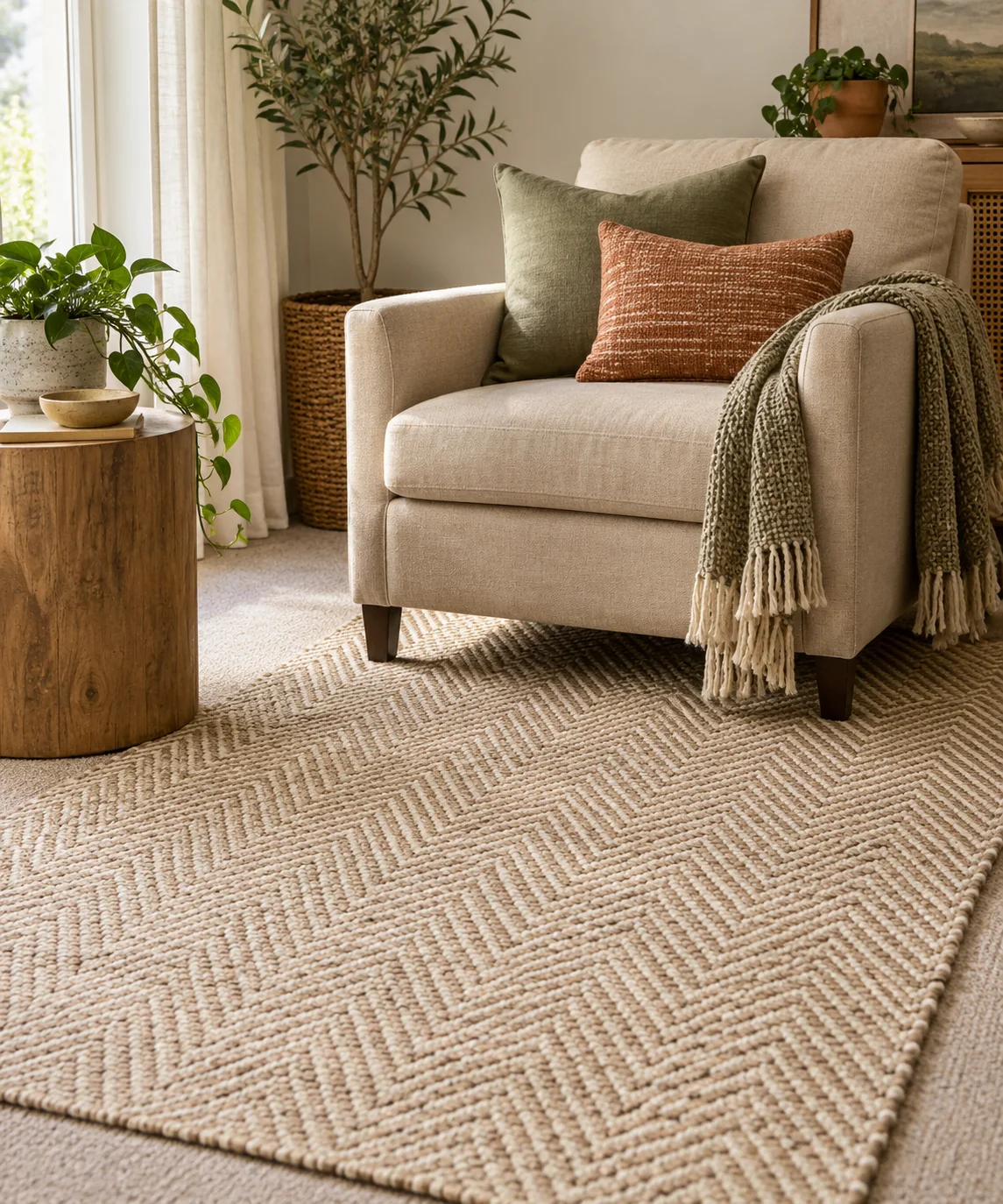
Selecting Wool Weaves and Tonal Variation
Opt for a flatweave, dhurrie, or kilim crafted from un-dyed natural wool featuring tones like cream, oatmeal, wheat, or soft flax. These subtle variations provide textural contrast against flat synthetic carpets while maintaining a calm neutral palette. Flatweaves feature a dense, low profile that resists excessive rippling compared to lighter printed cotton cloths. Look for woven structures like herringbone or simple ribbed stripes; these provide directional interest that visually widens narrow rental floorplans without requiring permanent changes to existing surfaces.
Preventing Creeping with Carpet-to-Carpet Pads
Layering rugs over carpet frequently causes buckling or creeping due to the natural movement of underlying pile beneath routine foot traffic. Reduce this shifting by placing a specialized carpet-to-carpet rug pad between the two surfaces. These firm, polyester or vinyl-coated pads feature dry adhesive tackiness on both faces, designed specifically to stabilize a flatweave against synthetic carpet fibers. Avoid standard open-cell waffle rubber pads manufactured exclusively for hard floors; they lack the lateral rigidity required for carpet piles and can allow the upper rug to stretch, bunch, and create tripping hazards.
Anchoring Dimensions and Furniture Footprints
Choose a rug size that extends comfortably under the front feet of primary seating pieces rather than floating freely in the center of the room. Placing the legs of an upholstered sofa or accent chair over the perimeter adds downward pressure that helps steady the layered weave, though some periodic adjustment may still be necessary over plush piles. In average living rooms, an eight-by-ten-foot rug generally establishes balanced proportions with common sofa dimensions. Sizing the rug to integrate beneath furniture footings reduces exposed edges that might otherwise catch shoes or lift during daily use.
Assessing Carpet Nap and Pile Movement
Before positioning a large wool rug, examine the nap and pile direction of the wall-to-wall carpeting. All cut-pile and loop carpets have an inherent grain or directional lean created during manufacturing. Brushing a hand across the carpet surface reveals the smooth direction and the resisting direction. Upper rugs tend to creep along the path of that underlying grain as footsteps compress the fibers. Selecting a firm, non-stretch carpet-to-carpet underlay engineered to resist pile migration helps mitigate this natural drift, and noting high-traffic walking paths ensures realistic expectations for routine readjustment.
Managing Upkeep and Rental Carpet Care
Vacuum flatweave wool rugs using suction-only settings or a canister vacuum, disengaging rotating beater bars that can catch, pull, or fray woven natural edges. Once every few months, roll back the wool rug and underlay to vacuum the underlying rental carpet thoroughly. This routine prevents fine grit and airborne particulate from settling through the weave and grinding against the synthetic carpet backing beneath. Rotating the wool rug one hundred eighty degrees twice a year promotes even wear across primary walkways and prevents localized matting where feet rest most frequently.
YOUR STARTING POINT
A little checklist.
Original editorial guidance. Images are AI-generated concepts, not photographs of completed projects. Our sources and approach.
Questions to consider
Can I layer a high-pile shag rug over carpet instead?
Placing thick shag over wall-to-wall carpet creates an unstable, spongy surface that catches door sweeps and wobbles furniture legs. Dense wool flatweaves offer stable support and introduce texture without excessive combined height.
Will an upper rug pad stain or damage rental carpet?
Quality carpet-to-carpet pads use dry water-based coatings designed not to transfer residues or discolor synthetic carpeting. Avoid cheap rubber underlays, which can crumble, degrade, and bond permanently to synthetic piles over time.
How do I flatten rolled edges on a new wool rug?
Unroll the rug and gently curl the stiff edges in the opposite direction along a flat surface. Weight the corners evenly with smooth, flat items such as clean boards or heavy cartons for a couple of days while the tightly bound weave naturally relaxes into a flat plane.