Bookshelf Styling · THE GUIDE
Layer Small Framed Botanical Sketches on Bookshelf Backboards
Bookshelves often suffer from flat, one-dimensional styling when every item is aligned along the outer shelf edge. Layering small, framed botanical sketches directly against the backboard behind horizontal book stacks introduces gentle depth without sacrificing valuable storage capacity. The illustrated botanical motifs provide subtle organic texture, while the horizontal books serve as functional anchors that keep frames upright and stable without wall punctures. This arrangement breaks up repetitive spine grids, establishes a calm visual rhythm, and turns standard back panels into engaging architectural backdrops using items already present in the home.
Jump to the checklist ↓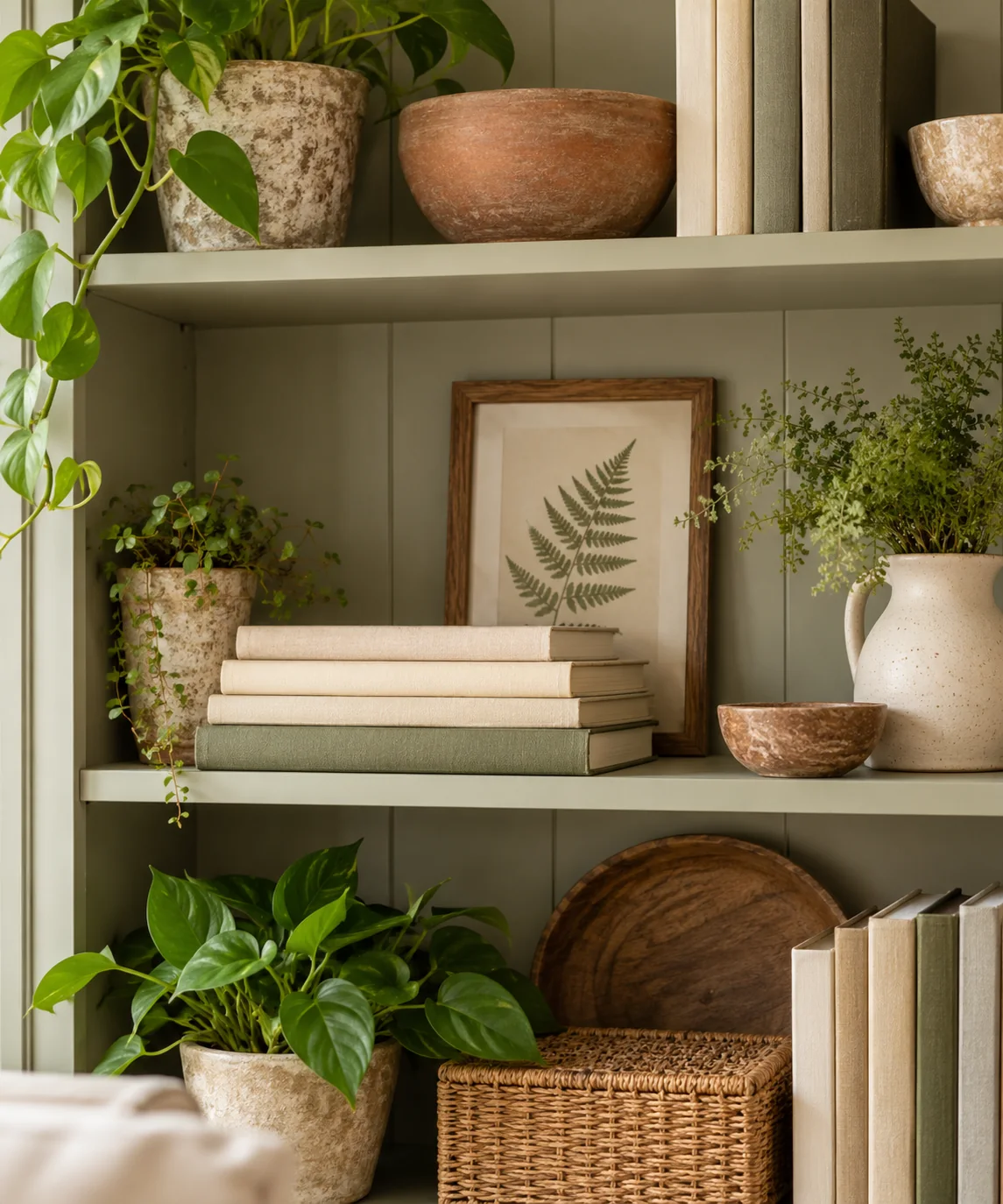
Select Shallow Frames with Flat Profiles
Choose lightweight frames measuring no larger than 5 by 7 or 6 by 8 inches, with narrow wooden or metal profiles under 0.75 inches thick. Frames with deep shadowbox profiles or bulky easel-back kickstands push forward too far, crowding the shelf footprint. If a frame has an attached desktop kickstand that prevents it from resting flush against the backboard, gently fold it flat or choose a wall-hanging frame format so it stands vertically without pitching forward onto your books.
Anchor Prints Behind Low Horizontal Stacks
Position the frame flat against the rear panel, then place a neat horizontal stack of two or three hardcovers directly in front of its lower margin. The books should obscure only the bottom 1 to 2 inches of the frame, leaving the botanical sketch fully visible above. This physical overlap mechanically secures the base of the frame, preventing it from sliding forward while creating visual layering that links the reading material with the artwork seamlessly.
Maintain Proportion and Negative Space
Avoid placing framed art on every single shelf tier, which creates a busy, cluttered gallery effect. Restrict framed sketches to one or two non-adjacent cubbies across a bookcase. Ensure the artwork leaves at least 3 inches of breathing room between its top edge and the shelf above. Overfilling the upper void makes the cubby feel cramped; open backboard space around the frame preserves an airy, intentional composition that draws the eye naturally.
Coordinate Paper Tones and Spine Hues
Botanical sketches typically feature cream, off-white, or aged parchment backgrounds that pair naturally with neutral cloth bindings or muted paperbacks. Select base books whose cover tones complement rather than clash with the art. A stack of beige, moss green, or charcoal hardcovers grounds a botanical print effectively. Avoid placing high-gloss, neon dust jackets directly below vintage sketches, as reflective modern finishes disrupt the calm, understated character of framed line drawings.
Establish Dusting and Print Protection Measures
Because framed glass resting against backboards can trap fine household dust along its lower rim, include the frames in routine shelf care. Slide the book stack forward every few weeks and wipe the glass with a dry lint-free cloth. Do not use wet glass cleaners directly inside the bookcase, as overspray can seep into frame corners and stain paper backboards or adjacent book edges. Keep precious original prints away from shelves exposed to direct sun.
YOUR STARTING POINT
A little checklist.
Original editorial guidance. Images are AI-generated concepts, not photographs of completed projects. Our sources and approach.
Questions to consider
Will leaning a frame against the backboard scratch the shelf finish?
Apply tiny felt bumper pads to the rear corners of the frame. These pads prevent direct friction against backboard veneer or paint while providing light grip that stops the frame from sliding horizontally.
Can I use larger art prints on standard 11-inch bookshelf tiers?
Prints taller than 8 inches overwhelm standard shelves and leave no space for supporting book stacks. Reserve larger framed art for top shelves or open wall areas, keeping internal cubby prints modest and shallow.
How do I keep frames upright without a heavy stack in front?
Without a book stack, an easel-back frame leans back excessively, consuming valuable depth. A horizontal book stack is the most stable, reversible anchor, keeping the art upright without permanent fasteners or tape.