Sage and Cream Interiors · THE GUIDE
Layer Window Treatments to Soften a Cramped Living Room Corner
Cramped living room corners often feel confined when bare window frames create harsh shadows and reveal architectural asymmetries. Introducing a layered curtain scheme using soft sage and cream fabrics visually expands perimeter walls while softening angular room edges. Combining lightweight sheer panels with tailored drapery side panels adds depth without blocking natural sunlight. When positioned high and wide along the wall, this textile combination draws the eye upward to suggest elevated ceiling height. The resulting arrangement diffuses harsh midday glare, conceals uneven window margins, and turns an awkward, shadowy corner into a balanced focal point.
Jump to the checklist ↓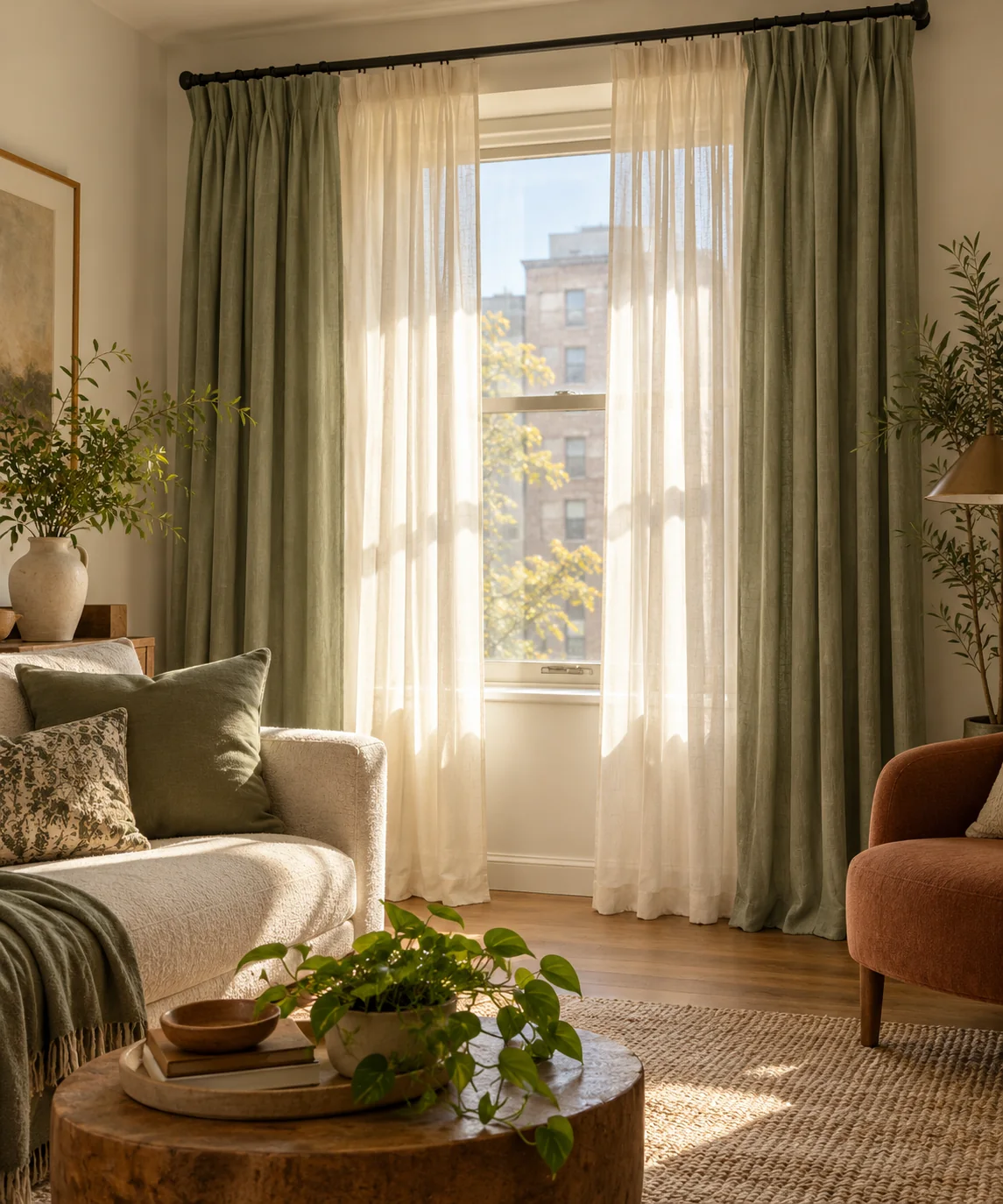
Rod Positioning for Visual Balance
Hardware placement influences how spacious a corner window arrangement feels. Mounting rods higher than the window casing and extending them slightly past the sides allows drapes to frame the glass without cutting off natural light. In tight corners, evaluate adjacent wall returns and trim dimensions before selecting hardware lengths. Choosing a rod position that lets open fabric rest mostly outside the glass area maximizes daytime illumination, which helps prevent a compact room corner from feeling dark or recessed.
Base Layer: Sheer Cream Panels
Hanging lightweight cream sheers or semi-sheer open-weave fabrics closest to the glass softens incoming daylight while preserving privacy. Sheer textiles diffuse direct sun glare across the room without casting heavy shadows into cramped corners. Warm cream tones impart a soft, welcoming glow that complements wood flooring and upholstered seating. Hemming or adjusting panels so they hover slightly above floor level keeps the bottom hem clean and prevents fabric from bunching awkwardly in tight spaces.
Outer Layer: Tailored Sage Drapery
Framing central sheers with medium-weight sage green linen or cotton drapes brings color and structure to the corner. The muted sage shade offers a calm visual border that grounds pale cream inner panels and softens sharp wall junctions. Choose unlined or light-filtering woven textiles that hang in clean, tailored folds without excessive bulk. Drapes with moderate volume soften angular corner architecture while remaining easy to draw open and shut during daily routines.
Double Rod Selection and Hardware Considerations
A double curtain rod arrangement allows both sheer and heavier panels to glide independently. Look for slim hardware profiles in finishes like brushed brass or matte dark metal that blend seamlessly with your living room decor without adding visual clutter. Check that the dual brackets provide adequate spacing between the inner and outer rods so drapery rings, grommets, or pleats move freely without snagging. Verify that wall brackets are mounted into solid wall framing or anchored with suitable wall fasteners rated for the drapery's total weight.
Textile Care and Dust Management
Layered fabrics located in compact corners can attract household dust, particularly where natural air circulation is limited. Gently shaking panels weekly helps prevent dust from settling into open weaves. For routine care, use a handheld vacuum with an upholstery brush attachment on a low-suction setting, working from the top down. Always review fabric manufacturer care labels before laundering or dry cleaning, as natural fibers such as linen can shrink or stretch if exposed to improper water temperatures or moisture.
YOUR STARTING POINT
A little checklist.
Original editorial guidance. Images are AI-generated concepts, not photographs of completed projects. Our sources and approach.
Questions to consider
Can tension rods be used for layered corner window treatments?
Tension rods fit within the interior window frame and can support lightweight sheer panels, but they cannot project past the casing to hold double drapery systems. Use securely mounted wall brackets for layered configurations to ensure adequate support.
What fabric weights work best in a cramped living room corner?
Lightweight to medium-weight cotton, linen blends, or open-weave synthetics drape smoothly without creating bulky stacks. Avoid excessively heavy or rigid blackout textiles that crowd corner spaces and block window glass when drawn open.
How can corner drapes be kept clear of nearby seating?
Plan furniture placement to leave reasonable clearance between curtain edges and nearby armchairs or side tables. Simple fabric tiebacks or magnetic holdbacks can keep outer drapery panels neatly gathered away from everyday living room walking paths.