Indoor Plant Styling · THE GUIDE
Line a Dining Credenza with a Zinc Moisture Tray for Grouped Pots
Dining room credenzas and timber sideboards offer expansive horizontal surfaces, making them natural staging areas for houseplant collections. However, scattered potted plants can quickly look disorganized and risk leaving water rings on fine wood finishes. Introducing a long, shallow zinc moisture tray resolves both functional and aesthetic hurdles. The galvanized metal establishes a clear perimeter that unifies multiple individual pots into a coherent centerpiece. At the same time, the raised lip contains loose potting debris and incidental condensation, protecting sensitive timber surfaces from moisture damage while creating an appealing industrial-botanical focal point in your dining room.
Jump to the checklist ↓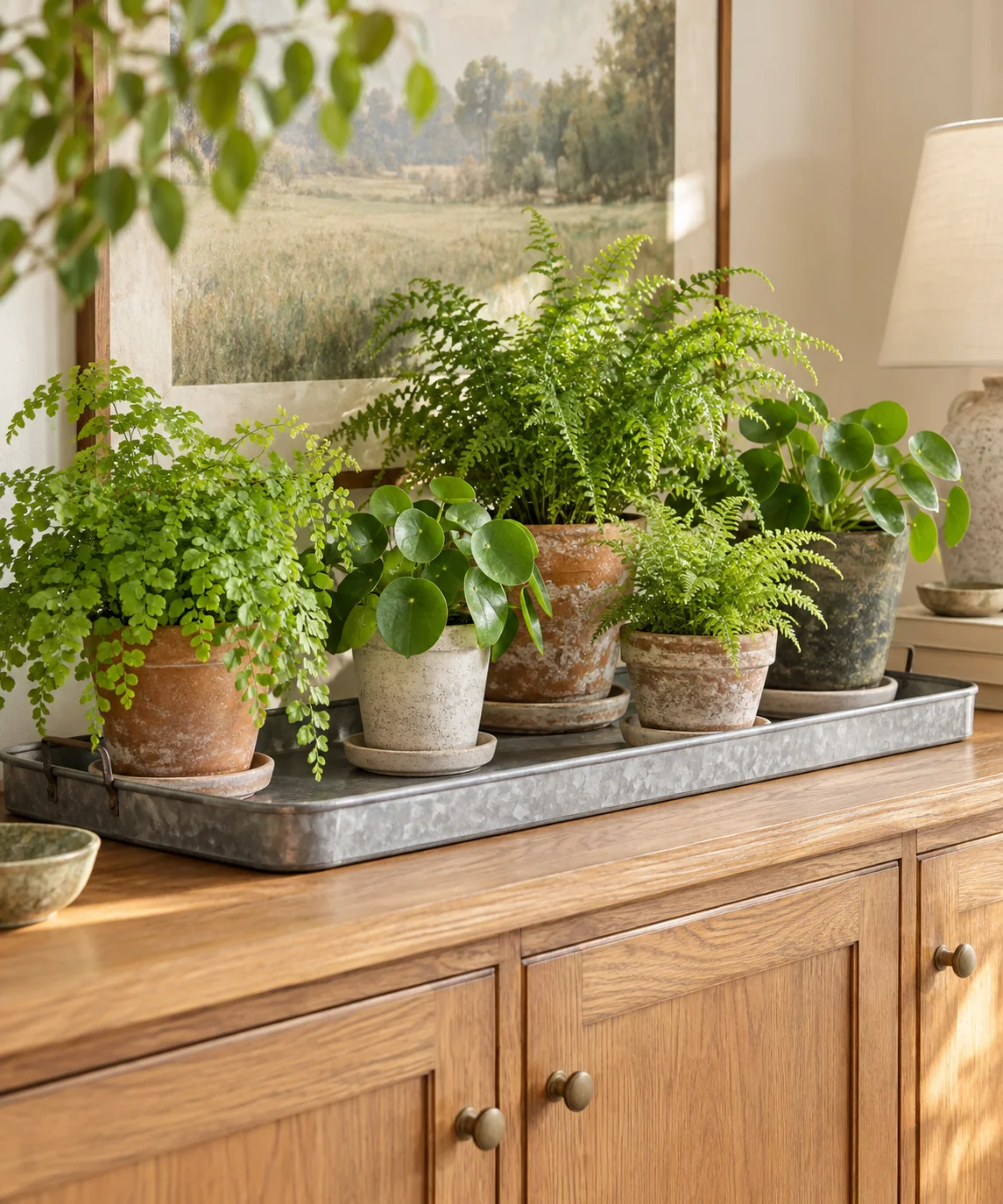
Selecting Tray Dimensions and Proportions
A tray should suit the scale of your credenza without crowding usable surface area. Measure the depth and length of the furniture piece before choosing a metal liner or tray. Look for proportions that leave comfortable working margins along the edges rather than covering the credenza edge-to-edge. Sufficient clearance keeps the credenza visually balanced while preserving space for serving dishes or everyday use. Confirm that the tray base sits entirely flat on the credenza top without hanging over beveled or profiled edges.
Insulating and Protecting the Wood Finish
While sheet metal creates a barrier against soil, metal can scratch wood finishes or collect condensation beneath it when room temperatures swing. Check the underside of the tray for rough solder beads, metal burrs, or uneven folds. Adhere protective felt pads or non-staining rubber feet to the underside of the tray to elevate it slightly above the timber. This small gap provides airflow beneath the base and prevents direct friction against varnished, waxed, or oiled wood.
Arranging Plant Heights and Textures
Arrange plants within the tray using varied foliage textures, heights, and container shapes. Pairing upright specimens with mounding or trailing varieties creates visual depth across the horizontal surface. Grouping pots in small clusters of varying heights helps prevent a rigid, uniform line across the sideboard. Rather than filling every square inch, leave open space between pots to keep individual plants accessible for inspection and care.
Managing Pot Drainage and Runoff
A decorative zinc tray acts as an organizational perimeter, not an open basin for excess irrigation. Allowing plants to sit in collected runoff risks root rot and can degrade soldered seams or cause metal discoloration over time. House each plant in a container with its own drainage saucer inside the tray, or use watertight cachepots. When watering, apply water carefully with a narrow-spout can, or remove individual pots to water and drain them elsewhere before returning them to the credenza.
Adapting for Dining Events and Everyday Use
When using the credenza for serving meals or entertaining, the botanical display may need to be cleared to free up tabletop space. Because sheet-metal trays can flex or buckle under the concentrated weight of multiple ceramic pots and damp soil, avoid lifting a fully loaded tray all at once. Remove individual pots first to reduce weight and prevent spills, then lift the empty tray. Wipe down the timber surface to remove any settled dust or stray debris before resetting the arrangement.
YOUR STARTING POINT
A little checklist.
Original editorial guidance. Images are AI-generated concepts, not photographs of completed projects. Our sources and approach.
Questions to consider
Will zinc rust if exposed to residual moisture?
Zinc resists conventional rust, but prolonged exposure to trapped standing water can cause white mineral oxidation, pitting, and eventual seam leaks. Wipe up any spills promptly and use individual saucers under pots.
Can I put gravel or pebbles inside the zinc tray?
Adding loose pebbles can trap fallen leaves, moisture, and debris while adding unnecessary weight to the credenza. Keeping the tray floor clear allows easier inspection, cleaning, and routine dusting.
How much clearance should remain on the credenza around the tray?
Leave sufficient perimeter space so cabinet doors or drawers open freely and items resting on the tray remain clear of the edge. Margins should feel visually balanced relative to the furniture piece.