Patio Seating Ideas · THE GUIDE
Linear Three-Piece Modular Sectional Along Rear Fence Line
Compact concrete patios can quickly feel overwhelmed by bulky corner sectionals or circular conversation sets that dominate central circulation space. Placing a linear three-piece modular sectional directly along the rear fence boundary offers a streamlined alternative that keeps the core patio floor entirely open. This perimeter layout provides generous lounging capacity for family use while functioning as an expansive daybed or three independent seats when entertaining. Maintaining proper fence clearances, choosing resilient materials, and establishing practical surface protection ensures an organized, spacious, and low-maintenance outdoor living environment.
Jump to the checklist ↓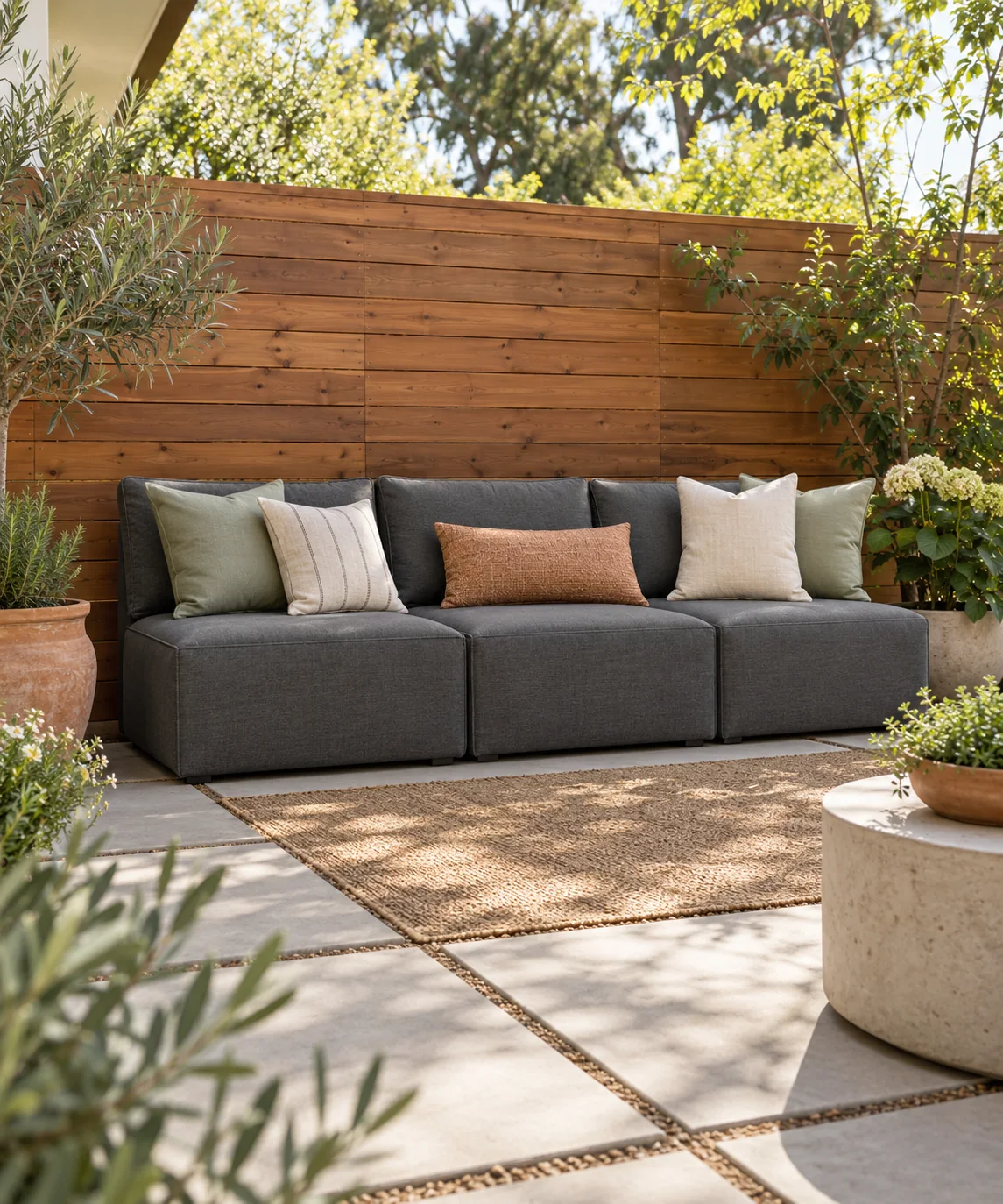
Maximizing Central Patio Clearance
Arranging three modular seating units in a continuous line against a rear fence concentrates furniture into a unified footprint. For compact paved patios, this alignment helps preserve central floor space for walking, tending container plants, or setting up lightweight folding furniture as needed. A typical three-unit setup spans roughly seven to eight feet across depending on individual chair dimensions, leaving central space clear for movement between door thresholds, hose bibs, and garden pathways.
Fence Clearance and Moisture Management
Placing outdoor seating directly against a perimeter fence can trap moisture and leaf debris between the cushions and fence boards. Maintaining a visible gap between the rear frame and the fence pickets promotes drying after heavy rain and makes routine sweeping simpler. Spacing the furniture slightly forward also reduces the chance of natural wood tannins or fence finishes marking cushion covers during damp weather.
Modular Flexibility for Changing Activities
A run of armless modular units offers functional flexibility for compact outdoor spaces. Connected together with manufacturer-approved frame brackets, the units form a bench-style lounge for resting. When visitors arrive, separating the sections allows the middle module to serve as a low table or freestanding ottoman, while the outer pieces function as individual armless chairs. This modular approach adapts the patio layout without introducing extra permanent pieces.
Surface Protection and Leveling Considerations
Exterior concrete slabs and pavers usually include subtle slopes to direct stormwater away from residential foundations, which can cause unanchored modular seating to sit unevenly or slowly shift. Choosing frames fitted with adjustable leveling feet helps accommodate minor surface slopes and uneven paver joints. Durable, non-marking foot caps made of rubber or dense polymer help prevent surface scratching and keep metal frame components elevated from standing surface moisture.
Cushion Care and Weather Protection
Continuous bench layouts require practical cushion management to stay clean and comfortable. Models with textured base decking, non-slip underlay pads, or cushion attachment tabs help keep seating pads in place during daily use. Because perimeter fence lines rarely provide complete overhead weather protection, storing loose cushions in a weather-resistant storage bin or bringing them indoors during extended storms preserves the fabric. Covering clean, dry frames with a breathable outdoor cover during off-season months extends material life.
YOUR STARTING POINT
A little checklist.
Original editorial guidance. Images are AI-generated concepts, not photographs of completed projects. Our sources and approach.
Questions to consider
Can I use modular chairs with arms along a fence line?
Armless chairs generally work better for continuous linear arrangements because they fit together without interior arm dividers. Adding end arms can define the ends of the run, but check that overall dimensions still fit comfortably along the fence without blocking walkways.
How do modular units stay together on smooth concrete?
Most modular systems rely on manufacturer-supplied underside connector clips or interlocking brackets that join adjacent frames. These fasteners reduce separation and shifting on smooth concrete while remaining easy to detach when rearranging.
What cushion materials handle outdoor conditions along a fence?
Outdoor-rated fabrics such as solution-dyed acrylics or polyester treated for exterior use hold up well to sun exposure and light moisture. Checking manufacturer cleaning instructions and wiping down boards before cushions contact them helps minimize seasonal staining.