Patio Seating Ideas · THE GUIDE
Louvered Privacy Screen Loveseat for Exposed Suburban Yards
Suburban patios can feel exposed when adjacent multi-story homes overlook private ground-level seating areas. Incorporating a louvered rear screen into a sturdy loveseat frame offers a practical visual shield without permanent structural alterations or wall fixings. By combining comfortable bench seating with an elevated slatted back, you define a cozy perimeter on an open patio surface while preserving natural light and gentle air movement. However, because tall furniture catches wind, planning appropriate proportions, monitoring seasonal weather, and selecting durable outdoor materials are essential for maintaining stable, reversible patio seating.
Jump to the checklist ↓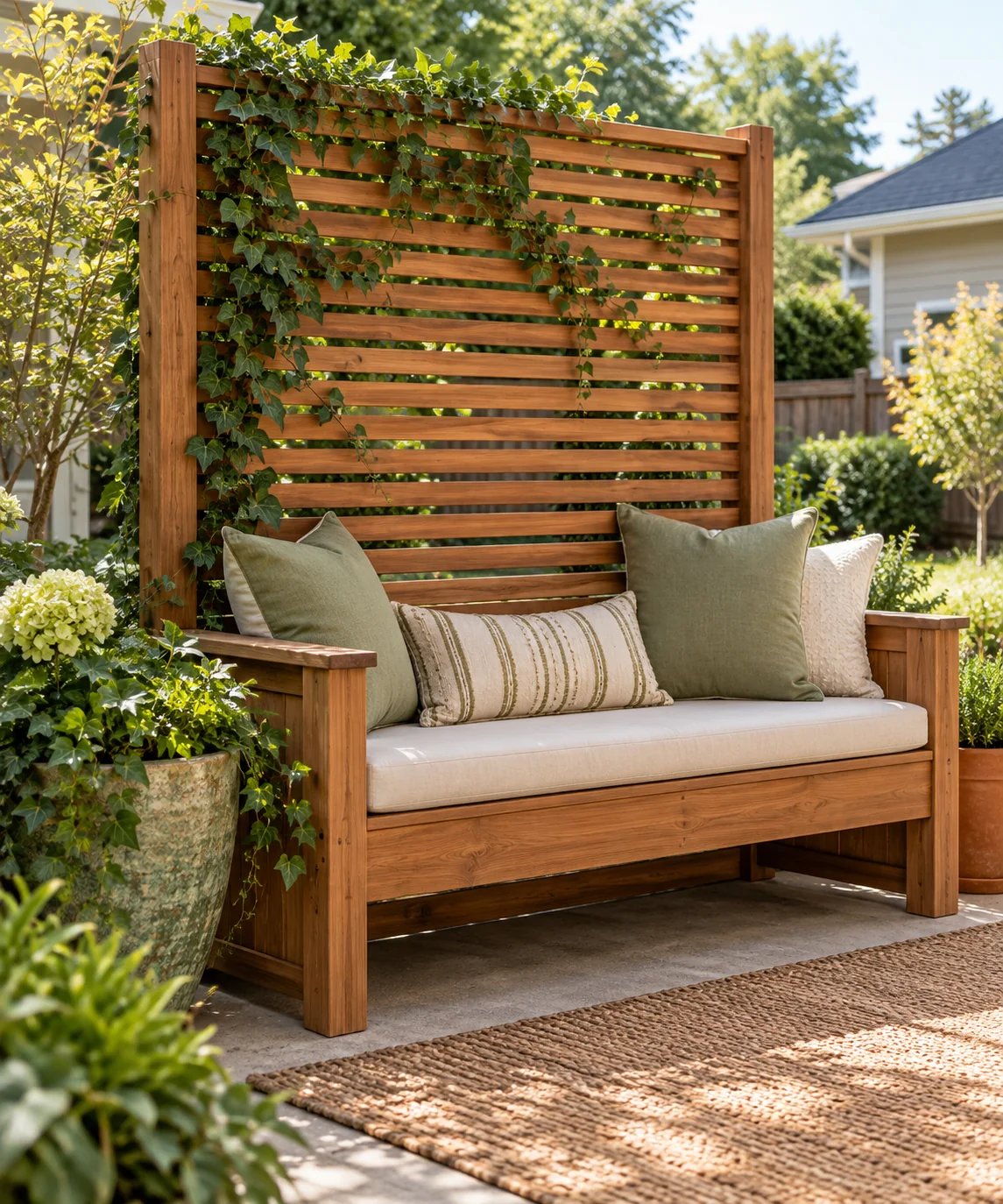
Assessing Sightlines and Exposure
Before selecting or building a high-backed seat, evaluate the visual angles from surrounding properties while seated in your preferred patio spot. Notice where upper windows or elevated decks align with your eye level. A screen extending roughly five to six feet from the patio surface helps interrupt upward sightlines, but increased height also catches significantly more wind. Position the bench to address primary visual angles while taking prevailing yard breezes into account, ensuring the furniture does not obstruct main walkways or garden access paths.
Louver Spacing and Wind Considerations
A solid vertical wall acts as a broad sail against sudden gusts, generating substantial tipping leverage on exposed patios. Incorporating horizontal slats with open gaps or gentle angled louvers allows moving air to pass through the structure, reducing resistance compared to an unbroken panel. However, angled louvers do not eliminate wind forces entirely. Spacing slats with modest visual overlaps helps shield direct sightlines from above, but users must recognize that strong winds will still exert force on any elevated surface.
Base Depth, Weight Distribution, and Limitations
A tall backrest naturally raises the furniture's center of gravity, demanding a generous front-to-back footprint to resist tipping during gentle breezes. A seating box depth of at least twenty-four inches provides a wider foundation on flat concrete or stone slabs. Enclosing the lower seat base allows homeowners to position low, non-structural ballast—such as heavy paving stones placed securely on the floor inside—to enhance everyday stability. Even with low ballast, tall freestanding units should be moved to a sheltered area or laid flat before severe windstorms.
Timber Selection and Fastener Durability
Naturally rot-resistant softwoods such as cedar and redwood, or dense hardwoods rated for exterior exposure, offer reliable service outdoors. Untreated interior lumber quickly weakens and warps from humidity and ground moisture. Assemble all screening components with exterior-grade stainless steel or coated ceramic screws rather than smooth finish nails, which can loosen under cyclical wind movement. Treat all cut ends and joints with an exterior penetrating oil or sealant to limit water penetration and reduce split development.
Surface Protection, Movement, and Maintenance
Freestanding patio furniture must be inspected periodically to maintain balance and surface condition. Moisture, fallen leaves, and dirt tend to settle around bench footings on concrete slabs and stone pavers. Fit durable nylon or rubber leveling glides beneath the base rails to raise timber slightly off the ground, promoting drainage and protecting paver finishes during repositioning. Routinely inspect structural screws and joints at the screen connection to ensure seasonal wood movement has not compromised rigidity.
YOUR STARTING POINT
A little checklist.
Original editorial guidance. Images are AI-generated concepts, not photographs of completed projects. Our sources and approach.
Questions to consider
Can a tall louvered bench withstand severe windstorms while freestanding?
No. While slatted designs reduce wind resistance compared to solid boards, any tall furniture piece can overturn in powerful gusts. During storm warnings or seasonal high-wind events, move the bench against a sheltered structural wall, lay it on its side, or store it indoors.
What maintenance does a wooden privacy bench require on an open patio?
Inspect fastener tightness and joint rigidity each spring and autumn, as outdoor exposure causes wood to expand and contract. Clean the timber with mild soap, clear debris from beneath the base glides, and refresh the exterior wood sealant as recommended by the coating manufacturer.
How do louver angles balance privacy and daylight?
Angling horizontal slats downward at approximately thirty degrees blocks downward sightlines from upper-story windows while still admitting ambient daylight and diffused air. Spacing should be tested visually before final fastening to confirm coverage for your specific eye line.