Container Vegetable Gardens · THE GUIDE
Low-Profile Modular Deck Boxes for High-Yield Bok Choy
Maximizing deck vegetable production requires efficient space planning that respects foot traffic corridors and load considerations. Low-profile modular deck planters offer an organized solution for fast-maturing brassicas like bok choy and tatsoi. By aligning linear, interlocking containers along exterior perimeter borders, you transform unused margins into productive zones without blocking doorways or main circulation routes. Bok choy features shallow root systems that thrive in eight- to ten-inch container depths. Implementing phased succession plantings across modular segments ensures a continuous yield of tender braising greens while maintaining an orderly outdoor living space throughout the growing season.
Jump to the checklist ↓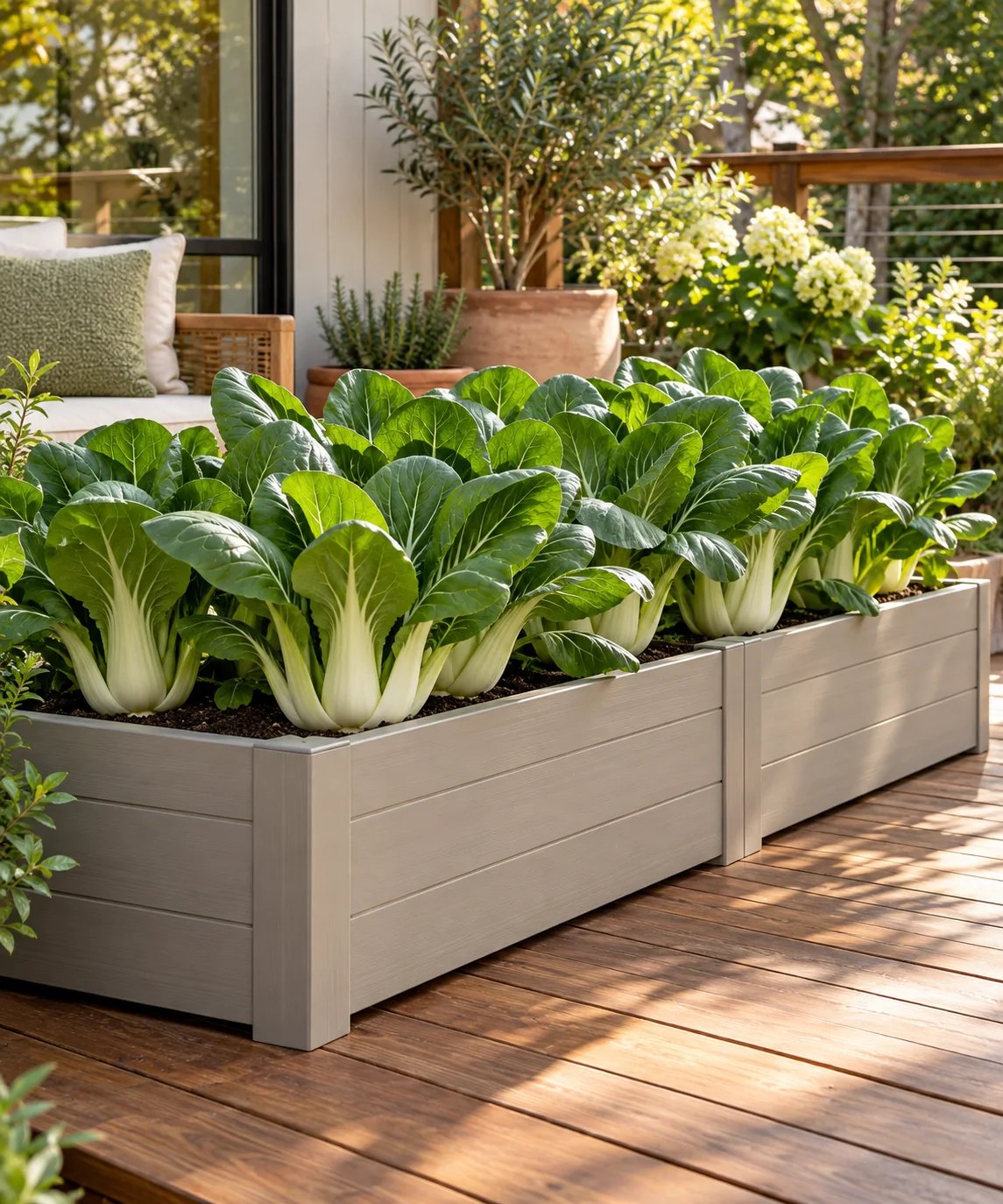
Perimeter Planning and Deck Load Considerations
Position modular planters along the deck floor where they do not obstruct doorways, stairs, or primary foot traffic routes. Before installing multiple container units, verify the allowable live load capacity of your deck structure with building management, a structural engineer, or local building authority guidelines. Saturated soil, water, and mature vegetable crops introduce significant weight that must remain within rated structural limits. Low-profile designs with broad bases provide stability against tipping, but they must always be situated directly on the deck surface rather than mounted to perimeter safety railings.
Soil Mechanics for Shallow Brassica Roots
Bok choy and related Asian brassicas develop compact, fibrous root systems that thrive in eight- to ten-inch container depths. Selecting shallow boxes avoids excess volume that simply holds unneeded wet potting mix, helping keep container weight manageable. Use an airy, well-draining potting blend formulated with composted bark, perlite, and coconut coir to support rapid drainage and root oxygenation. Avoid dense topsoil or heavy garden loam, which compacts easily inside container sidewalls and impedes fine root expansion. Moisten the medium evenly before sowing seeds or transplanting seedlings.
Staggered Succession Planting Schedules
Bok choy matures rapidly, often transitioning from seed to kitchen harvest within forty to fifty days depending on the cultivar and seasonal conditions. To avoid an unmanageable glut of greens maturing all at once, subdivide your modular boxes into distinct planting zones. Sow a small section every ten to fourteen days with seeds thinned to adequate spacing as they grow. As mature heads are harvested at the base, loosen the soil surface gently, incorporate a light top-dressing of finished compost, and replant immediately to maintain a continuous, manageable yield.
Sunlight Needs and Temperature Moderation
Braising greens develop crisp petioles under direct sunlight, generally benefiting from four to six hours of light exposure daily. However, elevated deck surfaces and nearby exterior walls absorb ambient heat, which can trigger premature bolting during warm summer periods. Position modular planters where structures provide natural afternoon shade, or use existing patio umbrellas to buffer intense midday sun. Maintain consistent soil hydration by watering during early morning hours so foliage dries quickly, helping reduce conditions that favor fungal leaf issues while keeping root temperatures cooler.
Seasonal Maintenance and Deck Surface Protection
At the close of the growing cycle, clear spent crop residues promptly to discourage overwintering garden pests and disease spores. Inspect the growing media and remove compacted root clusters before winter storage. If modular composite containers remain outside through cold months, empty or protect them according to the manufacturer's directions to avoid freeze-thaw damage. Elevate planter bases slightly using flat composite deck risers to promote unrestricted water runoff beneath the boxes, preventing moisture from lingering against wood or composite decking boards.
YOUR STARTING POINT
A little checklist.
Original editorial guidance. Images are AI-generated concepts, not photographs of completed projects. Our sources and approach.
Questions to consider
Can planter boxes be mounted directly onto deck railings?
Attaching containers to railings can create fall hazards, exceed railing design loads, or violate local building codes and property rules. Containers should rest on the deck floor where weight is supported directly, keeping the center of gravity low and keeping railings clear for their intended safety purpose.
Why does deck-grown bok choy produce flowers prematurely?
Bok choy tends to bolt into flower in response to elevated temperatures or sudden shifts in weather. Deck floorboards often absorb and radiate heat during sunny afternoons. Providing reversible shade using existing patio umbrellas and maintaining consistent soil moisture helps moderate root temperatures.
How many bok choy heads fit in a standard planter box?
Standard bok choy varieties generally need approximately six inches of space between plants to develop properly. A two-foot by one-foot container can comfortably support four mature heads without restricting air circulation or causing excessive foliage crowding.