Patio Seating Ideas · THE GUIDE
Low Tatami-Style Deck Platform for Screened Porch Quiet time
Screened porches with low rooflines or angled eaves can feel constrained when furnished with standard-height chairs, bulky sofas, or elevated patio sets. Introducing a low-profile floor platform or modular low seating area shifts the visual weight downward, preserving sightlines toward the garden and creating an open, uncluttered ambiance. However, creating a low-elevation seating zone on a screened porch requires addressing outdoor environmental factors that differ from interior rooms. Wind-driven rain, atmospheric humidity, and seasonal pollen can affect materials sitting close to the floor. By focusing on reversible modular framing, breathable and moisture-resilient mats, and safe circulation pathways, you can establish a practical low seating zone suited to your porch's layout and structural conditions.
Jump to the checklist ↓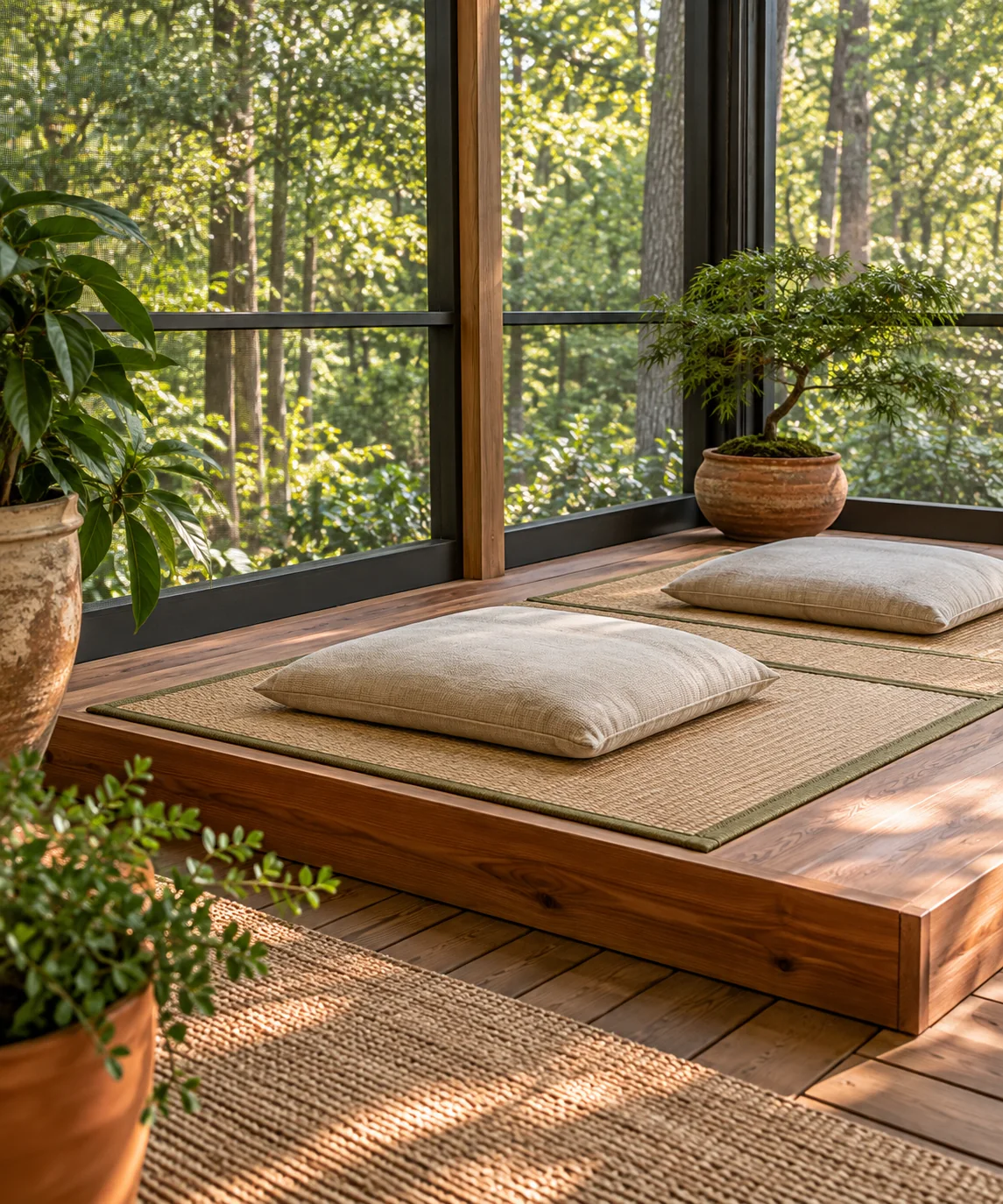
Assessing Porch Conditions and Floor Layout
Before planning low-profile seating, evaluate your porch's exposure to weather and existing floor construction. Screened enclosures protect against insects but remain exposed to blowing rain, humidity changes, and fine pollen. Verify that the existing porch floor is in good structural condition and can support additional furnishings without compromising drainage slopes. Position low seating platforms away from high-traffic entrance doors and screen access latches. Keeping primary pathways clear prevents tripping hazards, especially because low-elevation platforms sit beneath standard eye-level furniture cues.
Ventilation and Moisture Prevention Beneath Platforms
When placing any platform or low riser on a porch floor, airflow beneath the structure is essential to prevent moisture accumulation. Avoid using solid sheets of unventilated plywood or resting broad flat boards directly onto the porch decking, as trapped humidity can cause mildew and accelerate floor decay. If using a low wooden riser, select slatted designs that allow air to circulate freely beneath the seating plane. Elevating the platform slightly with non-absorbent footings prevents runoff water from pooling against the wood frame during heavy rain showers.
Selecting Outdoor-Rated Floor Coverings
Traditional interior tatami mats made from untreated natural rush grass are highly susceptible to mold and moisture degradation when exposed to porch humidity. For an outdoor or screened space, choose modern woven mats made from solution-dyed synthetic yarns or specially treated composite paper cords designed for exterior durability. These materials replicate the clean texture of woven rush while resisting moisture, drying efficiently after damp weather, and resisting fading from indirect UV exposure. Use non-slip, non-staining rubber pads beneath mats to keep them stable on smooth wood surfaces.
Visibility and Safe Step Transitions
A platform elevated just a few inches off the floor can become an unexpected trip hazard if not clearly delineated. Place the platform against an unbroken wall or perimeter screen rather than across natural walking paths. Enhance edge visibility by using contrasting timber tones, distinct border trim, or visual markers along the perimeter step. Ensure there is ample open floor space between the platform edge and any exterior doors or stairs so household members and guests can transition comfortably without misjudging changes in floor level.
Cushion Durability and Seasonal Care
Furnish the platform with low cushions, floor bolsters, or firm quiet time pads wrapped in water-resistant, solution-dyed acrylic or marine-grade outdoor fabrics. These textiles resist mildew, shed light moisture, and can be cleaned easily when airborne dust or pollen settles on the porch. During prolonged wet periods, severe winter months, or heavy pollen seasons, store fabric cushions indoors or in an airtight, weather-sealed deck box. Regularly lift synthetic mats to clean the underlying deck boards, ensuring the wood remains dry and free of trapped debris.
YOUR STARTING POINT
A little checklist.
Original editorial guidance. Images are AI-generated concepts, not photographs of completed projects. Our sources and approach.
Questions to consider
Why are natural straw tatami mats problematic on a screened porch?
Natural straw and rush absorb moisture from humid air and wind-driven rain, creating an environment prone to mildew, mold, and discoloration. Screened porches require moisture-resistant synthetic rush or treated outdoor textiles that do not harbor fungal growth.
What precautions should be taken to prevent tripping on a low platform?
Keep the platform out of primary travel paths between house doors and porch screen doors. Use visual contrast along the platform edge—such as a darker border or contrasting wood tone—so people clearly perceive the subtle step up from the main floor.
How do you maintain deck flooring beneath a low seating structure?
Ensure the platform has open slats and non-porous feet that keep it elevated slightly above the porch boards. Periodically move or lift the platform to sweep away leaves, vacuum pollen, and verify that no dampness is trapped against the porch floor.