Kitchen Herb Gardens · THE GUIDE
Magnetic Kitchen Utility Rack for Window-Adjacent Fridge Panels
When counter space is at a premium, the side panel of a refrigerator can serve as valuable vertical growing territory, provided it sits directly beside a sunlit window. By utilizing heavy-duty magnetic utility bins adapted to house small potted culinary herbs, home cooks can create a modular kitchen garden without permanent fixtures. This reversible installation keeps fragrant herbs like basil and dill within arm's reach of food prep areas. Success depends on selecting industrial-strength neodymium magnetic brackets, respecting weight thresholds, isolating plant moisture from appliance enamel, and ensuring the refrigerator exterior receives hours of strong direct sunlight.
Jump to the checklist ↓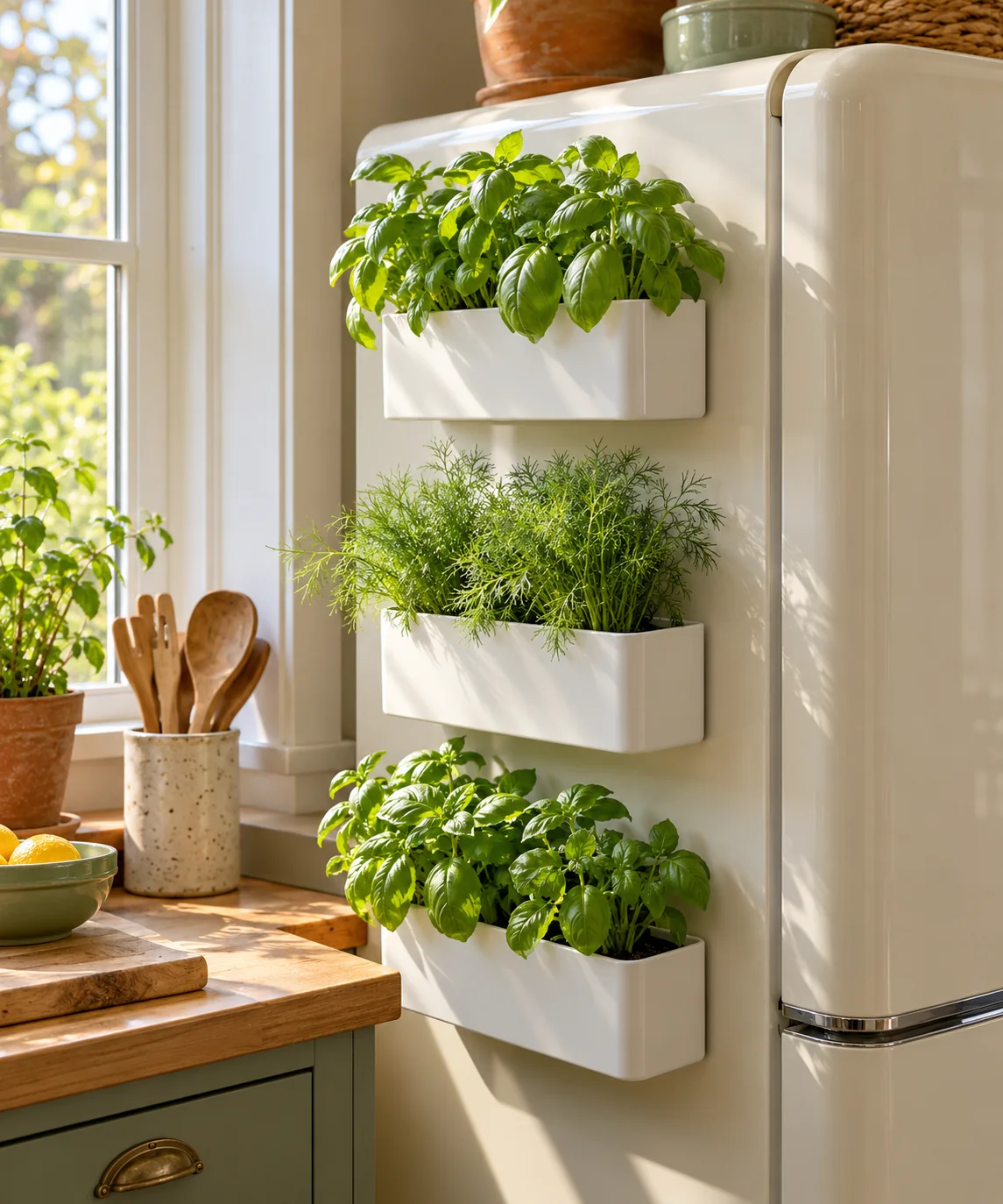
Confirming Window Proximity and Sunlight Angle
A refrigerator panel is only suitable for culinary herb culture if natural sunlight strikes the appliance side directly. Most culinary herbs demand four to six hours of intense daylight to thrive and build aromatic oils. Measure the sun path across the refrigerator surface across several clear days. If the appliance sits in a dim alcove or faces away from the window, herbs will rapidly stretch and fail. Target the side facing southeast or southwest, where bright light covers the metal panel without structural obstruction.
Magnet Strength and Safe Weight Thresholds
Standard decorative refrigerator magnets lack the shear resistance needed to support damp soil and ceramic planters. Select commercial magnetic bins equipped with wide neodymium rubber-coated backing strips rated for at least five to eight pounds of vertical hold. Limit each container to a three- or four-inch nursery pot. The combined weight of the plant, moist soil, and plastic container should not exceed two pounds per bin, preventing gradual downward slippage caused by appliance motor vibrations and daily door openings.
Insulating Enamel from Moisture and Scratches
Direct contact between wet planters and painted appliance panels can generate rust spots and scratch the factory finish. Choose magnetic racks that feature rubberized or silicone-coated magnetic pads to protect the refrigerator coating. Additionally, never place unsealed pots directly against the metal rack. Use solid-base metal or rigid plastic spice bins that serve as leakproof secondary outer vessels. Wipe down the appliance surface thoroughly with alcohol before mounting magnets to ensure a clean, slip-free magnetic bond.
Arranging Herb Varieties by Canopy Profile
Organize vertical tiers based on the growth habit of each herb to avoid upper plants shading lower levels. Place low-growing, spreading varieties like creeping thyme or compact oregano on the lowest magnetic shelf. Position upright, sun-hungry plants like sweet basil or feathery dill in the upper bins where they receive unfiltered light across their entire foliage canopy. Maintain at least six to eight inches of vertical spacing between tiers so taller herbs have sufficient clearance to grow upward without leaf compression.
Watering Protocols and Appliance Vibration Management
Compressor cycles produce mild, continuous vibrations that can shake loose soil or shift loosely placed pots. Secure each nursery pot firmly inside its magnetic caddy using small silicone shims if there is lateral play. To water, remove the inner container entirely from the magnetic rack and carry it to the sink. Allow all excess moisture to drain completely before returning the pot to the caddy, ensuring zero water ever enters the bin or touches the appliance casing.
YOUR STARTING POINT
A little checklist.
Original editorial guidance. Images are AI-generated concepts, not photographs of completed projects. Our sources and approach.
Questions to consider
Will the heat from the refrigerator harm the herbs?
Modern refrigerator side panels dissipate mild heat, which generally does not harm herbs. However, avoid placing bins directly over external heat vents or compressor grilles near the bottom rear, as dry hot air can dehydrate soil and foliage prematurely.
Can stainless steel refrigerators hold magnetic herb racks?
Many stainless steel refrigerators have non-magnetic front doors due to high nickel content, but their side panels are frequently standard painted magnetic steel. Test your refrigerator's specific side panel with a basic kitchen magnet before purchasing magnetic planters.
What pot size is best for magnetic fridge gardening?
Stick to three-inch or three-and-a-half-inch lightweight plastic pots. Larger containers hold too much heavy wet potting mix, risking magnet slippage and putting unnecessary mechanical stress on the refrigerator panel during regular door movement.